

Search results for "tommi+musturi/2010/05/song-without-words/2009/09/what-god-said"
Kai Ekholm & Yrjö Repo: Kirja tienhaarassa vuonna 2020 [The book at the crossroads in 2020]
10 December 2010 | Mini reviews, Reviews
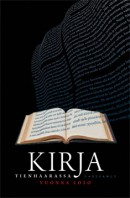 Kirja tienhaarassa vuonna 2020
[The book at the crossroads in 2020]
Helsinki: Gaudeamus, 2010. 205 p., ill.
ISBN 978-952-495-158-6
€29, paperback
This book looks at Finnish book publishing and its likely rate and direction of change. The future of the Finnish industry looks slightly more favourable than similar international forecasts have made out, although there have been some shake-ups in the Finnish book world too. The authors point out that while the decrease of reading as a leisure pursuit appears to be part of a long-term international trend, many feared for the future of the book in previous centuries as well. Book production and distribution, as well as changes undergone by various genres, are illustrated through a variety of statistics. They also go a long way towards explaining whether the publishing industry’s current difficulties are intrinsic or extrinsic in origin. The authors strive to find new perspectives to get away from a fear of the online world. The renewable publishing and reading culture envisioned by the authors will benefit from the novelty and efficiency of electronic publishing and will reinforce traditional knowledge. Professor Kai Ekholm is the Director of the National Library of Finland; Yrjö Repo is a researcher and statistician.
Asko Sahlberg: Häväistyt [Disgraced]
2 February 2012 | Mini reviews, Reviews
 Häväistyt
[Disgraced]
Helsinki: WSOY, 2011. 331 p.
ISBN 978-951-0-38275-2
€ 33, hardback
The tenth novel by Asko Sahlberg (born 1964) is reminiscent of the earlier works of this distinctive author: its principal characters are hardened by experience and lead their lives somewhere in the Finnish countryside during a recent period of the country’s history. The sentences are beautifully constructed, and the pace of the narrative is very slow – sometimes even too slow. The main role is played by a middle-aged man who is running away with a woman and a small boy. What they are running away from for a long time remains a puzzle, as does the question of who they are looking for, a man called The Master. In the flashbacks of the last part of the book all is explained, and the rhythm of the story quickens. Considering the book’s desolate, even fatalistic view of the world, it is slightly surprising that everything eventually turns out as happily as in a fairytale. But perhaps this is Sahlberg’s tribute to his characters, and to all of us human beings, for whom he seems to care a great deal? His novel He (2010) will be published in February in England under the title The Brothers (Peirene Press).
Translated by David McDuff
Petri Keto-Tokoi & Timo Kuuluvainen: Suomalainen aarniometsä [The Finnish virgin forest]
12 November 2010 | Mini reviews, Reviews
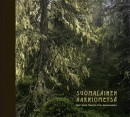 Suomalainen aarniometsä
[The Finnish virgin forest]
Helsinki: Maahenki, 2010. 302 p., ill.
ISBN 978-952-5870-06-0
€ 48, hardback
This book explains the cultural significance of forests – particularly virgin forests – to Finns. That term is used to refer to old-growth forests in their natural state, characterised by trees of different ages, an abundance of decaying tree remains, and continuous incremental changes. Nowadays around four per cent of Finnish forests are in a natural or near-natural state, and light is being shed on their ecosystems and the history of the slowly vanishing virgin forests. They are associated with deep-seated values and a multiplicity of roles throughout history. To many artists forests have been a significant elemental force, worthy even of worship; peasants and the timber industry have exploited the virgin forests. The authors also consider whether answers to key environmental issues will be found in old-growth forests: safeguarding natural diversity and slowing climate change. In addition to illustrative material from the authors, the book contains photographs by award-winning photographers Ritva Kovalainen and Sanni Seppo.
Northern exposure
21 June 2012 | Reviews
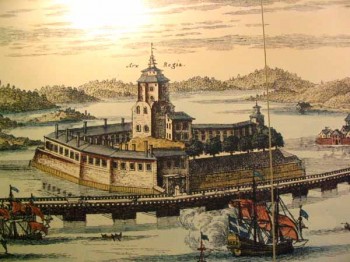
Between Helsinki and St Petersburg: Vyborg. Illustration of Vyborg Castle by an unknown artist, 1709, Wikimedia
Tony Lurcock
‘Not So Barren or Uncultivated’. British travellers in Finland 1760–1830
London: CB Editions, 2010. 230 p.
ISBN 9-780956-107398
£10.00, paperback
Finland is not unique in raising scholars who have often attempted to treat historical travellers’ accounts as source material for historical facts, and then prove how ‘wrong’ they are in relation to reality. This is an unproductive way in which to read them: travel books are nearly always based on the authors’ own country and experiences projected on what they encounter abroad.
Paradoxically, much of what was written about foreign countries in the past was really about conditions and problems in the author’s own land, and can be understood only against that background – something that also emerges in this book about British travellers in Finland. More…
Christmas best-sellers in Finnish fiction
13 January 2012 | In the news
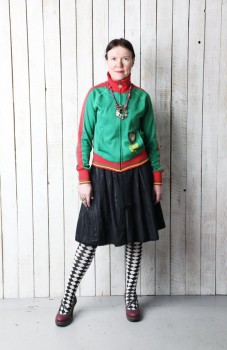
Rosa Liksom. Photo: Pekka Mustonen
Most new Finnish books are printed and sold in the autumn, and sales pick up considerably in December. The number one on the December list link: in Finnish only) of best-selling fiction titles in Finland, compiled by the Finnish Booksellers’ Association, is the Finlandia Fiction Prize-winning novel Hytti nro 6 (‘Compartment number 6’, WSOY, 2011) by Rosa Liksom (this is her homepage, also in English).
The Finlandia winner was announced on 1 December, upon which the book shot – from nowhere – to the top of the list.
Laila Hirvisaari’s historical novel, Minä Katariina (‘I, Catherine’, Otava), climbed up from the third place to the second. Number three was a newcomer, a tragic love story entitled Kätilö (‘The midwife’, WSOY), by Katja Kettu, set in the last phase of the Finnish Continuation War (1941–1944).
Jari Tervo’s Layla (WSOY) was in fourth place, while November’s number one, Ilkka Remes’s thriller Teräsleijona (‘Steel lion’, WSOY), came fifth.
In November Tuomas Kyrö occupied both the fourth and the tenth place with his novels Kerjäläinen ja jänis (‘The beggar and the hare’, Siltala – a pastiche-style story inspired by Jäniksen vuosi / The Year of the Hare by Arto Paasilinna, 1975) and Mielensäpahoittaja (‘Taking offence’, WSOY, 2010). In December they were numbers six and seven, in reverse order.
Women and the city
17 April 2010 | This 'n' that
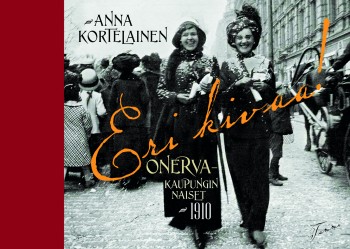
Jolly good! Young women celebrating the First of May in Helsinki in 1912. Photo: Ivan Timiryasev
How was city life for the single woman a hundred years ago in Helsinki?
She could ride a bike, for example, provided it was equipped with an ‘alarm system’ and the speed was not high. Socially she could have fun as long as she obeyed the rules. No admittance to restaurants without male company, for example.
Some young women in those days had to make a living by teaching or by working in an office – before they got married, of course.
A new exhibition (25 March–29 August) at Helsinki’s Ateneum art museum, entitled Kaupungin naiset (‘Women of the city’), focuses on the cultural life of young women in Helsinki in the 1910s through the eyes of the writer and critic L. Onerva (aka Hilja Onerva Lehtinen, 1882–1972). More…
Outside the human realm
28 May 2010 | Authors, Reviews
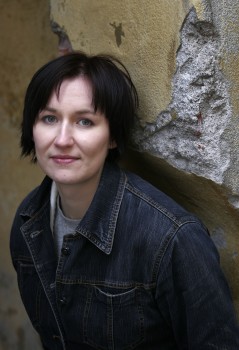
Tiina Raevaara. Photo: Heini Lehväslaiho
Themes enriched by the natural sciences set in a kind of naturalised literary fantasy make Tiina Raevaara an interesting young prose-writer. She is a doctor of genetics and a science writer whose collection of fourteen short stories, En tunne sinua vierelläni (‘I don’t feel you beside me’, Teos, 2010), is her second literary work.
Fantasy and a sombre dystopia combine in her debut novel, Eräänä päivänä tyhjä taivas (‘One day an empty sky’, 2008), which took its readers to the centre of ecological catastrophes and struggles for power taking the form of family relationships. The novel was seen as a morality tale examining the issue of human responsibility, and Leena Krohn, Johanna Sinisalo, Maarit Verronen and Jyrki Vainonen were identified as its literary godparents.
What unites these Finnish writers working at the borders of fact, fiction and fantasy? They are distinguished from realist prose by the way they pose a certain type of ethical question: the complex relationship between humankind and what is called nature, and the inexplicable fuzzy area between the two, which the hard sciences are unable to grasp. In these writers’ work, fantasy often layers into philosophical allegories which examine the limits of what can be experienced as human. More…
Kaipaus Karjalaan. Matkoja kotiseudulle [Longing for Karelia. Journeys to the homeland]
8 October 2010 | Mini reviews, Reviews
 Kaipaus Karjalaan. Matkoja kotiseudulle
[Longing for Karelia. Journeys to the homeland]
Toim. [Ed. by] Liisa Lehto
Helsinki: Finnish Literature Society, 2010. 231 p., ill.
ISBN 978-952-222-167-4
€34, hardback
The interest among Finns in making journeys to the areas of Karelia that were lost to the Soviet Union after the wars of 1939–1944 has showed no signs of lessening. On the contrary: the increasing preoccupation of researchers and ordinary citizens with the roots of the Karelians and with their modern way of life makes it possible to speak of a kind of Karelian renaissance. The opening of the borders after the fall of the Soviet Union triggered an enormous enthusiasm for tourism. This book contains fifty accounts of such journeys, drawn from the material of the Finnish Literature Society’s Folklore Archives collected in 1992 and 2007. The personal travel stories are by writers of different ages – the oldest was born in 1906, the youngest in the 1980s – and they focus on attitudes to loss of homeland that range from deep feelings of anger and failure to emotions of joy and of ‘reconciliation with oneself and with the whole of one’s life.’ Acts of purification in the water of the home village well or of swimming in Lake Ladoga are described in terms of a sacred ritual.
‘The Lion of the North’ wins the non-fiction Finlandia Prize
25 November 2014 | In the news
The Finlandia Prize for Non-Fiction 2014, worth €30,000 and awarded by Suomen Kirjasäätiö (The Finnish Book Foundation), went to the historian and author Mirkka Lappalainen on 19 November for her book on a 17th-century Swedish king.
The winning entry, entitled Pohjolan leijona, Kustaa II Adolf ja Suomi 1611–1632 (‘The Lion of the North. Gustavus II Adolphus and Finland 1611–1632’, Siltala), was chosen by from a shortlist of six finalists by Heikki Hellman, journalist and Dean of the School of Communication, Media and Theatre in Tampere. According to him, ‘Pohjolan leijona is an exceptionally well-written narrative for a non-fiction book; the author uses both earlier literature and numerous primary and secondary sources with great skill. Lappalainen succeeds in demonstrating how, during the reign of Gustavus II Adolphus, both Sweden and its easterly province, Finland, began to develop an organised society with its structure of officials and bureaucracy, how jurisdiction replaced the arbitrary rule of the aristocracy and how it was only then that Finland developed its role as part of Sweden. Pohjolan leijona sweeps the reader along and helps us to understand where we have come from and who we are.’
Hellman also commented on the growing practice of publishing non-fiction texts in English only: ‘Research is not done only for other scholars; it must also be relevant to people’s lives and be brought to their attention. We must also publish in our mother tongue, or else it will not survive as a language for research. This is one of the reasons why non-fiction is so necessary.’
Mirkka Lappalainen has received other prizes for her work. Susimessu (‘Wolf mass’), for example, was voted History Book of the year in 2010.
Riitta Jalonen & Kristiina Louhi: Aatos ja Sofia [Aatos and Sofia]
28 January 2011 | Mini reviews, Reviews
 Aatos ja Sofia
[Aatos and Sofia]
Kuvitus [ill. by]: Kristiina Louhi
Helsinki: Tammi, 2010. 36 p.
ISBN 978-951-31-5240-6
€14.30, hardback
Riitta Jalonen (born 1954) writes books for children and adults with the same emotional intensity. This picture book throws readers in alongside two children, Aatos and Sofia, to play in a sandpit. Aatos (or ‘Thought’, in Finnish) is a bit of a dreamer, while Sofia, who is slightly older, takes a more practical approach to life. As in her Tyttö (‘Girl’) trilogy, Riitta Jalonen uses an impressionistic mode of storytelling. Through a selection of brief, random scenes, Aatos ja Sofia tells the deeply personal story of a little boy’s fondness for his playmate. Kristiina Louhi’s bold, broad-brush illustrations have an almost hypnotic effect on the reader.
Translated by Ruth Urbom
Kirjallinen kulttuuri keskiajan Suomessa [Literary culture in medieval Finland]
1 June 2011 | Mini reviews, Reviews
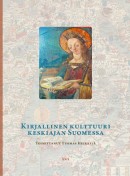 Kirjallinen kulttuuri keskiajan Suomessa
[Literary culture in medieval Finland]
Toim. [Ed. by] Tuomas Heikkilä
Helsinki: Finnish Literature Society, 2010. 480 p., ill.
ISBN 978-952-212-223-7
€ 36, hardback
The literary material from Finland’s medieval period is both more extensive and more interesting than previously thought. A team of scholars has gone through almost all of the material that survives, from the eleventh to the sixteenth century: missals, merchants’ correspondence, vernacular writings and state papers. Literary culture arrived in Finland with Christianity. During the Middle Ages the language of theologians and scholars on Finnish territory was Latin, the principal language of trade was Low German, and affairs of state were conducted in Swedish. This book examines how, when and where the texts were written and what their distribution says about Finnish literary tastes of earliest times. The scholars have done detective work, tracing and connecting parchment missals which ended up as the bindings of bailiffs’ ledgers. The book takes as its main source the National Library’s Fragmenta Membranea, one of the world’s largest collections of medieval parchment fragments. It is planned to digitise the collection and make the fragments freely accessible to both scholars and the general public.
Translated by David McDuff
What was Finland reading this summer?
2 September 2010 | In the news
 Novels, thrillers and comics were on the June–July list of best-selling books according to the Booksellers’ Association of Finland.
And, as the popular poet, MP, novelist and television celebrity Tommy Tabermann (born 1947) died in June, his collected poems, Runot 1970–2010 became number one of the list.
Sofi Oksanen’s highly popular novel Puhdistus (Purge) has kept itself on the list for a long time, was now at number three. Tuomas Kyrö’s humorous novel about a man in his 80s, Mielensäpahoittaja (‘Taking offense’) was at number seven, Pertti Jarla’s Fingerpori 3 at number eight and Leena Lander’s new novel Liekin lapset (‘Children of the flames’) at number ten.
The top ten list of translated fiction included works by Jo Nesbø, Charlaine Harris, John Irving, Donna Leon and Dagsson Hugleikur.
During the summer there’s clearly enough time for nature observations: The Cloudspotter’s Guide by Gavin Pretor-Pinney, a work presenting birds’ sounds and a book on bugs and creepy crawlies were among the ten best-selling non-fiction books.
Kirjoituksia sankaruudesta [Writings on heroism]
25 March 2011 | Mini reviews, Reviews
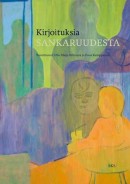 Kirjoituksia sankaruudesta
[Writings on heroism]
Toim. [Ed. by] Ulla-Maija Peltonen & Ilona Kemppainen
Helsinki: Suomalaisen Kirjallisuuden Seura, 2010. 330 p., ill.
ISBN 978-952-222-207-7
€ 29, paperback
This book examines Finnish heroism and anti-heroism by using approaches from folklore studies, history and literary theory. Political ‘heroism’ manufactured by the media is explored through a study of in-depth personal portraits of Finnish politicians published in the country’s biggest newspaper, Helsingin Sanomat, between 1981 and 2005. According to the research material, a positive impression is made by a narrative about a politician who is an independent thinker even in the context of his own party, from an ordinary home, engaged in manual work in his youth and risen to success overcoming setbacks through his own merits and without intrigue. The story of the European Union’s Commissioner for Economic and Monetary Affairs, Olli Rehn, is a heroic story about a politician who dares believe in a European Finland even when it was disadvantageous to his career. Since the 1990s, writers have begun to take a renewed interest in war heroism; the climate in the 1960s and 1970s was pacifist, but now the ‘Winter War spirit’, which is deemed heroic, has been surfacing in an ever-increasing variety of situations, including economic crises.
Translated by Ruth Urbom
Our favourite things
29 January 2010 | Letter from the Editors
Every reader has his or her favourite book. It is possible to define, with acceptable criteria, when a work of fiction is ‘a good novel’: do the plot, characterisation and language work, does it have anything to say? But when is a ‘good’ novel better than another ‘good’ novel? More…
Garden graft
2 September 2010 | Essays, Non-fiction
A chapter from Vapaasti versoo. Rönsyjä puutarhasta (‘Freely sprouting. Runners from the garden’, Kirjapaja, 2010)
If you sit in your garden and feel a bit like you’re tucked uncomfortably at the end of the dock in a guest berth, the reason is this: the garden hasn’t yet found a place in your muscle memory. Because it is only at the point when the garden has settled into your muscle memory, into your senses in as many ways as possible, that it will feel like your own. And that, of course, takes working in the garden, not just sitting in it.
So you should know your rose – not just its lovely smell but also the memory that you get from the shovel handle of when you planted it, or even the memory of the prick of its thorn on your finger. You can anchor every little detail in your senses, and it doesn’t even take much imagination. The scent of thyme on your fingertips, the downy fluff of a pasque flower against your palm, the silken glow of a peony opening in the morning sunlight – or the sumptuous mist of the wee hours of a summer morning twining over everything, and the rare experience of wading through it. More…