

Search results for "tommi+musturi/2010/05/song-without-words/2009/09/what-god-said"
Sirpa Kivilaakso: Satukuningatar Anni Swan [Anni Swan, the queen of storytelling]
7 May 2010 | Mini reviews, Reviews
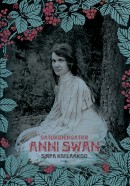 Satukuningatar Anni Swan. Elämä ja teokset
[Anni Swan, the queen of storytelling. Her life and works]
Jyväskylä: Atena, 2009. 275 p., ill.
ISBN 978-951-796-561-3
€ 32, hardback
Anni Swan (1875–1958) was a writer, translator and editor of children’s magazines. Her symbolic tales utilise her highly original language of sensory imagery. Swan’s symbolism is rooted in the golden age of Finnish arts at the end of the 19th century. The pre-eminent setting for Swan’s stories is the Finnish forest. Her ‘eco-criticism’ of practices that exploited the natural environment can be seen as radical for her time. Swan is also considered to be the first true writer of books for young people in Finland. Her stories about upper-class characters who overcome obstacles emphasise the class conflicts and other injustices of their day, yet they have remained popular into the 21st century. This book, based on Sirpa Kivilaakso’s doctoral thesis on Swan’s fairy-tale symbolism, presents a biography of the author, with supporting extracts from her books, diary entries and letters.
What Finland read in April
14 May 2010 | In the news
In April Sofi Oksanen’s best-selling novel Puhdistus, Purge (winner of the Finlandia Prize for Fiction in 2008, WSOY, and now available in English translation) was top of the best-selling Finnish fiction list again. Quite an achievement.
Finns seem to be besotted with Pertti Jarla’s comic books: three of them, set in the weird city of Fingerpori (‘Fingerborg’, Arktinen Banaani), were on the list.
The final volume of artist and writer Hannu Väisänen’s fictionalised autobiography, Kuperat ja koverat (‘Convex and concave’, Otava, 2009), was number five on the list. Number three was a newcomer, Tumman veden päällä (‘On dark water’, Tammi), also an autobiographical novel about childhood, by the the actor Peter Franzén.
Names appearing high on the foreign fiction list in April included Child Lee, Dan Brown, Falcones Ildefonso, Liza Marklund, Pamuk Orhan and W.G. Sebald.
Archives open!
12 December 2014 | This 'n' that
Illustration: Hannu Konttinen
For 41 years, from 1967 to 2008, Books from Finland was a printed journal. In 1976, after a decade of existence as not much more than a pamphlet, it began to expand: with more editorial staff and more pages, hundreds of Finnish books and authors were featured in the following decades.
Those texts remain archive treasures.
In 1998 Books from Finland went online, partially: we set up a website of our own, offering a few samples of text from each printed issue. In January 2009 Books from Finland became an online journal in its entirety, now accessible to everyone.
We then decided that we would digitise material from the printed volumes of 1976 to 2008: samples of fiction and related interviews, reviews, and articles should become part of the new website.
The process took a couple of years – thank you, diligent Finnish Literature Exchange (FILI) interns (and Johanna Sillanpää) : Claire Saint-Germain, Bruna di Pastena, Merethe Kristiansen, Franziska Fiebig, Saara Wille and Claire Dickenson! – and now it’s time to start publishing the results. We’re going to do so volume by volume, going backwards.
The first to go online was the fiction published in 2008: among the authors are the poets Tomi Kontio and Rakel Liehu and prose writers Helvi Hämäläinen (1907–1998), Sirpa Kähkönen, Maritta Lintunen, Arne Nevanlinna, Hagar Olsson (1893–1979), Juhani Peltonen (1941–1998) and Mika Waltari (1908–1979).
To introduce these new texts, we will feature a box on our website, entitled New from the archives, where links will take you to the new material. The digitised texts work in the same way as the rest of the posts, using the website’s search engine (although for technical reasons we have been unable to include all the original pictures).

By the time we reach the year 1976, there will be texts by more than 400 fiction authors on our website. We are proud and delighted that the printed treasures of past decades – the best of the Finnish literature published over the period – will be available to all readers of Books from Finland.
The small world of Finnish fiction will be even more accessible to the great English-speaking universe. Read on!
Tuomas Kyrö: 700 grammaa [700 grams]
12 November 2009 | Mini reviews, Reviews
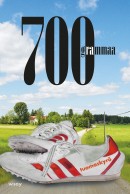 700 grammaa
[700 grams]
Helsinki: WSOY, 2009. 379 p.
ISBN 978-951-0-35601-2
€ 30, hardback
The genre of the picaresque novel is doing well, and one of its foremost exponents in Finland is Tuomas Kyrö (born 1974). The plot of his ingenious first novel, Nahkatakki (‘Leather jacket’, 2001), revolved around a jacket that moves from one owner to another. His later novels maintain this comical tension, but with a deepening of themes and a more sober outlook. Liitto (‘Union’, 2005) portrayed people scarred by war, while Benjamin Kivi (2007, featured in Books from Finland 4/2007) retold Finland’s history in a light-hearted and anachronistic manner. 700 grammaa is a book about sports fever and family relationships, the exploration of love and the pursuit of dreams. The main character is a boy who at birth weighs only 700 grams, and whose father vows to perform a seven metre long-jump if his son survives. He does, and the father has to devote his life to this almost impossible sporting achievement This novel, with its fast-developing plot and varied narrative techniques, is a paean to the heroism latent in mediocrity.
Memory in my hands
19 August 2010 | Fiction, poetry
A couple of years ago Timo Harju chose the non-military alternative to national service and was detailed to work at an old people’s home. Its director warned him that its inhabitants were ‘no sweet old grannies and grandpas’. Harju thought this might be a joke. In his first collection of poems, entitled Kastelimme heitä runsaasti kahvilla (‘We watered them abundantly with coffee’, Ntamo, 2009), he patiently gathers fragments of dreams and fears, memories and forgotten songs in the house of oblivion, treating them with gentle empathy. Commentary by Pia Ingström
Ward A5, Thursday
The clouds in the nursing home corridors, sky-open springlike after a bathe
and forgotten, in a frayed blue dressing-gown beside an osiery.
The grannies in the nursing home corridors, the last beautiful pride
you keep in a small wooden box behind your forehead:
if the lid opens by accident all the things may drop to the floor
topsy-turvy you won’t be able to find them, your back won’t let you
you won’t recognise them any more even if you do,
the springtime tears your insides to pieces.
Here they come, the grannies.
Better to stay here indoors, the journey to the dining room is a rough one
exposed like this
a long way and all by sleigh.
You stare at the keyhole: the clouds are coming. More…
Funny in favour (again)
8 June 2012 | In the news
The May list of best-selling Finnish fiction titles, compiled by the Finnish Booksellers’ Association, still features two novels about a grumpy old man (see In the news) by Tuomas Kyrö (a grumpy young man): Mielensäpahoittaja ja ruskeakastike (‘Taking offence and the brown sauce’) and Mielensäpahoittaja (‘Taking offence’, both WSOY) were number one and two.
Number three was a work by a classic humorist: Veikko Huovinen (1927–2009) was a highly original and versatile writer whose career lasted almost for 60 years. A selection of his short prose from 1950 to 2001, previously unpublished or published in various magazines, appeared in May: Luonnonkierto (‘Nature’s cycle’, Siltala) immediately shot up to the third place on the month’s list. (You’ll find one of these texts coming up next on this site!)
As summer was approaching at last, the non-fiction list featured several books on birds, grilling and cooking – as well as aphorisms and other food for thought, traditionally bought for young people graduating from school.
On presence and absence
30 December 2004 | Authors, Reviews

Photo: Irmeli Jung
The calm, precisely defined atmosphere of Sanna Karlström’s poems is interlined by the fragility and seriousness of the ‘I’, suggesting a certain sorrow. The clarity and purity of Finnish modernism’s tradition shows up in her controlled style; one may detect glimpses of the classically modernist images of Paavo Haavikko (1931–2008) in her poems. Karlström’s collection, Taivaan mittakaava (‘The scale of the sky’, Otava, 2004) does consider ‘the scale of the sky’, but her gaze is more centred on what is close at hand, the small. The ‘scale’ she works on is that of windows and rooms, which reflect both the self and ‘the other’. More…
Animal farm
30 December 2005 | Authors, Reviews

Photo: Miriam Ramirez
Kaarina Valoaalto is a writer who obviously adores rolling around in language – in the same way as one of the dogs in her new novel, Nooakan parkki (‘Noahannah’s barque’, Tammi, 2005):
‘Mother dog gets up off her fat tail and trundles over to the slope in the yard for a bit of a roll around. There’s rough gravelly ice on the bumpy road surface. She rapidly wiggles her rotund body from side to side, thrusting her legs against the kerb to generate enough power, and a contented half-purr half-growl issues from her chest, enough to melt the ice in the most irascible mistress’s heart. This is undoubtedly the sort of thing a mother feels about her baby’s first gurglings.’ More…
The stone’s silence
30 June 2000 | Archives online, Fiction, poetry
From Kiven vaitiolo (‘The stone’s silence’, Tammi, 1999). Introduction by Peter Mickwitz
I buried you
    in an onion field
the way to take care of a love whose stems
suddenly rupture, tubes break
   the earth's covered by
chickweed, goose foot and red-veined
leaves of sorrel, deep down
the inflamed wound, as sand that glints
in the soil, underground
golden domes and weeping under the crust
    I tear
with dry hands the green and you do not hear
    because you are cry and dirt
and onion and God and a man who's been thought
   into the ground
and the sun is wise and hot, underground
the trees' root systems are fishing
    for strength
there is enough left for a sigh
The anchor
31 March 1990 | Archives online, Fiction, Prose
An extract from the novel Leo (Söderströms, 1989). Introduction by Marianne Bargum
A summer quickly goes by and the beginning of autumn rolls merrily away. The middle of October is the time when things start slackening off, the harvest over, the flax brought in and the time for slaughter approaching. It is growing darker and the storm rumbles over the village, howling even more wildly out there in the darkness where the ships are gradually beginning to struggle home.
In stormy weather, we become touchy and angry. We think about those out there, and are irritated by minor matters people safe on the mainland make such a furore about. We conscientiously go to church the nearer autumn looms, and there we pray ardently for all those in peril on the sea. But then we have the pastor in the pulpit, irritable and angry like the rest of us, and he takes the opportunity to give us a reminder.
‘Out there in the storm the skipper calls on God, but when the storm dies down, he gives thanks for his own skill’, he begins. So you can work out what is to follow. Not very edified, we make our way home in the mud, in the cold wind, a shoulder like a wedge ahead of us. More…
The Knife
31 December 1989 | Archives online, Drama, Fiction
First performed in 1989 at the Savonlinna Opera Festival. Veitsi (‘The knife’, 1984) is set in Helsinki. The opera is composed by Paavo Heininen and the libretto is by the novelist, poet, playwright Veijo Meri. Veitsi is not a traditional opera, but ‘music-drama’. Introduction by Austin Flint
ACT I
(Pamppu takes Havinen and the Poet to the Publisher’s office)
PUBLISHER
Hello there, you great novelist!
This is really a surprise,
as though you’d blown the door off its hinges.
PAMPPU
These pages are terrific. Take a look at them. More…
Do not be afraid
30 June 1998 | Archives online, Fiction, poetry
Poems from Älä pelkää (‘Do not be afraid’, WSOY, 1997). Introduction by Jyrki Kiiskinen
Travel preparations
Late Friday night. Strange noises in the yard, someone
bangs on the door to the next stairway. Electricity hums.
I have just come back from the U.S. and France, from Sweden too.
On their channels, people laugh. They are having fun.
They are, nowadays, strange, young, and handsome, each and every one.
We did not have that when I was young. We limped.
We did not talk. We stammered tortuous phrases
and, while embracing, were afraid to be seen.
We did embrace. We clung to one another, expecting
to drown alone in every ninth wave.
I know my place is not here where I am. I think, I try
to construct conclusions. Someone looks over my shoulder.
Slowly the universe was born out of my mother s womb.
I am not responsible for its sudden extinction. On a Friday night.
I let them rule, the beauties and young lovers. My ticket has been written.
it is ready. I have had my shots against fear. I have my passport.
Bulldog
No European he who does not every morning
put on a tie. This morning, European
as I am, I looked at myself in the mirror
and noted that, incontrovertibly, more
and more every day, I resemble a
sad bulldog. Who has ever seen a bulldog smile?
We know we were born into the wrong world,
born to struggle. My bloodshot eyes tell me
I would like nothing better than to bed down m the straw
with my adversary, the bull, and ponder the stars.
Paradise apple
Consciousness is anchored to dark matter
as are the swells to the ocean. It is a quality
of matter, darkness glittering darkness. No need for words,
the overarching multidimensional web is one seamless
thought, not verifiable by observations or signs.
As soon as light penetrates the ambiguity of being,
the fruit falls outside the bounds of paradise.
The first sense
For another moment, you are incomprehensibly close,
you are mental image, you are voice, almost scent.
Only touch is missing, the most elementary of sensations
but precisely the one with which God tested the clay
with which the worm knows itself
with which there is hurt in torture and love,
and with which I miss your retreating appearance,
your tender groin, your rough hand.
(Written after a telephone conversation.)
Translated by Anselm Hollo
Dread and happiness
31 March 1993 | Archives online, Fiction, poetry
A selection of poems. Introduction by Herbert Lomas
Comet
He stands at the edge of the market,
not much to look at himself,
with a stare:
across the black dome a shooting star
draws its portrait – and is not there.
His bag weighs on him heavy –
a hard day's
skychart inside.
He fumbles for... a formula –
some old saw, or a soaring phrase –
     to lay the moment wide.
He’s nailed fast to the world,
but before he goes away –
what did he come here to say? More…