

Search results for "tommi+musturi/2010/05/song-without-words/2009/09/what-god-said"
Night city
30 June 1998 | Authors

Stephen Kuusisto
The German poet Novalis wrote: ‘Daylight has got limits and hours, but the hegemony of Night penetrates through space and through time.’ In effect he says that the night is always with us, even when the sun is out. The lines always bring me back to Helsinki, the city where night permeates every wall and cobblestone.
I first came to Helsinki as a three-year-old boy, wrapped up in a heavy wool coat. My father, an American Finn, had been invited to the University of Helsinki as a Fulbright scholar. While my father taught courses in political science I practiced and perfected a child’s insomnia and remained energetically awake during hours of the day and night. I lived in a perpetual state of shadow-sleep and never closed my eyes. As a result my emerging brain absorbed Helsinki the way a night-blooming flower takes in the moon. More…
Poems
30 June 1998 | Fiction, poetry
Sometimes
Sometimes the river that gave birth to me
Whispers in my ear. And while the harsh hand
Of day keeps at me, my river
Sounds like birds walking on the leaves,
And the waters speak to me in Finnish:
Ikävä on olla kartanolla –
I am alone and waiting in the yard…. More…
At your service
19 March 2014 | Extracts, Non-fiction
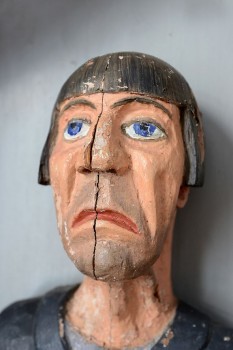
Melancholy man: detail of the almsman in Pomarkku, carved by Artturi Kaseva in the 1920s. Photo: Aki Paavola
Old men carved of wood have stood outside churches since the 17th century, begging for money to be given to the poor and the sick of the parish. These almsmen, or men-at-alms, mostly represented a disabled soldier; the tradition is not known elsewhere. Some 40 of the still surviving almsmen (there is one almswoman) were assembled for an exhibition in Kerimäki – in the world’s largest Christian wooden church – in summer 2013. The surviving specimens were hunted down and photographed by Aki Paavola for the book Vaivaisukkojen paluu (‘The return of the almsmen’). Otso Kantokorpi asks in the title of his introduction: are men-at-alms pioneers of ITE (from the words itse tehty elämä, ‘self-made life’; the English-language term is ‘outsider art’) or a disappearing folk tradition?
Many a church or belfry wall, particularly in Ostrobothnia, has been decorated – and is often still decorated – with a wooden human figure. Often they stand beneath a decorative canopy, sometimes accompanied by an encouraging phrase: He that hath pity upon the poor lendeth unto the LORD. They have been called men-at-alms or boys-at-alms. More…
Soulscapes
30 June 1987 | Archives online, Authors, Reviews

Raija Siekkinen. Photo: Irmeli Jung
When the first collection of short stories by Raija Siekkinen (born 1953), entitled Talven tulo (‘The coming of winter’, 1978) appeared, the critics were unanimous on one point: here was a mature writer with an original, individual voice. For her second collection, Tuomitut (‘The condemned’, 1982), Raija Siekkinen received the coveted Kalevi Jäntti Prize. Since then she has remained faithful to the short story. And since the publication of her fourth collection, Pieni valhe (‘A small lie’), the reader has been able to trace a development in which she has polished and tightened her narrative and brought to it more and more poetic and symbolic elements.
The main character in Raija Siekkinen’s short stories is generally a woman, not old but not very young either, often alone, sometimes broken by illness. Death is a recurring theme with Siekkinen; illness withers her women, her men die sometimes by their own hand. Siekkinen writes seldom about children; when she does so, it is from a child’s point of view. This perspective results in a critique of the narrow and restricted world view of adults. But always sensitively, never pointing the finger. More…
The forest, everything
31 March 1998 | Authors, Interviews
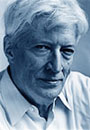
Lassi Nummi
Lassi Nummi (1928–2012) considered himself a prose-writer who has strayed into poetry. In a career spanning almost half a century and 25 collections of poetry, his preoccupations, and his central metaphors, remained constant: landscape, trees, bushes, blades of grass. Interview (1997) by Tarja Roinila
Now I can see how
        distinct
each twig is on the bush, each grassblade
       with, all around, the void
(1986)
My first encounter with the poet Lassi Nummi came with Maisema (‘Landscape’), a novella which appeared in the same year as his first collection of poetry. The experience was startling. The text delineates the building timbers of his subsequent poetry: trees, bushes, blades of grass. Maisema is a dazzlingly modern work, a complete realisation of something Virginia Woolf wrote in the same year, 1925: ‘Let us record the atoms as they fall upon the mind in the order in which they fall, let us trace the pattern, however disconnected and incoherent in appearance, which each sight or incident scores upon the consciousness.’ More…
A sensitive pessimist
30 December 2000 | Authors, Reviews

Photo: Irmeli Jung
When we arrive in Oaxaca, we find a Sapotek culture pulsing with quiet wisdom, a people who, even in their appalling poverty, have preserved their joy in life, mezcal bars which threaten to overturn our blameless work schedules, and the house rented by the Finnish Writers’ Union, where the rooms we are shown to as are empty and unfurnished as the solitary confinement cells in the central jail.
But Pentti Saaritsa has the language skill and, more essentially, the art of relating to people as though he has been lifelong friends with the whole of humanity. During the first week, we explore the squares, markets and furniture stores of Oaxaca. Ritsa haggles with astonishing perseverance, with the result that, in the second week, we are the proud owners of two genuine Mexican desks, stools and standard lamps. But the typewriter takes up an entire chapter in Pentti Saaritsa’s autobiography. Untiringly, he finally reaches the price he wants. And so we settle in a town turned upside down by the Zapatista movement: ‘The Mexican typewriter has / its own handwriting: with letters that bounce / off the lines it continues / the story of my life….’ More…
Turd i’ your teeth
24 November 2011 | This 'n' that

Swearwords: universal language? Picture: Wikimedia
The title is a phrase by Shakespeare’s contemporary Ben Jonson, used in his plays.
In Japanese, swearwords are unknown. The worst thing you can say to a member of the African Xoxa tribe is ‘hlebeshako’, which roughly translates as ‘your mother’s ears’. ‘Swearing involves one or more of the following: filth, the forbidden and the sacred,’ says the American-born journalist and author Bill Bryson in his book Mother Tongue. The Story of the English Language (1990). It is a very entertaining and enlightening work full of interesting facts and peculiarities, many of them about a languages other than English.
There is one faulty reference to the Finnish language, though, and we do wonder how it has got into the book:
‘The Finns, lacking the sort of words you need to describe your feelings when you stub your toe getting up to answer a wrong number at 2.00 a.m., rather oddly adopted the word ravintolassa. It means “in the restaurant”.’ (p. 210)
Indeed it does, and definitely we never did. Adopt, that is. We’ve never ever heard anyone substituting a solid swearword – and there is no lack of sustainable, onomatopoeically effective (lots of r’s) examples in the Finnish language – for ‘ravintolassa’. Darn! Any Finn (prone to cursing) would say PERRRKELE, for example.
Someone, we fear, has been having Mr Bryson on.
Heartstone
2 December 2010 | Reviews
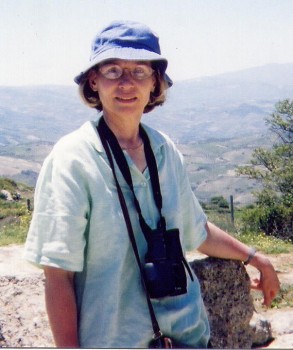
Ulla-Lena Lundberg
‘Knowledge enhances feeling’ is a motto that runs through the whole of Ulla-Lena Lundberg’s oeuvre – both her novels and her travel-writing, covering Åland, Siberia and Africa.
In her trilogy of maritime novels (Leo, Stora världen [‘The wide world’], Allt man kan önska sig [‘All you could wish for’], 1989–1995) she used the form of a family chronicle to depict the development of sea-faring on Åland over the course of a century or so. She gathered her material with historical and anthropological methodology and love of detail. The result was entirely a work of quality fiction, from the consciously old-fashioned rural realism of the first volume to the contradictory postmodern multiplicity of voices in the last – all of it in harmony with the times being depicted.
When Lundberg (born 1947) takes us underground or up onto cliff-faces in her new documentary book, Jägarens leende. Resor i hällkonstens rymd (‘Smile of the hunter. Travels in the space of rock art’), in order to consider cave- and rock-paintings in various parts of the world, she also reveals a little of the background to this attitude towards life that takes such delight in acquiring knowledge – an attitude that is familiar from many of the protagonists of her novels. More…
Poems
31 March 1979 | Archives online, Fiction, poetry
Poems from Lähdössä tänään (‘Leaving today’, 1977) Introduction by Jouko Tyyri
1
‘The wind’s speaking.’ If the wind were really speaking
could we endure its words
so void, flinty, so groping?
Inside them
they have
salt, horror,
mania: a long-drawn black speechless
roller that wipes the coast clean
of houses, woods, junk. It swashes
your eyes. If I’d had some
feeling. Or thought. If
I was something. If I was I.
It’s gone.
There’s nothing here. Only a draught.
The air moving back and forth, soon to drop.
2
Orlando di Lasso's melodies
airy, without a touch of soil
                           a little dust on
as much as might be on a butterfly's wing
                           only just so much
Orlando himself, four hundred years
remoulded into loam, coalesced with dust
just like you, you, just like you More…