

Search results for "tommi+musturi/2010/05/song-without-words/2009/09/what-god-said"
Chill climates
30 June 1984 | Archives online, Authors, Interviews
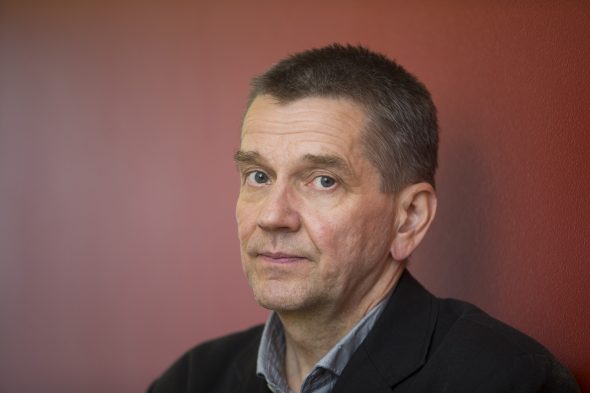
Olli Jalonen. Photo: Pekka Nieminen.
Olli Jalonen was born in 1954 and lives in Hämeenlinna. His first work, a collection of short stories entitled Unien tausta (‘The background of dreams’, 1978) and two later novels, Sulkaturkki (‘Feather coat’, 1979) and Ilo ja häpeä (‘Joy and shame’, 1981) were reviewed with exceptional warmth by the critics. His latest novel, Hotelli eläville (‘Hotel for the living’, 1983) brought him a State Prize for Literature in 1984. The awarding committee commented that the novel is ‘a representative of that rare genre in Finnish literature, the grotesque novel’. Jalonen also received the ‘Spurs of Criticism’, the annual prize awarded by the Finnish Critics’ Association. The hotel for the living is the book’s ironic name for a nuclear shelter that is being quarried into the living rock of Finland; Jalonen sets up a situation that allows him to examine the crevices of his characters’ personalities. He studies their attitudes to life with cool satire – they live in the bleak climate of buying and selling, the struggle for power and material goods, the domination of others, and submission to their fates. Interview by Markku Huotari
‘Poetry in a world under threat’ was the headline for a survey of Finnish poetry by poet and critic Väinö Kirstina that appeared in the Tampere daily newspaper Aamulehti in 1981.
Two years later that headline is just as bitingly relevant. Only one alteration is necessary: to poetry must be added prose, for prose, too, is addressing itself to that future, difficult enough to imagine, in which the threat of nuclear war may involve Finland, living in the shadow of the super powers, in a conflict in which she wishes no part.
One of the scenes in Olli Jalonen’s novel Hotelli eläville (‘Hotel for the living’) is set in a nuclear shelter that is being built inside the living rock on which Helsinki stands. Even now the planners of that ‘shelter’ use the fear of other people to their own ends, and divide them into those who will be saved and those who will perish.
A sermon on the day of judgement? Cliche? Milking of a fashionable subject? More…
I hate your Face(book)
5 May 2009 | Columns, Tales of a journalist

Illustration: Joonas Väänänen
Just how ‘free’ is free speech? Pay a visit to any internet chatroom, and you’ll see. In the first column of a new series called ‘Journalist’s tales’, the media critic Jyrki Lehtola investigates intolerance on the internet
First there was utopia. Then came people, and utopia suffered.
As with all new inventions, from electricity to the atom bomb, internet social networks were supposed to make our lives better. They were supposed to give us license to network, to participate, to get to know each other, to get reacquainted, to flirt, to find an extramarital lover and to be connected to as many people as possible in as many inconsequential ways as possible. More…
Too much or too little love
31 March 1987 | Archives online, Authors, Reviews
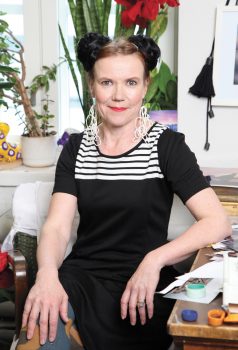
Rosa Liksom. Photo: Pekka Mustonen.
On the October day last year on which Rosa Liksom‘s second collection of short stories, Unohdettu vartti (‘The forgotten quarter’), was published, she also opened an art exhibition of her own work. The occasion took the form of a kind of cross between performance art and a practical joke. Young women dressed in Finnish military uniforms carried out body searches on every newcomer, changed the guard and drilled, while crackers exploded in the gallery. Many people were of the opinion that it was all no more than a silly joke. Even the art critics were not enthusiastic: they felt that Rosa Liksom’s felt pen work was derivative of a certain Danish artist who himself had copied the cartoon-like stick-men of the so-called Chicago school. But all the same, there emerged from the pictures a funny story about the artist’s adventures among the underground youth of Russia from Leningrad to Vladivostock.
Only her closest friends knew which of the soldiers in the gallery was Rosa Liksom, which her clones. Rosa Liksom is a pseudonym, and her little game of hide and seek has already lasted a couple of years. We know of her that she was born in Lapland, studied anthropology, has travelled in both East and West and lived for a long time in Copenhagen. Her writing was published for the first time in an anthology of the work of young authors, Kalenteri 84 (‘Calendar 84’, 1984). Her first work, the short story collection Yhden yön pysäkki (‘One-night stand’) was published in 1985 and achieved considerable success. More…
Animal magic
3 June 2014 | Extracts, Non-fiction
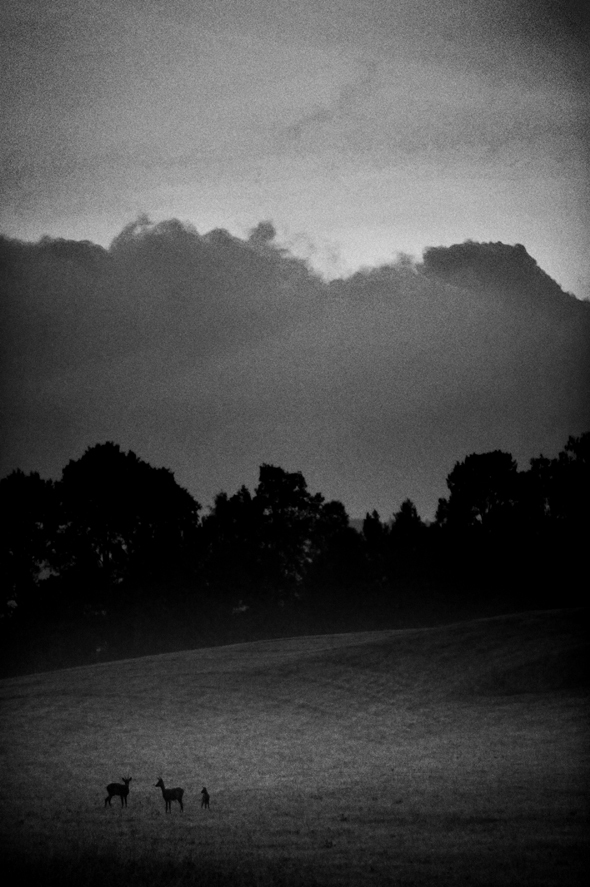
Roe deer, Sweden. Photo: Mats Andersson
A day in the life of an elk, of a lynx? Nature photographers venture into the depths of forests, in pursuit of the inhabitants – predator and prey, mythical and real. Photographs from Kohtaamisia (‘Encounters’), by Mats Andersson and Heikki Willamo, text by Willamo (Maahenki & Musta Taide [Black Art], 2014)
The feelings in our dreams. They well from depths – from those layers of awareness that the mind does not shackle. In sleep we handle and organise the events of our lives in a way which is impossible when awake, when we are conscious of ourselves and our limitations. That is why animals can come into my dreams as friends, equal partners, like me, and therefore I so often dream of having their abilities and skills.
When awake we think all the time. We think about past events and worry about the future or dream of something better. Very seldom do we live in the moment. Photographs are passing moments, often only a thousandth of a second long, but sometimes lasting minutes or even hours. In finished photographs the beholder can see much more – he adds his memories or dreams of the future. The picture-taking moment vanishes, something else comes in its stead. More…
Coming up…
11 April 2013 | This 'n' that
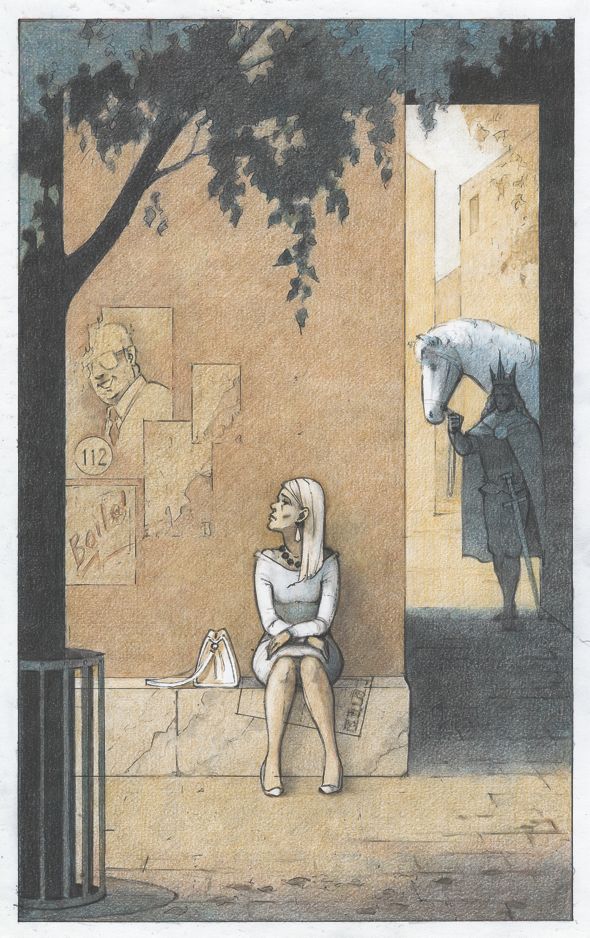
Illustration: Mikko Metsähonkala
‘Just before the meeting Ludwig chickened out. In the ad he had bragged that he was a “sporty male with a sense of humour”. Would Patsy accept his illiteracy, brutal table manners and cruelty towards the peasants?’
One picture, few words: Mikko Metsähonkala’s artwork creates a moment in a universe – recognisable or completely strange – providing it with a laconic textual subtext. We feature some of his stories published in Toisaalta / (P)å andra sidan / In Other Wor(l)ds.
Literary glory and basketball
23 November 2012 | This 'n' that
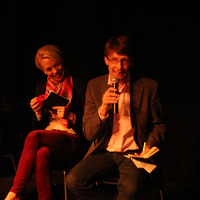
Fights with words: Baba Lybeck and Markus Nummi. Photo: Literary Death Match
Fans of new writing and competitive reading out loud converged on Korjaamo in Helsinki on October 25th for the second Finnish ‘episode’ of Literary Death Match. LDM (as it’s known to regulars) is a series of events created in the USA and hosted by Adrian Todd Zuniga in which authors perform live readings of their recent work and receive critical assessments from a panel of judges in a manner familiar to viewers of trashy TV talent shows.
The winners of the evening’s initial reading rounds advance to the final, where the ultimate victor is decided in a game show-style battle involving skills that are perhaps more tangential to the work of most authors.
In his shiny jacket, LDM co-founder Adrian Todd Zuniga certainly looked the part of the cheesy game show host. He was an enthusiastic compère and got the bilingual evening under way by introducing the panel of judges. Author Markus Nummi was to be responsible for assessing the competitors on literary merit, while Baba Lybeck, a radio journalist and host of Uutisvuoto (the Finnish TV version of the BBC’s topical panel show Have I Got News for You), would be awarding points for performance. The third member of the panel was journalist and author Ari Lahdenmäki, who was assigned the category of ‘Intangibles’, i.e. anything that didn’t fall under the other two headings. More…
Let us eat cake
4 February 2010 | This 'n' that
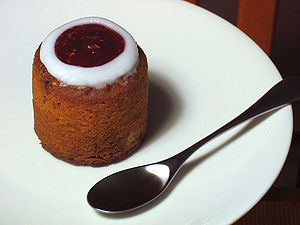
A national favourite. Photo: Ville Koistinen
Here at Books from Finland central we’re celebrating, with the one Finnish literary anniversary that involves its own dedicated cake.
The fifth of February marks the birthday of the poet J.L. Runeberg (1804–1877) – writer, among many other things, of the Finnish national anthem (actually unofficial, as there’s no mention of such a thing in the legislation), which he wrote in Swedish, Vårt land (in Finnish, Maamme). More…
The personal and the political
In his new collection, Claes Andersson (born 1937) – poet, pianist and politician – takes a look at what human existence is about: excess, apathy, greed, devotion, freedom, and the simple pleasures of everyday life (see the introduction)
Poems from Lust (‘Desire’, Söderströms, 2008), translated by David McDuff and David Hackston
A Finnish translation, by Jyrki Kiiskinen, is entitled Ajan meno (WSOY, 2008)
(easter)
Despite the prognoses of the Earth's imminent warming
today April 8 it is cold enough to make one’s teeth chatter

In a few weeks I will turn seventy, my ninth grandchild
  August (Siiri's younger brother)
was born two months ago and the tenth is on the way
Practically public
31 December 2002 | Archives online, Fiction, poetry
Poems from Koko tarina (‘The whole story’, Tammi, 2002). Introduction by Anselm Hollo
Pan shot
A whitewashed wall, small windows
advent calendar peepholes at the end of darkness,
                               lit-up squares
One two three kitchens awake at 7
each tenant bends over a kettle of porridge
in the gurgling coffeemaker’s soundscape,
opens the refrigerator
see the hunter in action: let’s spear this yoghurt
and the building across the way testifies to all of this
practically public activity
the evening’s closure of curtains, turnings-off of the light,
nocturnal breastfeedings. Talking windows. A light comes on at: 2:54 AM
– what’s up now?
Is someone thinking about a bird she encountered at the cemetery? More…
Coming up next week…
7 May 2010 | This 'n' that
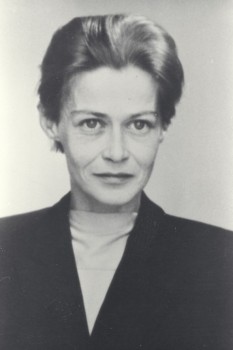
Helvi Juvonen (1950s). Photo: WSOY
‘…A strange tapir / (the bi-coloured one) / a wondrous tapir (the many-toed one) / circles the tree, goes round and about, / a small word hangs from the tip of his snout….’
Helvi Juvonen (1919–1959) wrote nature-inspired poetry; she was a fan of the 19th-century American poet Emily Dickinson, whose work she also translated. Her short adult life, in the drab Helsinki of the post-war years, was burdened by poverty and illness, and yet she wished to ‘toast the richness of our lives’.
The literary scholar Emily Jeremiah has translated a handful of Juvonen’s poems and takes a look at her work in this, the 15th part of a series devoted to classic Finnish authors (also available in our archive are essays about Kirsi Kunnas, Henry Parland and Sirkka Turkka). Helvi Juvonen: small words celebrate ‘the richness of our lives’
Portraits and bagatelles
30 September 2008 | Fiction, Prose

Kaarina Valoaalto. Photo: Tammi.
Soila Lehtonen on Kaarina Valoaalto’s new collection of short prose
In Kaarina Valoaalto’s prose ‘the river, made wild by a storm, gallops, foaming at the mouth, down between the stays of the street banks and into the sea’ and ‘the fly is a classic’: ‘its buzz sounds the cycle of the year and all of the scales of feeling. A fly brings together agrarian and urban culture…. When I hear it, I believe I’m alone in the cabin of a sailboat, anchored to the bottom of a bay where terns and seagulls call out on the gleaming blue of the open sea and no there is no coffee because no one has bothered to make it’. More…
3 x Runeberg: poet, cake & prize
5 February 2014 | This 'n' that
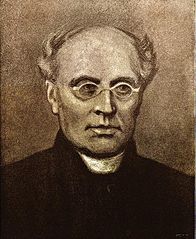
J.L. Runeberg. Painting by Albert Edelfelt, 1893. WIkipedia
Today, the fifth of February, marks the birthday of the poet J.L. Runeberg (1804–1877), writer, among other things, of the words of Finnish national anthem.
Runeberg’s birthday is celebrated among the literary community by the award of the Runeberg Prize for fiction; the winner is announced in Runeberg’s house, in the town of Borgå/Porvoo.
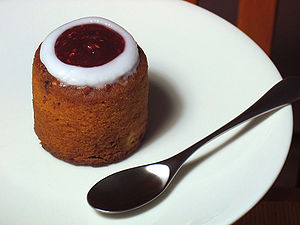
Runeberg’s favourite. Photo: Ville Koistinen
Mrs Runeberg, a mother of seven and also a writer, is said to have baked ‘Runeberg’s cakes’ for her husband, and these cakes are still sold on 5 February. Read more – and even find a recipe for them – by clicking our story Let us eat cake!
The Runeberg Prize 2014, worth €10,000, went to Hannu Raittila and his novel Terminaali (‘Terminal’, Siltala).
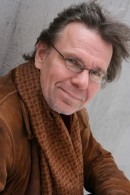
Hannu Raittila. Photo: Laura Malmivaara
According to the members of the prize jury – the literary scholar Rita Paqvalen, the author Sari Peltoniemi and the critic and writer Merja Leppälahti – they were unanimous in their decision; however, the winner of the 2013 Finlandia Prize for Fiction, Jokapäiväinen elämämme (‘Our everyday lives’) by Riikka Pelo, was also seriously considered.
Read more about the 2014 Runeberg shortlist In the news.