

Search results for "harjunpää/2010/10/mikko-rimminen-nenapaiva-nose-day/page/15/www.booksfromfinland.fi/2012/04/tuomas-kyro-mielensapahoittaja-ja-ruskea-kastike-taking-offence-brown-sauce"
Do you remember the yellow house?
14 February 2011 | Fiction, Prose
Extracts from the novel Enkelten kirja (‘The book of angels’, Tammi, 2010)
[Tallinn, summer] The past will not go away
and the present is insurmountable. Summer vacation has begun, the newspaper hasn’t come; it doesn’t get delivered here anyway. Can you remember the Isabelline yellow house? Remember the alley with the name that means hurry? Surely you remember the home with all the maps on the shelves, the important papers and the brass objects bought from nearby antique dealers? Also the rugs from North Africa and the obligatory cedar camel figurines on the windowsill. And so many glasses and plates and empty lighters in a cardboard box on the shelf on the left hand side of the kitchen.
Tallinn, June 7th. The floors creak. One step has split in half; some of the lights have burned out. This is a lovely home. A small window upstairs is ajar to the courtyard. Tuomas had latched it behind the Virginia creepers. The fountain in the courtyard is dry. On cold nights the smoke from the fireplace grows like a statue for the crows until it wraps around over the layered rooftops like a snake eating its tail. Russian men are repairing the attic of the house across the street for wealthy people to live in; they laugh in front of the window and smoke. Tuomas waves at them, and they wave back. The courtyard is creepy when it’s empty. Soon the neighbours would go about their day and quietly close their doors behind them, and two nearby churches would divide the hours into quarters, Russians and their gossip would make their way to the Alexander Nevski Cathedral, and the Estonians and their gossip would go to their own churches where a wise and peculiar, almost human scent would rise from between the headstones. Tuomas wouldn’t smell it, Aino would and would move to stand beneath the the center tower. More…
Tuomas Kyrö: Mielensäpahoittaja ja ruskeakastike [Taking offence: brown sauce]
25 April 2012 | Mini reviews, Reviews
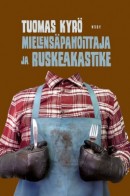 Mielensäpahoittaja ja ruskeakastike
[Taking offence: brown sauce]
Helsinki: WSOY, 2012. 130 p., ill.
ISBN 978-951-0-39079-5
€23.90, hardback
The most popular book by Tuomas Kyrö (born 1974), so far, has been his sixth novel, Mielensäpahoittaja (‘Taking offence’: literally ‘He who takes offence’, 2010). It has sold nearly 65,000 copies as a book and audiobook. The protagonist is a 80-something man, a sturdy old bear who lives in the countryside, now alone, because his demented wife has been taken into care and the children have long since left home. Kyrö inserts genuine humour into the monologues of his stubborn – but by no means simple – character, defiantly critical, opposing new gadgets, fads and all sorts of silly stuff of the contemporary society. In this sequel Kyrö still manages to entertain the reader with his detailed portrait: now Mr Grumpy has to learn to cook, because the food a paid helper brings in just isn’t good enough. With the potato as the cornerstone of his diet, he finally learns how to make good, fatty and salty meals of meat and veg. ‘One must remember what’s important in life, marriage and prostate problems. Time and patience.’ Illustrations remind the reader of the old times: photographs of television programmes and printed recipes from the 1960s and 1970s.
Mikko Rimminen: Nenäpäivä [Nose day]
29 October 2010 | Mini reviews, Reviews
 Nenäpäivä
[Nose day]
Helsinki: Teos, 2010. 339 p.
ISBN 978-951-327-1
€ 25.90, hardback
Female protagonists as sympathetic as this are rare in contemporary literature; in this third novel by Mikko Rimminen (born 1975), Irma is a solitary, slightly awkward outsider who gets badly tangled up in a muddle of her own making. She poses as a door-to-door market researcher – in order to meet people. Rimminen employs a more complex plot than in his previous novels (his 2004 debut work, Pussikaljaromaani, ‘A six-pack novel’, about idle young men, has been translated into five languages). The author is an acknowledged master of the slow narration: he is skilled at describing the sound of silence and giving a page-long description of the behaviour of a mobile phone in someone’s hand. All that passes unsaid and unseen between people is cleverly and hilariously put into words. Rimminen’s Finnish is highly original – he keeps creating new verbs and compounds – and his characters who stand on the margins hankering after ordinary life gain the reader’s genuine sympathy.
Finland(ia) of the present day
2 December 2010 | In the news

Mikko Rimminen. Photo: Heini Lehväslaiho
The Finlandia Prize for Fiction 2010, worth €30,000, was awarded on 2 December to Mikko Rimminen (born 1975) ; his novel Nenäpäivä (‘Nose day’, Teos) was selected by the cultural journalist and editor Minna Joenniemi from a shortlist of six.
Appointed by the Finnish Book Foundation, the prize jury (Marianne Bargum, former publishing director of Söderströms, researcher and writer Lari Kotilainen and communications consultant Kirsi Piha) shortlisted the following novels:
Joel Haahtela: Katoamispiste (‘Vanishing point’, Otava), Markus Nummi: Karkkipäivä (‘Candy day’, Otava), Riikka Pulkkinen: Totta (‘True’, Teos), Mikko Rimminen: Nenäpäivä (‘Nose day’, Teos), Alexandra Salmela: 27 eli kuolema tekee taiteilijan (’27 or death makes an artist’, Teos) and Erik Wahlström: Flugtämjaren (in Finnish translation, Kärpäsenkesyttäjä, ‘The fly tamer’, Schildts). Here’s the FILI – Finnish Literature Exchange link to the jury’s comments.
Joenniemi noted the shortlisted books all involve problems experienced by people of different ages. How to be a consenting adult? How do adults listen to children? Contemporary society has been pushing the age limits of ‘youth’ upwards so that, for example, what used to be known as middle age now feels quite young. And, for example, in Erik Wahlström’s Flugtämjaren (now also on the shortlist for the Nordic Literature Prize 2011) the aged, paralysed 19th-century author J.L. Runeberg appears full of hatred: being revered as Finland’s national poet didn’t make him particularly noble-minded.
According to Joenniemi, Rimminen’s novel ‘takes a stand gently’ in its portrayal of contemporary life – in a city where a lonely person’s longing for human contacts takes on tragicomical proportions. Joenniemi finds Rimminen’s language ‘uniquely overflowing’. Its humour poses itself against the prevailing negative attitude, turning black into something lighter.
Rimminen has earlier published two collections of poems and two novels (Pussikaljaromaani, ‘Sixpack novel’, 2004, and Pölkky, ‘The log’, 2007) . Pussikaljaromaani has been translated into Dutch, German, Latvian, Russian and Swedish.
What Finland read in April…
18 May 2012 | In the news
…was Tuomas Kyrö mostly, it seems: at the top of the April list of best-selling fiction titles in Finland, compiled by the Finnish Booksellers’ Association, was his novel Mielensäpahoittaja ja ruskeakastike (‘Taking offense: the brown sauce’, WSOY).
In March, Kyrö (born 1974) already featured twice on the list: his first novel about a 80-something man, Mielensäpahoittaja (‘Taking offense’, WSOY, 2010) was number two, and the newly-published sequel, Mielensäpahoittaja ja ruskeakastike had shot up to sixth place. In April they changed places – with the audio book version of the brown sauce book at number five.
This mielensäpahoittaja, ‘he who takes offence’, lives in the countryside and opposes most of what a contemporary lifestyle has to offer. Finns are evidently highly amused by the opinions of this obstinate, grumpy old man. But the popularity of Kyrö’s literary creation may also be boosted by the fact that he currently takes part in a television talk show every week, entertaining the audience and his fellow guests with his often acerbic remarks.
A crime novel by Seppo Jokinen, Hervantalainen (‘The person from Hervanta’, Crime Time), occupied third place, Tarhapäivä (‘Kindergarten day’, Otava) by Eve Hietamies fourth.
On the non-fiction list Solzhenitsyn’s The Gulag Archipelago, republished by Silberfeldt in April, was already in third place; we published a news piece about it on 25 April.
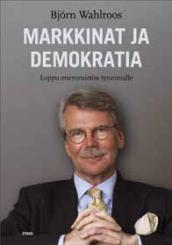 The non-fiction list was topped by a new, controversial book by banker – and one of the richest men in Finland – Björn Wahlroos, Markkinat ja demokratia. Loppu enemmistön tyrannialle (‘Market and democracy. The end of the tyranny of the majority’, Otava). He favours the methods of Margaret Thatcher’s economic policy and opposes social benefits for the poor; according to him, the market economy is superior to democracy any time.
Funny stuff favoured
13 April 2011 | In the news
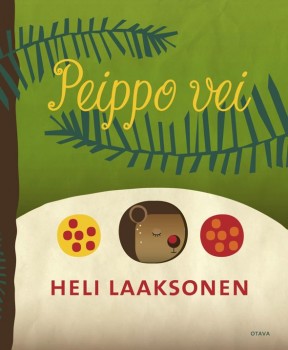 In March the Bookseller’s Association of Finland’s list of the best-selling Finnish fiction was topped – for a change – by a collection of poems. Like all her collections, Heli Laaksonen’s Peippo vei (‘The chaffinch took it’, Otava) is written in a local dialect spoken in south-western Finland.
Perttti Jarla’s latest comics book, Fingerpori 4 (‘Fingerborg 4’, Arktinen Banaani) was number two – and, demonstrating the Finns’ love of cartoons and comics, another of his titles, Fingerpori book, Fingerpori – Kamppailuni (‘Fingerborg – My fight’) occupied fourth place, following Sofi Oksanen’s Puhdistus (Purge), published in 2008 and still number three on the list. More…
What Finland read in March
13 April 2012 | In the news
Tuomas Kyrö: ‘Taking offense’, part two
The top of the March list of best-selling fiction titles in Finland, compiled by the Finnish Booksellers’ Association, was Katja Kettu’s love story set in 1940s Finland at war, Kätilö (‘The midwife’, WSOY; see our feature).
Tuomas Kyrö (born 1974) featured twice on the list: Mielensäpahoittaja (‘Taking offense’, WSOY, 2010) was number two and the newly-published sequel, Mielensäpahoittaja ja ruskeakastike (‘Taking offense: the brown sauce’, 2012) had shot up to sixth place.
The title is actually a noun: ‘He who takes offence’: this person is an 80-something man who lives in the countryside and opposes most of what a contemporary lifestyle has to offer.
In the sequel, as his wife has to stay in a nursing home, ‘He who takes offence’ decides to learn how to cook for himself. He dismisses the ‘no-good’ girl who bring him food dailysent by a local agency. A firm believer in the potato, this no-nonsense character continues to fascinate lots of readers.
Rosa Liksom’s Finlandia Prize -winning novel set in the Soviet Union in the 1980s, Hytti nro 6 (‘Compartment number 6’, WSOY) occupied fourth place, a new novel about family life by Eve Hietamies, Tarhapäivä (‘Kindergarten day’, Otava) was number three.
The non-fiction list was topped by a new cookbook by Sikke Sumari, Sikke – ruokaa rakkaudella Toskanassa (‘Sikke – food with love in Tuscany’, Paasilinna). As books about birds featured on the list, one might assume spring is on the way, at last.
Hare-raising
13 February 2015 | Reviews
In this job, it’s a heart-lifting moment when you spot a new Finnish novel diplayed in prime position on a London bookshop table – and we’ve seen Tuomas Kyrö’s The Beggar & The Hare in not just one bookshop, but many. Popular among booksellers, then – and we’re guessing, readers – the book nevertheless seems in general to have remained beneath the radar of the critics and can therefore be termed a real word-of-mouth success. Kyrö (born 1974), a writer and cartoonist, is the author of the wildly popular Mielensäpahoittaja (‘Taking umbridge’) novels, about an 80-year-old curmudgeon who grumbles about practically everything. His new book – a story about a man and his rabbit, a satire of contemporary Finland – seems to found a warm welcome in Britain. Stephen Chan dissects its charm
 Tuomas Kyrö: The Beggar & The Hare
(translated by David McDuff. London: Short Books, 2011)
Kerjäläinen ja jänis (Helsinki: Siltala, 2011)
For someone who is not Finnish, but who has had a love affair with the country – not its beauties but its idiosyncratic masochisms; its melancholia and its perpetual silences; its concocted mythologies and histories; its one great composer, Sibelius, and its one great architect, Aalto; and the fact that Sibelius’s Finlandia, written for a country of snow and frozen lakes, should become the national anthem of the doomed state of Biafra, with thousands of doomed soldiers marching to its strains under the African sun – this book and its idiots and idiocies seemed to sum up everything about a country that can be profoundly moving, and profoundly stupid.
It’s an idiot book; its closest cousin is Voltaire’s Candide (1759). But, whereas Candide was both a comedic satire and a critique of the German philosopher and mathematician Gottfried Wilhelm Leibniz (1646-1716), The Beggar & The Hare is merely an insider’s self-satire. Someone who has not spent time in Finland would have no idea how to imagine the events of this book. Candide, too, deployed a foil for its eponymous hero, and that was Pangloss, the philosopher Leibniz himself in thin disguise. Together they traverse alien geographies and cultures, each given dimension by the other. More…
Tuomas Kyrö: 700 grammaa [700 grams]
12 November 2009 | Mini reviews, Reviews
 700 grammaa
[700 grams]
Helsinki: WSOY, 2009. 379 p.
ISBN 978-951-0-35601-2
€ 30, hardback
The genre of the picaresque novel is doing well, and one of its foremost exponents in Finland is Tuomas Kyrö (born 1974). The plot of his ingenious first novel, Nahkatakki (‘Leather jacket’, 2001), revolved around a jacket that moves from one owner to another. His later novels maintain this comical tension, but with a deepening of themes and a more sober outlook. Liitto (‘Union’, 2005) portrayed people scarred by war, while Benjamin Kivi (2007, featured in Books from Finland 4/2007) retold Finland’s history in a light-hearted and anachronistic manner. 700 grammaa is a book about sports fever and family relationships, the exploration of love and the pursuit of dreams. The main character is a boy who at birth weighs only 700 grams, and whose father vows to perform a seven metre long-jump if his son survives. He does, and the father has to devote his life to this almost impossible sporting achievement This novel, with its fast-developing plot and varied narrative techniques, is a paean to the heroism latent in mediocrity.
Chronicles of crisis
31 December 1982 | Archives online, Fiction, Prose
Books from Finland presents here an extract from Dyre prins, a novel by the Finland-Swedish writer Christer Kihlman that is to be published in 1983 by Peter Owen of London under the title Sweet Prince, in a translation by Joan Tate.
Christer Kihlman (born 1930) first became known as a poet; but, after publishing two collections of poetry, he turned to novels. He has been branded a merciless scourge of the bourgeoisie. Equally important in his writing, however, are his masterly psychological analyses, his examination of the myriad aspects of the human personality, his sovereign disregard for taboos and his unflagging search for the truth. His books are about crises – the conflict between the generations, between the individual and society, between opposing political ideologies, between homosexual and heterosexual love. As Ingmar Svedberg remarked in an extensive appreciation of Kihlman’s work that appeared in Books from Finland 1-2/1976, ‘In his perceptive moral analyses, his exploration of the depths of human destructiveness and degradation, Kihlman is sometimes reminiscent of Faulkner.’ Since 1970, Kihlman has published three revealing autobiographical works, two of them dealing with his encounter with South America; Dyre prins, first published in 1975, represents a brief interlude of fiction.
The extract printed below is accompanied with a personal appreciation of the novel by its English translator, Joan Tate
Grandfather’s astonishing revelation gave me a new perspective on my life. I had suddenly been given a concrete, genuine foundation for both my hatred and my self-esteem. In a way I took the story of my origins as an extreme confirmation of the rightness of the Communist interpretation of reality, and at the same time it gave me a wonderful, dazzling sensation of being someone, despite everything, of having a place in a meaningful human perspective of time, despite everything, of being a link, however modest, in the historical family tradition. I did not need to found a dynasty; I already belonged to a dynasty, if only a minor branch. One was less important than the other, and even if the two experiences were irreconcilable and contradictory, they existed all the same in the same consciousness, contained within the same consciousness, my consciousness. I, Donald Blad! More…
Tuomas Kyrö: Kunkku [The king]
19 December 2013 | Mini reviews, Reviews
 Kunkku
[The king]
Helsinki: Siltala 2013. 549 pp.
ISBN 975-952-234-173-0
€29.90, hardback
This novel is a satirical alternative history of successful Finland and self-destructive Sweden. It is also the story of the king of Finland – the protagonist, Kalle XIV Penttinen, is driven by his instincts, which causes him to fail as a family man. Pena, as he is called, would like to play tennis all day long and watch pole dancing at night. Finland is a fantastic wonderland of film and music industry, tennis, space technology and innovative legal usage, whereas Sweden, ravaged by war, suffers from the trauma that passes from one generation to the next. Estonia has done well for a long time, and the Soviet Union (sic) is a stronghold of democracy. Chuckling, Kyrö turns history upside down. As a writer of short prose and tragicomic novels he is currently a very popular author. However, this time his typically witty associations and inventive comedy suffer from the sheer size of this novel.
Ice hockey and grumpiness – popular books in September
16 October 2014 | In the news
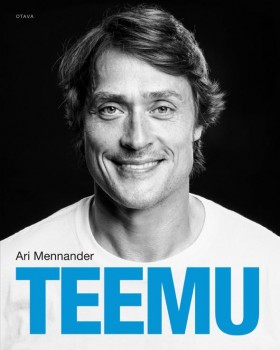
Ice hockey veteran: Teemu Selänne
The September list of best-selling non-fiction compiled by Suomen Kirjakauppaliitto, the Finnish Booksellers’ Association, included books on mushrooming: a popular pastime that, finding fungi for dinner. However, number one was the biography of the most internationally successful (NHL) ice hockey player so far, Teemu Selänne (recently retired), entitled Teemu (Otava).
Ilosia aikoja, Mielensäpahoittaja (‘Happy times, you who take offence’, WSOY) is the third book in the popular humorous series by Tuomas Kyrö, and it tops the September list of the best-selling Finnish fiction.
Kyrö’s protagonist, this mielensäpahoittaja, the one who ‘takes offence’, is a 80-something grumpy old man living in the countryside and opposing most of what contemporary lifestyles are about. For in the olden days everything was better: for example, food wasn’t complicated and cars were easily repairable.
Apparently Finns can’t get enough of this grumpiness. What began as short monologues written for the radio has become a series of books, and Kyrö’s Mr Grumpy has also appeared on the stage as well as on the screen: the first night of the film, also entitled Mielensäpahoittaja (directed by Dome Karukoski), took place in September. Will there be much more to come, we wonder.
Number two was the latest thriller by Ilkka Remes (pseudonym) with a book entitled Horna (‘Hell’, WSOY), and on third place was the new book by Anna-Leena Härkönen, a novel about a married couple who become lotto winners, Kaikki oikein (‘All correct’, Otava).
First place of the best-selling books for children and young people was occupied by the Moomins – not the original story books or comics by Tove Jansson though, but by other ‘Moomin writers’ and illustrators, whom there have been surprisingly many after Jansson’s Moomin art was made reproducible; this time the book is entitled Muumit ja ihmeiden aika (‘The Moomins and the time of wonders’, Tammi). Another cause of wonder, we think.
Furies and angels: best-selling books in August
10 September 2014 | In the news

On the August list of the best-selling non-fiction compiled by Suomen Kirjakauppaliitto, the Finnish Booksellers’ Association, are two translated books on furies and angels: number two is Hitler’s Furies: German Women in the Nazi Killing Fields by Wendy Lower (Atena), number three is Love from Heaven (Otava) by Lorna Byrne, an Irishwoman and writer of books about angels who claims she has met the Archangel Michael.
At the top of the list, however, was Apulanta, the story of the Finnish rock band of the same name (it translates as ‘Fertilizer’) by Ari Väntänen (Like).
The top three Finnish fiction books were new: the latest novel by Tuomas Kyrö, Ilosia aikoja, Mielensäpahoittaja (‘Happy times, the one who takes offence’, WSOY), a new novel, about a couple who wins the lottery by Anna-Leena Härkönen, Kaikki oikein (‘Direct hit’, Otava) and a first novel, Kissani Jugoslavia (‘My cat Yugoslavia’, Otava), by Pajtim Statovci (born 1990), the story of an Albanian family arriving in Finland as refugees.
Mielensäpahoittaja is a noun: Kyrö’s protagonist is an 80-something man who lives in the countryside and opposes most of what contemporary lifestyles have to offer. His favourite sentence used to begin with ‘so I took offence when…’ This is the third book in the surprisingly popular series, and Kyrö’s Mr Grumpy (who originates from monologues written for the radio) has also appeared on the stage as well as on the screen: the first night of the film Mielensäpahoittaja (directed by Dome Karukoski) took place in early September.
The book and the rose
3 May 2012 | In the news
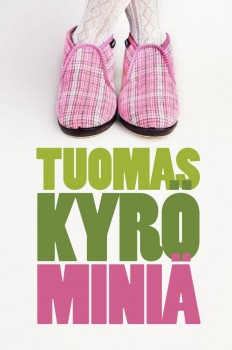 The twenty-third of April – Shakespeare’s birthday – is the international day of the book and the rose. The tradition derives, however, not from England but from Barcelona, where the tradition was for men to give women roses while women gave men books.
This year Finnish booksellers decided to celebrate the occasion by publishing a new novel which was given for free to all customers who made a purchase worth €10. This was the only way to get hold of a copy; the print run was 3,000 copies.
The chosen work was a new novel by Tuomas Kyrö, entitled Miniä (‘Daughter-in-law’). The narrator is the daughter-in-law of the main character of Kyrö’s two popular novels, Mielensäpahoittaja (‘Taking offence’) and Mielensäpahoittaja ja ruskeakastike (‘Taking offence: the brown sauce’). The grumpy old man from the country comes to stay with his son and his daughter-in-law in the capital – which inevitably results in practical (and mainly comical) discordance of various sorts.
The price of success
31 December 2007 | Authors, Reviews

Tuomas Kyrö. Photo: Veikko Somerpuro/WSOY
A Finnish novel – or any fictitious work – that contains inaccurate historical facts can evoke bafflement in its readers, and public disapproval can follow from these ‘errors’. Finnish readers are unaccustomed to postmodernist stylistic devices. The details connected with Finnish wars, in particular, are examined under a magnifying lens.
The fourth novel by Tuomas Kyrö (born 1974), Benjamin Kivi (WSOY, 2007), stretches the boundaries of realism with its tale of a 100-year-old adventurer, written in the style of a memoir. It encompasses changing identities, periods of societal crisis, and war, which protagonist Benjamin Kivi calls simply ‘the killing’. In Finland we’re accustomed to regarding the Winter War (1939–40) and the Continuation War (1941–44) as honourable efforts to defend the country from the Soviet Union. More…