

Search results for "jarkko laine prize/2010/10/mikko-rimminen-nenapaiva-nose-day/2010/02/let-us-eat-cake/2009/2009/09/what-god-said"
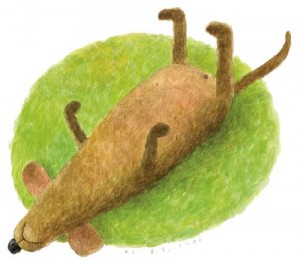
Hannele Huovi: Karvakorvan runopurkki [Furry pooch’s jar of verse]
4 March 2009 | Mini reviews
 Karvakorvan runopurkki
[Furry pooch’s jar of verse]
Kuvitus [Ill. by]: Kristiina Louhi
Helsinki: Tammi, 2008. 79 p.
ISBN 978-951-31-3974-2
€ 23.30, hardback
‘Methinks,/ said the sausage dog / who loved eating verse, that / poetry is tastier than bone’. Hannele Huovi (born 1949) has written poetry, books for children, novels and fables. The masterly rhymes of Finland’s grand old lady of children’s poetry, Kirsi Kunnas (born 1924), are hard to match, but Huovi comes close. For her, Finnish is easily pliable; her rhymes do not try to be too clever, her tone of voice is warm and humorous, and often the poems are little stories in the tradition of nonsense verse. Huovi’s sense of humour matches perfectly with Kristiina Louhi’s pastel pictures which often add surprising dimensions to the poetic stories. ‘So complete / trust can be: / with your paws skywards, /with your belly bared, you can / lie in the grass.’
The politics of difference
17 June 2011 | Non-fiction, Tales of a journalist

Right or wrong, my country? Illustration: Joonas Väänänen
Right or wrong, my country? Illustration: Joonas Väänänen
Big electoral turnouts are generally considered a good thing. But, writes columnist Jyrki Lehtola, in Finland the fact that the vote went up in the last Finnish general election caused a revelation. Educated urbanites and the media (perhaps near enough the same thing), are shocked by how 20 per cent of their fellow Finns think – and the ramifications caused tremors all across Europe
Listen up. Diversity is a resource. Except of course if it’s the sort of diversity that is a resource for the wrong people.
That sort of diversity isn’t the least bit nice. In Finland in the spring, we ran into the sort of diversity that even got the rest of Europe to start worrying. Out in the thickets and forests, diverse people had been springing up in secret, people of whose existence we urbanites were entirely unaware.
And they threatened to bring Europe down. Europe. Which was a bit much. More…
New from the archives
5 May 2015 | This 'n' that
Runar Schildt
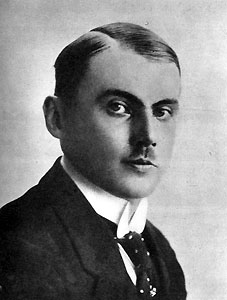
It’s a period that seems sometimes to have disappeared from view – Helsinki in the final years of Russian rule – but Runar Schildt’s short story brings it vividly to life. The characters – Sahlberg the baker and his mortal enemy, Johansson from the customs service; the restaurant-owner Durdin and Elsa, daughter of a commissionaire at the Senate, around whom the story revolves – spend a lazy but sexually charged summer Sunday in their villas just outside Helsinki, their hidden emotions all too familiar to those of a later age…
As the story’s translator, the formidably erudite George C. Schoolfield, remarks in his introduction, Runar Schildt (1888-1925) has often been hailed as a Finland-Swedish classic. There’s a quality of aesthetic decadence in his work that makes him very much a product of his time. There’s nothing, in Raketen, with its solid, belle epoque atmosphere, to foreshadow the change that was so soon to engulf Finland, with the granting of independence in 1917 and the bitter civil war that followed. Schildt was in Helsinki during the months when it was ruled by the Red side in the civil war; afterwards, he served as a clerk in the terrible detention camp for Red prisoners of war on Suomenlinna island. It was a new world, in which all the old certainties were questioned. Timid, conservative and something of a dandy (his friend Hans Ruin said he always looked as if he had stepped out of a bandbox), Schildt may well have felt out of tune with the times. By 1920 he had ceased to write the prose at which he excelled, and had turned to drama, with which he had much less success.
Schildt shot himself, in 1925, in the courtyard of the old university clinic in Helsinki. He was not yet 40.
Cycling through a rainbow
30 March 2006 | Fiction, poetry
From Läsning för vandrare (‘Reading for hikers‘, Schildts, 1974). Introduction by Maria Antas
1
The people I was fond of have been
     wiped from my memory.
Do you remember a friend, perhaps?
     Be glad, then, you are still alive.
7
The one who has owned a room in
     someone's heart
is easily reconciled with the thought
     of eventually
gaining a room in the earth's bosom.
8
Love is only a preparation. More…
Around zero o’clock
30 June 1996 | Archives online, Fiction, poetry
Poems from the collection Musta oli valkoinen (‘Black was white’, WSOY, 1995). Introduction by Jukka Koskelainen
When?
			         When I learned to pay attention
to unlikely reptiles
to surprising glacier waters
to nightgowned rejections
to wall-mounted assault rifles
to traveling angels
to lips shaped like promises
to mussels swimming in dreams
to crashes, rules and funerals
to shady, secret sacristies
to the indecisiveness of dancing shoes
to the immeasurable indifference of looks like bullets
to spring, myself and seductions slow as clouds
			                                     all of these
					                                         between the words,
was that when the difficulties began?
About the third
To stop waiting, the second step.
To be born of woman. The first.
The price of the word and the moon
	    are determined with the same weightless scales.
The third we don’t know about, don’t ask.
On the ear’s walk
The landscape's deepest melody flowed on
	     over the banks of the resounding Middle Ages.
Do you hear, do you hear it
the way a snail hears,
that snail there who teaches
learns from the earth’s replies, learning
the snail hears and gets there,
gets there for sure
even the slow one gets there,
even the slower one will
then get there, it will
surely get there, into the pot.
Herbal wisdom
New churches, old
	                       harmonized organs and repetitions
like a prayer or a psalm for seven voices.
Against scant blue
	               a hundred people
believe in pilots and safety belts. The wind
	                                                 just a little too strong.
But my heart it was, that loaded institution
through four expectations it came
	                                               here. Exactly here
where you, with both hands,
	               almost inaudibly
intended to break
	              the fragrant life of a sprig of thyme.
That soundless break, the speech of dust, said all
			                                  I understood.
Around zero o’clock
Just be the shape of an angel, be, be
	                be, be a screeching
   hatful of sleepless night	it dresses
even the seagulls in diver's suits, be
	      be lazy intellect and come
to bed
be manager of nightmare
	  and conqueror of desire
to say
Be the disease of saying 	Be the lifelong remedy
	   which 	                        whether you take it or not
	              certainly kills
Be the one who no longer is
	     a dab of the freedom of the void, a flight of three strides
out of thought's night	                    be
Because I’m jading
Translated by Anselm Hollo
On subterranean spaces
30 August 2013 | Authors, Reviews

Zinaida Lindén. Photo: Janne Aaltonen
A melancholic diplomat’s wife in Turku recalls her childhood in 1970s Leningrad. This is how one might describe the new novel by Zinaida Lindén – then one might be surprised encountering nuance after nuance that challenge our expectations.
The melancholy in Lindén’s novel isn’t soft and misty; it is sharp and metallic. The life of the protagonist Galina, a diplomat’s wife, is far from glamorous, and consists mostly of standing over the ironing board in the family’s one-bedroom flat, ironing shirts for her conscientious and overworked husband at the consulate. The 1970s Leningrad of her memories is not an arena for ideology or culture, but serves as the backdrop for an intimate familial drama, in which the child always remained on the outside and was eventually left alone after the death of her parents. More…
Lassi Nummi in memoriam 1928–2012
16 March 2012 | In the news
Lassi Nummi. Photo: Jouni Harala
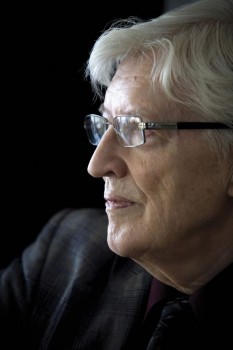
Poet and author Lassi Nummi died on 13 March at the age of 83.
His first collection of poems, Intohimo olemassaoloon (‘A passion for existence’) appeared in 1949. Nummi worked as a journalist, chairman of the Finnish PEN Club and as a member of the Bible translation committee.
Nummi published a couple of prose works and more than two dozen collections of poems; in an interview by Tarja Roinila* he said he was ‘a prose writer who has strayed into poetry’ and that he regarded himself ‘a fairly old-fashioned poet’.
Nummi attempted to find a synthesis between traditionalism and modernism – the prevailing ‘ism’ in the 1950s Finland – and wrote both metrical, traditional and speech-like, free verse.
Religious, philosophical and existential themes are found in his poetry, strongly featuring imagery of nature, music and travelling. His poems have been translated into six languages.
Nummi’s two sons, Markus and Ilari, became artists as well – Markus, an author, Ilari, a filmmaker.
Above and through everything
Above and through everything
the thin web of life. On an evening like this,
its strands
are stretched to breaking
under the moment’s significange, the light’s
weight. So much empty space,
so much lovely desolation
freed from significance
in us, in the world,
it makes you grow faint.
And here, all dreams have to be dreamed by oneself!
When I am dead, a stone
will dream my dreams.
From Hengitys yössä (‘Breathing in the night’, 1995), translated by Anselm Hollo , *) published in Books from Finland 1/1998
A personal appreciation
31 December 1982 | Archives online, Authors
Christer Kihlman. Photo: Magnus Weckström
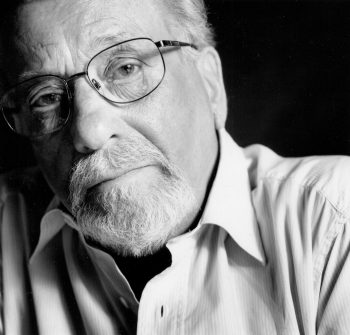
Almost twenty years ago, a book arrived on my table from a London publisher, a large book called Den blå modern, by someone called Christer Kihlman, of whom I had never heard. Although the book came from Stockholm, in fact it turned out to be the work of a Finland-Swedish writer, perhaps the second or third I had ever read.
The book was to me remarkable. I had never read anything quite like it before, and I have been reading adult fiction for over fifty years. Looking back now in my ancient tatty files, I see I typed three single-spaced pages of synopsis and two and a half of comment, and even translated several extracts, not something I can normally afford to do. This was partly because I was impressed with the book, partly because it was almost impossible to explain the style, or styles, in which it was written, and also it was very difficult to say succinctly just what kind of book it was. The blurb called it a ‘family chronicle’, which in a way it was, but in all other respects it was nothing like what we normally call a family chronicle, anyhow of the kind so familiar from the United States. Two sons trying to live up to their father’s image of a third son, who is dead; but in fact it seemed to me to be the story of one man’s struggle with himself and the agony of existing in a world in which pain and hatred and suffering and despair are constantly victorious over love. In the book was almost everything any thinking person struggles with in his or her mind during a whole lifetime, a search for some kind of meaning in a life that appears meaningless. More…
Reality versus morality
30 September 1982 | Archives online, Authors
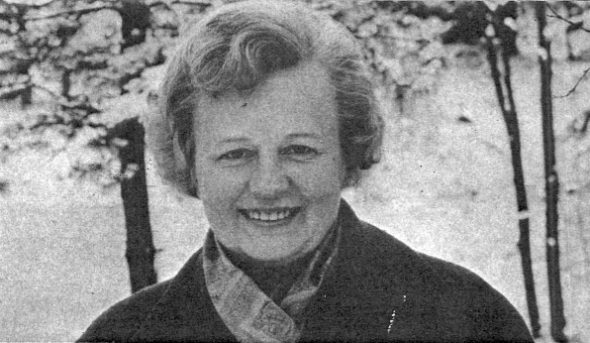
Eila Pennanen. Photo: Anonymous (Suomen Kuvalehti 1965) via Wikimedia Commons
Reviewing Eila Pennanen‘s second collection of essays, which appeared earlier this year under the delightfully ambiguous title of Kirjailijatar ja hänen miehensä (‘The authoress and her… man? … men? … husband?… husbands?’), a critic called attention to the heading she had chosen for her essay on Bernard Malamud: ‘Malamud’s ignoble hero’. His comment on this was that the moral judgment implicit in such a title would be both pointless and valueless if Pennanen had maintained it with logical consistency throughout the essay. If in fact she does no such thing, it is because she knows how to look at a character, however ignoble, with an eye for subtleties and a great deal of psychological insight. This is something one often notices about Eila Pennanen: she is apt to begin by labelling somebody or something ‘good’ or ‘bad’, and even to sound quite defiant about it, but she is never, in the end, content to leave it at that. I once heard her give a lecture on Joel Lehtonen. She startled her audience by the vehemence with which she avowed the feelings of loathing or sympathy aroused in her by characters or events in Lehtonen’s books. Her cheeks blazed as she talked. Then, just as unexpectedly, she chided herself for exaggerating, took back a lot of what she had said, laid bare the reasons for Lehtonen’s contradictoriness, and left her hearers in a condition of fruitful perplexity. Whatever they may have thought or felt about the ‘moral approach’ to criticism, they were left in no doubt as to the wit and intelligence of its leading Finnish exponent. More…
Juha Mannerkorpi (1915–1989) and the metamorphosis of the self
30 June 1982 | Archives online, Authors
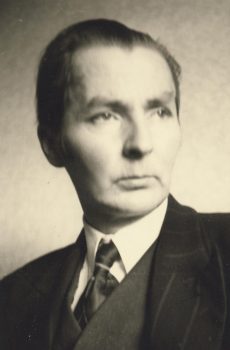
Juha Mannerkorpi. Photo: SKS Archives
The chapter, entitled ‘About calendars and other documents’, is a section of Juha Mannerkorpi’s book, Sudenkorento eli erään pakaraisen esittävät seikkailut (‘The dragonfly, or the representative adventures of a certain buttocks’, 1970). The main character is a writer, Caleb Buttocks, a long-term diabetic who can get around only on crutches and spends most of his days sitting in his room smoking and drinking beer. Pain and depression are his daily companions.
In the beginning, Caleb Buttocks attempts a real adventure: lifting himself out of the swamp like Baron von Münchhausen and going on an outing with his wife. The adventure comes to a bad end; he is not up to it. Thereafter, he has to be content with ‘representative adventures’: dreams, memories, and nightmares which are interwoven with the present time.
Sudenkorento is largely a first-person narrative which operates on many levels and the language of which is exceptionally rich. The narrator makes use of many different elements: fairy tales, poems, fantasies realistic narratives, and reminiscences. Sudekorento can be considered the most important book by Juha Mannerkorpi (1915-1980), and represents a synthesis of his earlier writing, which includes some twenty works since 1946: poems, plays, radio-plays, novels, and short stories. After the publication of Sudenkorento Mannerkorpi wrote a short diary-like work, Päivänsinet (‘Heavenly blue’, 1979), a study of the will to live in the shadow of a serious illness, diabetes, which is a subject he often dealt with in his work. Characteristic of Mannerkorpi’s writing are his analyses of the relationship of the self with the world and his explication of existential questions. In the European literary milieu, he is closest to Camus, Sartre and Beckett, all of whom he has translated into Finnish. More…