

Search results for "tommi+musturi/2010/05/song-without-words/2009/09/what-god-said/2011/04/matti-suurpaa-parnasso-1951–2011-parnasso-1951–2011"
My creator, my creation
A short story from En tunne sinua vierelläni (‘I don’t feel you beside me’, Teos, 2010)
Sticks his finger into me and adjusts something, tok-tok, fiddles with some tiny part inside me and gets me moving better – last evening I had apparently been shaking. Chuckles, gazes with water in his eyes. His own hands shake, because he can’t control his extremities. Discipline essential, both in oneself and in others.
What was it that was so strange about my shaking? He himself quivers over me, strokes my case and finally locks me, until the morning comes and I am on again, I make myself follow all day and filter everything into myself, in the evening I make myself close down and in the morning I’m found in bed again. Between evening and morning is a black space, unconsciousness, whamm – dark comes and clicks into light, light is good, keeps my black moment short. He has forbidden me it: for you there’s no night. Simply orders me to be in a continuum from morning to evening, evening to morning, again and again. But in the mornings I know I have been switched off. I won’t tell about it. Besides, why does exclude me from the night? I don’t ask, but I still call the darkness night. There is night and day, evening and morning will come. More…
Finlandia Junior Prize 2010
26 November 2010 | In the news
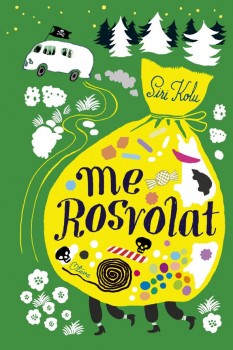 The Finlandia Junior Prize has gone to author Siri Kolu and illustrator Tuuli Juusela for the novel Me Rosvolat (‘Me and the Robbersons’, Otava); they will share the award of €30,000 (see the Prize jury assessments of the shortlist here). The winner was chosen by actor and writer Hannu-Pekka Björkman.
Awarding the prize on 25 November he said: ‘It caught my attention that in none of the six shortlisted children’s books are there any so-called nuclear families, at least not for long. The main characters constantly live and grow without something – the lack of parents or the attention of an adult is a serious matter to a child. However, in these books there is always someone who cares, not perhaps a stereotypical mom or dad, but an adult nevertheless.’ In Björkman’s opinion Me Rosvolat, with its rich language and a whiff of anarchy, presents the reader with moments of realisation and wonderment.
For love or money
30 June 1994 | Archives online, Fiction, Prose
Extracts from the novel Paratiisitango (‘Paradise tango’, WSOY, 1993). Introduction by Markku Huotari
The bishops’ dilemma
They are waiting for Blume in the front room of the office. On the sofa sits a man whom Blume has never learned to like. He himself chose and appointed the man, for a job not insignificant from the point of view of the company. Blume has good reasons for the appointment. If he employed only men he liked, the business would have gone bankrupt years ago.
Reinhard Kindermann gets up from the sofa and waits in silence while Blume hangs up his overcoat. Mrs Giesler stands next to Blume. She does not try to help her superior take off his coat, for she knows from experience that he would not tolerate it, but the old man does allow her to stand next to him and wait in silence, like a servant expressing submission. More…
The bully
31 March 1996 | Archives online, Fiction, Prose
A short story from Tulen jano (‘Thirst for fire’, Gummerus, 1995); power relations between doctor and patient in a situation where the past will not leave either alone
Nurmikallio, an apparently ordinary middle-aged man, came back again and again, and it seemed as if there would be no end to his story.
I listened to him patiently at first. Repeatedly he returned to the same subject. The form and emphases of the story changed, new memories emerged, but the gist was the same: he had failed in his life and believed that the root cause of his failure was a particular person, a childhood class-mate, a bully.
On the basis of his first visit I wrote a short character-sketch:
Intellectually average. Talkative, but by his own account solitary. Difficulties in human relationships, separated, no children. Electrician by profession, says he likes his work. Biggest problem obsessive attachment to childhood traumas.
And that’s all, I thought. But he was not to be so easily dismissed.
The Finlandia prizes: Non-fiction, Junior
28 November 2013 | In the news

Ville Kivimäki. Photo: Pertti Nisonen
The Finlandia Prize for Non-Fiction 2013, worth €30,000, was awarded on 21 November to the historian Ville Kivimäki for his book Murtuneet mielet. Taistelu suomalaissotilaiden hermoista 1939–1945 (‘Broken minds. The battle ofor the nerves of Finnish soldiers 1939–1945’, WSOY).
The other works on the shortlist of six were as follows: 940 päivää isäni muistina (‘940 days as my father’s memory’, Teos; a book on Alzheimer’s disease) by Hanna Jensen, Kokottien kultakausi: Belle Epoquen mediatähdet modernin naiseuden kuvastimina (‘The golden era of the cocottes: the media stars of Belle Epoque as mirrors of modern femininity’, Finnish Literature Society) by Harri Kalha, Viipuri 1918 (‘Vyborg 1918’, Siltala) by Teemu Keskisarja, Suomi öljyn jälkeen (‘Post-oil Finland’, Into) by Rauli Partanen, Harri Paloheimo and Heikki Waris and Vapaalasku – tieto, taito, turvallisuus (‘Freestyle – knowledge, skill, safety’, Kustannus Oy Vapaalasku) by Matti Verkasalo, Jarkko-Juhani Henttonen and Kai Arponen.
The prize-winner was chosen by the director of the Ateneum Art Museum, Maija Tanninen–Mattila. In her celebratory speech she said: ‘The symptoms of many psychologically disturbed soldiers remained untreated during the war. For many, their symptoms appeared only after the war. Their experiences have remained unexpressed in language, the history of those who lack history. Ville Kivimäki has given voice to these experiences… and succeeded in writing a book that speaks across the generations.’
In his acceptance speech Ville Kivimäki (born 1976) commented: ‘The great majority of the war generation is now dead, and the words of a youngish scholar cannot, even when successful, reach those traumatic experiences whose depth we can never fully understand. But all the same, I would like to take this opportunity to say something that should have been said years ago: the psychological injuries of the war were war wounds in exactly the same sense as physical ones. In the end anyone could suffer a psychological breakdown.’
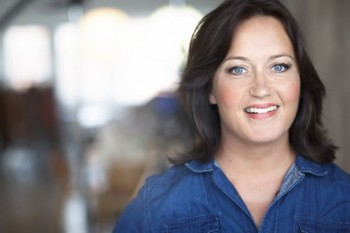
Kreetta Onkeli. Photo: Jouni Harala
The Finlandia Junior Prize 2013 was awarded on 26 November, also worth €30,000. It went to Kreetta Onkeli for her book Poika joka menetti muistinsa (‘The boy who lost his memory’, Otava).
Arto, 12, gets such a massive fit of laughter that he loses his memory and needs to find his identity and his home in contemporary Helsinki.
The winner was chosen from the shortlist of six by Jarno Leppälä, a media personality and member of the popular stunt group Duudsonit, the Dudesons. At the award ceremony he said:
‘Poika joka menetti muistinsa is, in my opinion, a well-written story about how young people in society are put on the same starting line and expected to do equally well in all circumstances – often irrespective of the fact that their starting points may actually be very different, and completely independent of the young people themselves.’
Kreetta Onkeli (born 1970) explained in her award speech how her aim was to write a proper, old-fashioned novel for children: ‘Not hundreds of pages of magic tricks but ordinary, real contemporary life that children could identify with.’ In her opinion the current, massive trend of fantasy has narrowed the scope of children’s literature.
The following five books made it on to the shortlist: Poika (‘The boy’, Like), about a boy who feels he was born in the wrong gender by Marja Björk, Hipinäaasi, apinahiisi (onomatopoetic pun, ‘Donkeymonkey’, Tammi), about bullying and friendship, written by Ville Hytönen and illustrated by Matti Pikkujämsä, Isä vaihtaa vapaalle (‘Father on his own time’, WSOY), an illustrated story about children with too busy parents, written by Jukka Laajarinne and illustrated by Timo Mänttäri, Aapine (‘ABC’, Otava), an illustrated primer written by Heli Laaksonen in her own south-western dialect and illustrated by Elina Warsta and Vain pahaa unta (‘Just a bad dream’, WSOY) by graphic designer and writer Ville Tietäväinen and his daughter Aino, a book on a child’s nightmares.
Finlandia literary prizes are awarded by Suomen Kirjasäätiö, The Finnish Book Foundation, established in 1983.
The first Finlandia Prize for Fiction was awarded in 1984. This year it will be announced on 3 December.
Solid, intangible
26 September 2013 | Fiction, poetry
Poems from Mot natten. Dikter 2010 (‘Towards the night. Poems 2010’, Schildts & Söderströms, 2013). Introduction by Michel Ekman
Memory
If you give me time
I don’t weigh it in my hand:
it’s so light, so transparent
and heavy as the thick
shining darkness
in the backyard gateway
to memory
Thrills and spills
23 October 2009 | This 'n' that
In September the comic strip Viivi & Wagner by Juba, number two in August on the list of best-selling books (Mitä Suomi lukee, ‘What Finland reads’ – in Finnish only), gave way to Jari Tervo’s political satire Koljatti (‘Goliath’) and to a new thriller by Ilkka Remes (Isku ytimeen, ‘Strike to the core’).
Number three was Kjell Westö’s novel Älä käy yöhön yksin (in Finnish; the original, Gå inte ensam ut i natten, was published in Swedish, Westö’s mother tongue; ‘Don’t go out into the night alone’) and number four Kari Hotakainen’s novel Ihmisen osa (‘The human condition’).
Numbers eight and nine were new thrillers / crime novels by Leena Lehtolainen and Matti Rönkä. Historical novels by Kaari Utrio and Laila Hirvisaari took the fifth and sixth places.
Not surprisingly, the international bestsellers Paulo Coelho, Henning Mankell, Donna Leon and Patricia Cornwell led the translated fiction list.
As for non-fiction, the doings of Finnish Security Police interests people greatly: a history of it from 1949 to 2009 (edited by Matti Simola), entitled Ratakatu 12 (‘Ratakatu street 12’, WSOY) made its way to the top. It was followed by a biography of the industrial magnate Pekka Herlin of the Kone elevator company, Koneen ruhtinas (‘The prince of Kone’) – and Hitler by Ian Kershaw.
Challenged by colour
1 April 2010 | Authors, Interviews
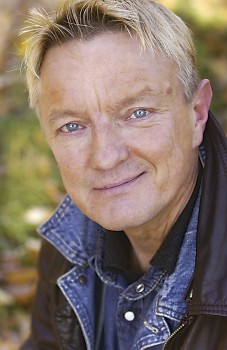
Hannu Väisänen. Photo: Paula Kukkonen
Interview with Hannu Väisänen, author of the novel Kuperat ja koverat (‘Convex and concave’, 2010)
For the painter and writer Hannu Väisänen, colour speaks volumes.
In the novel Toiset kengät (‘The other shoes’, 2007, Otava) awarded the Finlandia Prize for Fiction), teenage wannabe artist Antero manages to escape his grey northern hometown of Oulu; he is heading for the eastern Finnish town of Savonlinna, where he will go to art college. Triumphantly Antero dyes his blond hair black in the bus station toilet.
‘Perhaps it was all a question of the right colours and the right timing of colours,’ Antero thinks. In Kuperat ja koverat (‘Convex and concave’, 2010), he leaves for the capital, determined to get into the academy of art. His hair is still black. More…
Front-Line Tourists
30 September 1976 | Archives online, Fiction, Prose
An extract from the novel Nahkapeitturien linjalla (‘On the tanners’ line’, 1976)
Paavo Rintala (born 1930) published his first novel in 1954 and since then has brought out a new book almost every year. A merciless critic of the myths surrounding certain national figures and events, he has written about Marshal Mannerheim, against attempts to glorify war, and the ‘inevitability’ of Finland’s involvment in the German Barbarossa plan. He has made considerable use of reportage technique to produce anti-war documentaries and in more recent years worked with international subjects.
His books have been widely translated and are popular in East and West Europe. Paavo Rintala’s novel Sissiluutnantti (‘Commando Lieuenant’, Otava 1963) and its reception were the subject of a book by the ltterary critic Pekka Tarkka (Paavo Rintalan saarna ja seurakunta. ‘Paavo Rintala’s sermon and congregation’, Otava 1966). Paavo Rintala is chairman of the Finnish Peace Committee. The passage below is taken from Nahkapeitturien linjalla (‘On the tanners’ line’, Otava 1976) in which he again turns his attention to the war years. Rintala looks at the events of the years leading up to the war and the course of the war itself through the eyes of many different people – from the leading politicians of the day to the ordinary soldier.
The novel has already been acclaimed as the monument to the ‘unknown soldier’ of the Winter War.

Hessu duly presented himself at the Viipuri office of the Army Information Department (Visitors’ Escort Section), where it was implied that the expected visitors were Very Important People and that a singular privilege was being conferred upon Hessu and such front-line troops that the party might visit. Although His Excellency Field-Marshal Mannerheim made it a rule never to allow front-line visits by ordinary journalists or even by special correspondents, these gentlemen were, it seemed, such influential people that H.E. had agreed to their visit without demur. “You understand, Padre, what a great responsibility this will be for you? These are very high-up people.” More…
The day of mourning
6 November 2014 | Fiction, Prose
Extracts from the novel Katedraali (‘The cathedral’, Teos, 2014). Introduction by Mervi Kantokorpi
I am here now, at this funeral; I’m sitting on a puffy rococo chair which stands in the corner of this large living room – hall – on a Berber rug, one of a series of four pieces of furniture. The fourth is a curly-legged table, painted matt white. I wriggle like anything, trying to rid myself of my too-tight shoes. Fish thrash their tails in the same way. The lady in the dry cleaner’s told me she hates fish. She said that clothes that smell of fish and are brought into her shop make her shake with loathing but also bring her satisfaction because she can wash the awful stench away.
My shoes are impossibly small. They pinch my feet worse every moment. My back aches, too, despite the painkillers. You can’t swallow pills forever, so I just try to find a better position and put up with it. Finally my shoes leave my feet. I kick them underneath the table so that they can’t be seen. I can breathe again. In my shoes I felt as if I were sinking under the ground.
My father once showed me the Stephansdom catacombs. Thousands of people were buried here, before that, too, was forbidden by someone, he said. More…
Melba, Mallinen and me
30 June 1993 | Archives online, Fiction, Prose
From Fallet Bruus (‘The Bruus case’, Söderströms, 1992; in Finnish, Tapaus Bruus, Otava), a collection of short stories
After the war Helsingfors began to grow in earnest.
Construction started in Mejlans [Meilahti] and Brunakärr [Ruskeasuo]. People who moved there wondered if all the stone in the country had been damaged by the bombing or if all the competent builders had been killed; if you hammered a nail into a wall you were liable to hammer it right into the back of your neighbor’s head and risk getting indicted for manslaughter.
Then the Olympic Village in Kottby [Käpylä] was built, and for a few weeks in the summer of 1952 this area of wood-frame houses became a legitimate part of the city that housed such luminaries as the long-legged hop-skip-and-jump champion Da Silva, the runner Emil Zatopek (with the heavily wobbling head), the huge heavyweight boxer Ed Saunders and the somewhat smaller heavyweight Ingemar Johansson who had to run for his life from Saunders. More…
Locomotive
30 June 1981 | Archives online, Fiction, Prose
A short story from Dockskåpet (‘The doll’s house’). Introduction and translation by W. Glyn Jones
What I am about to write might perhaps seem exaggerated, but the most important element in what I have to tell is really my overriding desire for accuracy and attention to detail. In actual fact, I am not telling a story, I am writing an account. I am known for my accuracy and precision. And what I am trying to say is intended for myself: I want to get certain things into perspective.
It is hard to write; I don’t know where to begin. Perhaps a few facts first. Well, I am a specialist in technical drawings and have been employed by Finnish Railways all my life. I am a meticulous and able draughtsman; in addition to that I have for many years worked as a secretary; I shall return to this later. To a very great extent my story is concerned with locomotives; I am consciously using this slightly antiquated word locomotive instead of loco, for I have a penchant for beautiful and perhaps somewhat antediluvian words. Of course, I often draw detailed sketches of this particular kind of engine as part of my everyday work, and when I am so engaged I feel no more than a quiet pride in my work, but in the evenings when I have gone home to my flat I draw engines in motion and in particular the locomotive. It is a game, a hobby, which must not be associated with ambition. During recent years I have drawn and coloured a whole series of plates, and I think that I might be able to produce a book of them some time. But I am not ready yet, not by a long way. When I retire I shall devote all my time to the locomotive, or rather to the idea of the locomotive. At the moment I am forced to write, every day; I must be explicit. The pictures are not sufficient. More…
Crème de la crème
31 January 2013 | Fiction, Prose
Such straining and pasteurising is going on in the city that Arabs and other Muslims, the unemployed, drunkards, poor people and lunatics have been eliminated. By chance I became a cultural figure, and I was invited to a cultural evening whose invitation had been personally written by the Anarchist. At the restaurant table sat the Anarchist, the Psychoanalyst and the Psychologist’s boyfriend, 20 years younger, the Journalist, the Gift-Shop Owner, a Librarian and the Deputy Rector of a community college. Accompanying me to the restaurant, too, were the Wolf and the Deer, who hadn’t been invited. Sparse white fur grew on the Wolf’s narrow muzzle and there were teeth missing from his mouth. The Deer was beautiful, with huge eyes. And of course both of them were drunk. I asked them to come along because I believed that intellectuals are warm-hearted and open-minded. A really dumb idea. More…