

Search results for "tommi+musturi/2010/05/song-without-words/2009/09/what-god-said/2011/04/matti-suurpaa-parnasso-1951–2011-parnasso-1951–2011"
Funny in favour (again)
8 June 2012 | In the news
The May list of best-selling Finnish fiction titles, compiled by the Finnish Booksellers’ Association, still features two novels about a grumpy old man (see In the news) by Tuomas Kyrö (a grumpy young man): Mielensäpahoittaja ja ruskeakastike (‘Taking offence and the brown sauce’) and Mielensäpahoittaja (‘Taking offence’, both WSOY) were number one and two.
Number three was a work by a classic humorist: Veikko Huovinen (1927–2009) was a highly original and versatile writer whose career lasted almost for 60 years. A selection of his short prose from 1950 to 2001, previously unpublished or published in various magazines, appeared in May: Luonnonkierto (‘Nature’s cycle’, Siltala) immediately shot up to the third place on the month’s list. (You’ll find one of these texts coming up next on this site!)
As summer was approaching at last, the non-fiction list featured several books on birds, grilling and cooking – as well as aphorisms and other food for thought, traditionally bought for young people graduating from school.
On presence and absence
30 December 2004 | Authors, Reviews

Photo: Irmeli Jung
The calm, precisely defined atmosphere of Sanna Karlström’s poems is interlined by the fragility and seriousness of the ‘I’, suggesting a certain sorrow. The clarity and purity of Finnish modernism’s tradition shows up in her controlled style; one may detect glimpses of the classically modernist images of Paavo Haavikko (1931–2008) in her poems. Karlström’s collection, Taivaan mittakaava (‘The scale of the sky’, Otava, 2004) does consider ‘the scale of the sky’, but her gaze is more centred on what is close at hand, the small. The ‘scale’ she works on is that of windows and rooms, which reflect both the self and ‘the other’. More…
Animal farm
30 December 2005 | Authors, Reviews

Photo: Miriam Ramirez
Kaarina Valoaalto is a writer who obviously adores rolling around in language – in the same way as one of the dogs in her new novel, Nooakan parkki (‘Noahannah’s barque’, Tammi, 2005):
‘Mother dog gets up off her fat tail and trundles over to the slope in the yard for a bit of a roll around. There’s rough gravelly ice on the bumpy road surface. She rapidly wiggles her rotund body from side to side, thrusting her legs against the kerb to generate enough power, and a contented half-purr half-growl issues from her chest, enough to melt the ice in the most irascible mistress’s heart. This is undoubtedly the sort of thing a mother feels about her baby’s first gurglings.’ More…
The stone’s silence
30 June 2000 | Archives online, Fiction, poetry
From Kiven vaitiolo (‘The stone’s silence’, Tammi, 1999). Introduction by Peter Mickwitz
I buried you
    in an onion field
the way to take care of a love whose stems
suddenly rupture, tubes break
   the earth's covered by
chickweed, goose foot and red-veined
leaves of sorrel, deep down
the inflamed wound, as sand that glints
in the soil, underground
golden domes and weeping under the crust
    I tear
with dry hands the green and you do not hear
    because you are cry and dirt
and onion and God and a man who's been thought
   into the ground
and the sun is wise and hot, underground
the trees' root systems are fishing
    for strength
there is enough left for a sigh
The anchor
31 March 1990 | Archives online, Fiction, Prose
An extract from the novel Leo (Söderströms, 1989). Introduction by Marianne Bargum
A summer quickly goes by and the beginning of autumn rolls merrily away. The middle of October is the time when things start slackening off, the harvest over, the flax brought in and the time for slaughter approaching. It is growing darker and the storm rumbles over the village, howling even more wildly out there in the darkness where the ships are gradually beginning to struggle home.
In stormy weather, we become touchy and angry. We think about those out there, and are irritated by minor matters people safe on the mainland make such a furore about. We conscientiously go to church the nearer autumn looms, and there we pray ardently for all those in peril on the sea. But then we have the pastor in the pulpit, irritable and angry like the rest of us, and he takes the opportunity to give us a reminder.
‘Out there in the storm the skipper calls on God, but when the storm dies down, he gives thanks for his own skill’, he begins. So you can work out what is to follow. Not very edified, we make our way home in the mud, in the cold wind, a shoulder like a wedge ahead of us. More…
The Knife
31 December 1989 | Archives online, Drama, Fiction
First performed in 1989 at the Savonlinna Opera Festival. Veitsi (‘The knife’, 1984) is set in Helsinki. The opera is composed by Paavo Heininen and the libretto is by the novelist, poet, playwright Veijo Meri. Veitsi is not a traditional opera, but ‘music-drama’. Introduction by Austin Flint
ACT I
(Pamppu takes Havinen and the Poet to the Publisher’s office)
PUBLISHER
Hello there, you great novelist!
This is really a surprise,
as though you’d blown the door off its hinges.
PAMPPU
These pages are terrific. Take a look at them. More…
Do not be afraid
30 June 1998 | Archives online, Fiction, poetry
Poems from Älä pelkää (‘Do not be afraid’, WSOY, 1997). Introduction by Jyrki Kiiskinen
Travel preparations
Late Friday night. Strange noises in the yard, someone
bangs on the door to the next stairway. Electricity hums.
I have just come back from the U.S. and France, from Sweden too.
On their channels, people laugh. They are having fun.
They are, nowadays, strange, young, and handsome, each and every one.
We did not have that when I was young. We limped.
We did not talk. We stammered tortuous phrases
and, while embracing, were afraid to be seen.
We did embrace. We clung to one another, expecting
to drown alone in every ninth wave.
I know my place is not here where I am. I think, I try
to construct conclusions. Someone looks over my shoulder.
Slowly the universe was born out of my mother s womb.
I am not responsible for its sudden extinction. On a Friday night.
I let them rule, the beauties and young lovers. My ticket has been written.
it is ready. I have had my shots against fear. I have my passport.
Bulldog
No European he who does not every morning
put on a tie. This morning, European
as I am, I looked at myself in the mirror
and noted that, incontrovertibly, more
and more every day, I resemble a
sad bulldog. Who has ever seen a bulldog smile?
We know we were born into the wrong world,
born to struggle. My bloodshot eyes tell me
I would like nothing better than to bed down m the straw
with my adversary, the bull, and ponder the stars.
Paradise apple
Consciousness is anchored to dark matter
as are the swells to the ocean. It is a quality
of matter, darkness glittering darkness. No need for words,
the overarching multidimensional web is one seamless
thought, not verifiable by observations or signs.
As soon as light penetrates the ambiguity of being,
the fruit falls outside the bounds of paradise.
The first sense
For another moment, you are incomprehensibly close,
you are mental image, you are voice, almost scent.
Only touch is missing, the most elementary of sensations
but precisely the one with which God tested the clay
with which the worm knows itself
with which there is hurt in torture and love,
and with which I miss your retreating appearance,
your tender groin, your rough hand.
(Written after a telephone conversation.)
Translated by Anselm Hollo
Dread and happiness
31 March 1993 | Archives online, Fiction, poetry
A selection of poems. Introduction by Herbert Lomas
Comet
He stands at the edge of the market,
not much to look at himself,
with a stare:
across the black dome a shooting star
draws its portrait – and is not there.
His bag weighs on him heavy –
a hard day's
skychart inside.
He fumbles for... a formula –
some old saw, or a soaring phrase –
     to lay the moment wide.
He’s nailed fast to the world,
but before he goes away –
what did he come here to say? More…
A Note on Nine Contemporary Poems from Finland
31 March 1987 | Archives online, Articles, Fiction, Non-fiction, poetry
Contemporary Finnish poetry, translated and introduced by Anselm Hollo
The last couple of months, it has been my pleasure to browse around in a tightly packed shelf of books of poetry published in Finland in the last five years. On the showing of these, and of the excellent anthology Modern finlandssvensk lyrik (‘Modern Finland-Swedish poetry’, 1980), edited by Claes Andersson and Bo Carpelan, poetry certainly seems to be alive and well in the old homeland. In a way, the sheaf translated here is just first travel notes, individual works that struck my fancy seemed translatable: thus, by no means a ‘representative selection’.
Claes Andersson’s poem ‘When I was born, Helsinki was…’ was quite simply a direct hit (perhaps an unfortunate metaphor in that it deals, in part, with the WW2 air raids on Helsinki) – it brought back personal memories from my early childhood. But beyond those immediate circumstances, it is also a very moving evocation of the magnificent and terrifying world of magic children inhabit. Helena Anhava’s ‘These years…’, with its marvelous image of the great hinge turning in the human psyche at certain points familiar to anyone who has lived into middle age, seemed a fine example of her impressive body of meditative lyric poems, sharing a tenor of wistfulness not uncommon in Finland’s poetry with Bo Carpelan’s ‘You drive up…’, which is also a poem of the pangs of change. In Carpelan’s text, the clash between ‘wonderful clear Vivaldi’ on the protagonist’s car radio and the perceived tawdriness of the environment is beautifully balanced between genuine revulsion for the latter and a self-irony directed against the self-declared ‘finer sensibilities’ of the class that can afford them. Tua Forsström‘s ‘Do you want to hear something’ moves in a lovely dance figure from myth to everyday present: we see the interior world that is Nausicaa’s island shimmering through the exterior in which ‘someone’s/ balcony door whines all night like a cat’. More…
Oh heiferiness and humanness
30 September 2007 | Fiction, poetry
Kesäillan kevyt käsitteellisyys.
III laulu: Suvisimfonia, omistettu Joel Lehtoselle.
‘A summer evening’s slight conceptualness’.
III song: Summer symfony, dedicated to the author
Joel Lehtonen (1881–1934)
From Eros (WSOY, 2002)
A summer evening’s slight conceptualness
Ah summer evening, and its eveningness,
its prodigious wonders and their bridgefulness
when the nightunited seamlessness
steals into one’s heart with restfulness
O heiferiness and humanness,
ah shivering shimmeringness,
innocents’ innocuousness
and vastness with its stresslessness –
five or six chicks of a dabchick,
and deep water, lapfulness.
Our blue sky’s mirrored changefulness!
the spruces’ tall topliness, their tips’ sacredness
the yellow-billed black singer’s flutiness.
Nested cosiness, mutual tootiness! More…
Midwinter in a minor key
23 December 2009 | Letter from the Editors
Finland’s end-of-year celebrations, both Christmas and New Year, take place in a thoroughly muted mode. At noon on Christmas Eve the Christmas Peace is rung out from the mediaeval cathedral in Turku, with the pious and seldom realised hope that peace and harmony will be unbroken for the following twelve days.
It’s true, though, that there’s little of the carousing that characterises Christmas celebrations further south; by and large, people stay behind closed doors, and there’s plenty of time, in the dark mornings and evenings and the brief twilight between them, to eat and drink and sleep – and, for those whose souls are not entirely claimed by the television and food-induced torpor, to read. More…
Poems
31 March 1978 | Archives online, Fiction, poetry
Poems from Laulu tummana tulevi (‘The song comes darkly’, 1976). Introduction by Pentti Saaritsa
1
                      I have longed for you
as the burning heath for rain,
                      I have asked for you
as fingers of moss for shade,
                      I have yearned for you
as the dusty mind for tears,
                      and I have loved you
as distant lightning the dark,
                      I have been in you
as flowering pine in the wind.
The blue will-o’-the-wisps dance,
strangers stitching happiness.
Silvery the spring mornings,
the trumpets bright in summer,
the autumns cranberry-red,
the white legend of winter. More…
Landscapes of the mind
30 June 1986 | Archives online, Fiction, poetry
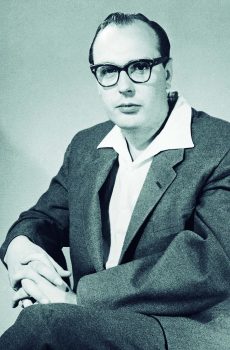
Tuomas Anhava. Photo: Otava
In his book Suomalaisia nykykirjailijoita (‘Contemporary Finnish writers’), Pekka Tarkka describes Tuomas Anhava’s development as a poet as follows: In his first work, Anhava appears as an elegist of death and loneliness; and this classical temperament remains characteristic in his later work. Anhava is a poet of the seasons and the hours of the day, of the ages of man; and his scope is widened by the influence of Japanese and Chinese poetry. As well as his miniature, crystalclear, imagist nature poems, Anhava writes, in his Runoja 1961 (‘Poems 1961’), brilliant didactic poems stressing the power of perception and rebuffing conceptual explanation. The mood in Kuudes kirja (‘The sixth book’, 1966) is of confessionary resignation and intimate subjectivity.
Anhava’s literary inclinations reflect his most important translations, which include William Blake’s The Marriage of Heaven and Hell (1959), selections of Japanese tanka poetry (1960, 1970, 1975), Saint John Perse’s Anabasis (1960), a selection from the works of Ezra Pound, published under the title Personae, and selections from the work of the Finland-Swedish poets Gunnar Björling and Bo Carpelan.

Song of the black
My days must be black,
to make what I write stand out
on the bleached sheets of life,
my rage must be the colour of death, to make my black love stand out,
my nights must be summer white and snow white,
to make my black grief burn far,
since you're grieving and I love you
for your undying grief.
Let the sun's rolled gold gild dunghills,
let the moon's blue milk leak out till it's empty,
              we're not short of those.
The obscure black darkness of the cosmic night
glitters on us enough.