

Search results for "tommi+musturi/2010/05/song-without-words/2009/09/what-god-said/2011/04/matti-suurpaa-parnasso-1951–2011-parnasso-1951–2011"
And the winner is…?
27 March 2012 | This 'n' that
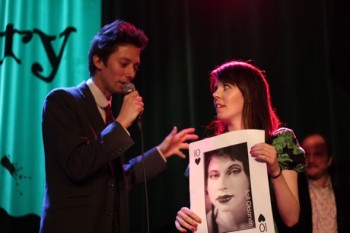
Playing your cards right: Todd Zuniga talks to Riikka Pulkkinen on 20 March in Helsinki. Photo: courtesy/T. Zuniga
The writer Johanna Sinisalo’s words lash the stage like the tail of Pessi the troll in her best-known novel. The novelist Riikka Pulkkinen bursts into deconstructive dance. The singer Anni Mattila translates the poet Teemu Manninen’s explosive poetic frolics into rhythmic dictations and the Finlandia Prize-winning author Rosa Liksom’s conductor’s glittering moustaches see the audience off on a train journey to Moscow.
On a March evening, a Literary Death Match has begun in the Korjaamo Culture Factory in Helsinki’s old tramsheds. The creation of the American author and journalist Todd Zuniga, the Literary Death Match combines an evening of readings with stand-up comedy as well as the judging familiar from reality TV shows.
‘It all started with me eating sushi with two of my friends and talking about some of the readings we’d been to. We all loved literature and loved to listen to writers reading from their own work. But the audience was always the same circle of people. We wanted to expand it beyond literary circles,’ Zuniga explains. More…
Music of the heart
30 December 2003 | Authors

Photo: Irmeli Jung
The short stories of Raija Siekkinen (1953–2004) – she very rarely wrote long fiction – are almost always about women. Something has happened, or is about to happen, vague, unspecified. The change is all-engulfing, and often to do with men. Memories are summoned, or stirred, in the effort to face the future.
‘Throughout the day, memories re-entered her mind, densely, as if in a high fever, drifting from one image to the next, aimless, directionless,’ runs the narrative in the title story from her collection Kuinka rakkaus syntyy (‘How love begins’ 1991), ‘and somewhere behind the clear realisation that moments are long, endlessly expanding, and life is short.’ Resolution, if any is offered, often lies beyond the end of the story, beyond the printed page, in the mind and heart of the reader. More…
Johan Bargum’s analyses
30 June 1982 | Archives online, Authors
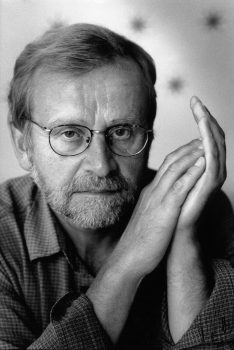
Johan Bargum. Photo: Irmeli Jung
Few Finland-Swedish authors can make a living by their writing. A readership of little more than 300,000 cannot support a large number of writers, and only the most successful books sell more than a thousand copies. Writers have thus no choice but to seek other markets, notably in Sweden or among the Finnish-speaking population.
Both alternatives present problems, but popular writers like Henrik Tikkanen and Christer Kihlman are tending more and more to publish simultaneously in all three markets. Since the publication of his novel Den privata detektiven (‘The private detective’) in 1980, which even became the Book of the Month in Sweden, Johan Bargum has joined this group. Enthusiastic reviewers have since speculated on the possibility of translations into other European languages.
Born in 1943, Bargum grew up in Helsinki and, like so many other writers with their roots in the Finnish capital, he comes from an upper-class family. Politically he belongs to the left, while artistically he has benefited from family tradition: both his grandmother, Margit von Willebrand-Hollmerus, and his mother, Viveca Hollmerus, are well-known authors. Writing as a family tradition is actually quite a common phenomenon in Finland-Swedish literature.
A social conscience
Thanks to his skill as a dramatist as well as a prose-writer, Johan Bargum has been able to live by his pen for the past ten years. Early in the 1970s he had a success with Som snort (‘A cinch’), Bygga bastu (‘Building a sauna’) and Virke och verkan (‘Material and the making’), all specially written for Lilla Teatern, the Swedish-language theatre in Helsinki. In this trilogy he was concerned with the difficulties encountered by small businessman in their struggle against large monopolies. His text is characterized by a strong ironic humour. More…
Poems
31 March 1983 | Archives online, Fiction, poetry
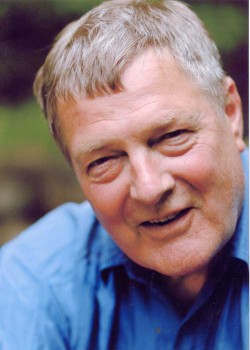
Claes Andersson. Photo: Johan Bargum.
Claes Andersson (born 1937) became, during the 1960s, one of the few authors to free themselves from the modernist tradition so firmly established in Finland-Swedish writing in the 1920s to create poetry of a more distinctly personal kind. Claes Andersson’s poems are coloured by his training as a psychiatrist; he uses technical language in which scientific terms are exploited as an expressive device. His work also sometimes contains black humour and an ironical element calculated to shock the reader; they reflect the contrast between the dream of beauty and love and the grim reality of evil . To date, Andersson has published eleven collections of poems and a considerable number of plays for the stage, cabaret and radio. He has also written three novels, the latest of which – entitled En människa som börjar likna sin själ (‘The person who began to resemble his soul’) – is to appear in the autumn of 1983. For an introduction to Claes Andersson’s work, see Thomas Warburton’s article in Books from Finland 3/1979. Claes Andersson’s poems have recently appeared in translation in Poetry East, Seneca Review, Scandinavian Review and Grand Street.
Loneliness
My love, the moments I spend
in your cunt I forget my
migraine aching joints drinking problem grand mal paralysis
hallucinations pain between the shoulderblades short-
ness of breath hiccoughs dandruff dry skin vertigo bedwetting
impaired hearing chafed lips pustules liver
spots leg sores bleeding gums flatulence
sciatica crying fits thoughts of suicide swol-
len ankles pathological thirst Angst baldness double
vision facial twinges difficulty concentrating
cross eyes burning in the urethra running ears ring
ing ears cramps throat pain itching allergies
strange subcutaneous lumps cold hands nail-
biting hoarseness obesity jealousy vomiting
constipation sleeplessness noctural crying fits
failing memory pus in each nasal sinus and gout.
From Rumskamrater (‘Roommates’), 1974)
Hip hip hurray!
13 June 2014 | This 'n' that
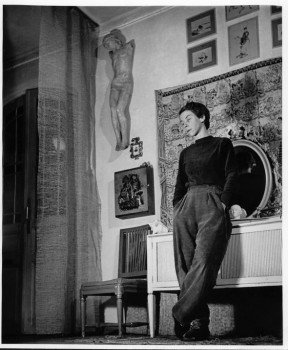
Tove Jansson, 1956. Photo: @Moomin Characters™
The English author of bestselling children’s fantasy books Philip Pullman – of His Dark Materials fame – declares himself a devoted fan of Tove Jansson, the Finnish Moomin-creator and artist, whose stories and novels have been translated into 44 languages.
Pullman has been a fan since the age of eight – now, reassessing Jansson’s work, he notes ‘the perfection of the drawings’. Jansson illustrated her Moomin books, in black-and-white mostly.
Pullman reviews two books in Books for Keeps, the British online children’s book magazine: the newly translated biography of Tove Jansson (1914–2001) by the Swedish scholar Boel Westin (Tove Jansson: Life, Art, Words, Sort of Books, 2014) and Tove Jansson’s memoir from her childhood, Sculptor’s Daughter. ‘Jansson responded to the world with a freshness and originality that have hardly ever been matched in the field of children’s books,’ he writes.
The artist, painter, writer Tove Jansson was born on 9 August – almost a hundred years ago. A major centenary exhibition of her work at the Finnish National Gallery Ateneum is open until 7 September.
Pullman concludes: ‘she could convey all the excitement of wonder as well as the reassurance of comfort and familial love – and [–] evoke a mood of apprehension, loss and mystery. She should have had the Nobel Prize.’
Three cheers – we at Books from Finland agree!
Juhani Niemi on Väinö Linna
31 December 1980 | Archives online, Authors
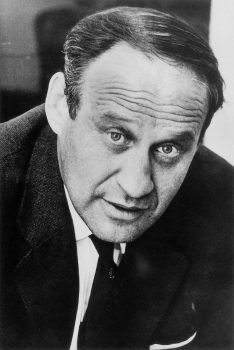
Väinö Linna. Photo: WSOY
Väinö Linna fits squarely into one of the dominant patterns of twentieth century literary development in Scandinavia. Like many writers of the period, Linna came from a working class background and struggled to free himself from that environment through self-education. He had no special interest in politics but his natural leanings were moderately left-wing. He isn’t a ‘political’ writer as such, and it would be simplistic to apply labels to his views. His central interests, which directly affect his style, are a concentration on firstly, acute social observation and, secondly, social analysis. Through novels in this genre – and Linna is without doubt a master – the reader finds a world and all its influences, from the personal to the historical and economic dissected, the casings laid back, the true juxtapositions revealed.
The process can be powerful and effective and Linna’s major works Tuntematon Sotilas (‘The Unknown Soldier’, 1954, English translation 1957) and the trilogy Täällä Pohjantähden alla (‘Here beneath the North Star’, 1960-62) have struck deep into the Finnish national consciousness radically influencing the way events in recent Finnish history have been viewed by a wide audience of readers. Both works have been enormously popular: the characters have so accurately caught the Finnish personality that they have become part of the nation’s mythology. More…
Our fellow creatures
30 June 2004 | Authors, Reviews

Photo: Tiina Itkonen
Hannele Huovi is a compelling story-teller (see page 98) but, again and again, she makes us realise what a strange place our world is – how easily we can slip out of it into dream or psychosis, or cross some concealed frontier into a parallel universe.
Hers is a readable form of surrealism – the art of defamiliarising familiar things by putting them in anomalous environments. The results are absorbing for children but fascinating and entertaining for adults too, an essential of good children’s literature. Because it can be serious without being solemn and can expand consciousness, the genre has engaged very great wits from Jonathan Swift to Lewis Carroll. Eeva-Liisa Manner’s stories (see Books from Finland 1/2004) are another obvious point of contact, but Huovi is brilliantly inventive and completely original. More…
Nature girl: on the poetry of Sirkka Turkka
21 January 2010 | Authors, Reviews
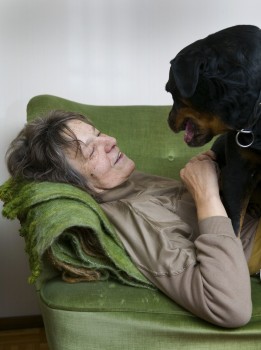
Sirkka Turkka with a friend. Photo: Pertti Nisonen
Sirkka Turkka writes precise, lucid sentences, as if composing a treatise. But her poems often relate utterly loopy things; the work is playful, frisky. It is not based on explication or hidden themes. When it refers to abstract matters, it always couples them with concrete reality, with natural or everyday occurrences. ‘Trees have the snowy faces of ancestors, and on the road where dogs walk in their wind-blasted trousers, silence eats itself like silk.’
The poems contain numerous allusions to literature and culture, including popular culture. The tone can be parodic in these instances, but not critical; rather, a new point of departure is established, as when Turkka writes about Hamlet in her 1970s collection, Yö aukeaa kuin vilja (‘The night opens like corn’). ‘On long, silent winter days, when his father immersed himself in additional studies or demonstrations of learning, Hamlet would shut himself up in his room in order to rewrite history. He colonised countries and swapped their locations. At one stage he even thought of making the sun rise in the West and America encounter Columbus, but he restrained himself.’ More…