

Search results for "tommi+musturi/2010/05/song-without-words/2009/09/what-god-said/2011/04/matti-suurpaa-parnasso-1951–2011-parnasso-1951–2011"
Jukka Laajarinne & Timo Mänttäri: Isä vaihtaa vapaalle [Dad takes time off]
9 January 2014 | Mini reviews, Reviews
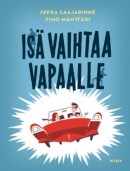 Isä vaihtaa vapaalle
[Dad takes time off]
Kuvitus [Ill. by]: Timo Mänttäri
Helsinki: WSOY, 2013. 31 pp., ill.
ISBN 978-951-0-39780-0
€26.90, hardback
Isä vaihtaa vapaalle is a picture book infused with wry humour which lends itself to both realistic and fanciful readings. In the story, a girl’s father is a secret agent. He’d like to reduce his working hours to spend more time with his daughter, but his employer has other ideas. This book provides an amusing reflection of its time: parents’ job titles often do not mean much to children, so their strange roles and the heavy briefcases parents lug home start to take on a life of their own in children’s minds. The story is free from clichés about gender roles and will entertain boys and girls alike. Timo Mänttäri, making his debut as a children’s book illustrator here, depicts fast-paced, dangerous situations and amusing details. The comic book-style narrative and large, double-page illustrations create suspense in this zippy story. The words and pictures are seamlessly integrated, and the not-overlong text is balanced by the exceptionally strong, expressive visuals.
Translated by Ruth Urbom
Self-made man
1 April 2009 | Extracts, Non-fiction
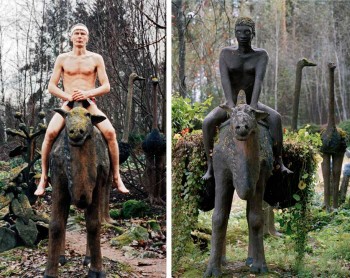
On camelback: in the exotic part of Veijo Rönkkönen’s concrete cosmos there are animals and palm trees, side by side with the living plants of the northerly latitudes. - Photo, left: Veijo Rönkkönen; right: Veli Granö.
Extracts and photographs from Veijo Rönkkösen todellinen elämä / The real life of Veijo Rönkkönen (Maahenki, 2007. Translation: Kirsti Nurmela-Knox)
Veijo Rönkkönen (born 1944) has lived all his life on an isolated, small farm in eastern Finland, Parikkala, less than a kilometre from the Russian border, where he has quietly built a garden inhabited by nearly five hundred human figures made of concrete. Entrance is free.
What have brains got to do with it?
17 October 2013 | Columns, Tales of a journalist
Illustration: Joonas Väänänen
Pondering his changing profession once again, columnist and media critic Jyrki Lehtola feels compelled to present a brief history of the media
Not long ago a certain media company invited me to participate in a panel on brainprints.
I didn’t know what they were talking about, so I agreed. At most I thought it was about the engram left in our collective psyche that yes, we used to have this sort of print media thing that told us what the world was like.
And then we didn’t – look at this picture of print media on my iPad, kids, isn’t it cute?
That wasn’t what it was about at all. Brainprint means all the ways the media can influence us as consumers. In other words, this is one more conversation the media has with itself to convince itself that it has a role to play.
There we sat around a long table once again talking about whether the media is a mirror or a window when maybe we should have been talking about the pile of glass on the ground and whether someone shouldn’t clean it up before someone hurts themselves. More…
Alone here
31 March 1989 | Archives online, Fiction, poetry
Gösta Ågren has published a couple of dozen volumes of poetry; Jär (the title is a dialect word meaning ‘here’) won the Finlandia Prize in 1989. Ågren’s earlier poems have been epic, tinged with Marxism, in the style of Whitman and Neruda. Gradually his has become more strongly linguistically concentrated, developed towards a more conventionally lyrical style questioning the problem of existence. He himself has expressed the matter in one of the paradoxical statements he particularly enjoys: ‘don’t worry / it will never work out.’ Introduction by Erkka Lehtola
Here
Here she came, through the motion
less Sunday of old age.
In headscarf and long skirt
she came, a tall bird
of clothes. She wondered in
the sunlight on the shed-hill
what she should do
so she could die. I must
write about this. For it happens
everywhere, and there are no
questions to answer. But questioning
is already insight. Only
those questions that are never asked
need answers. I remember
that her hands were no longer
part of her. Idle
they lay in her lap. She saw
with her eyes only darkness
and light. It was silent. I
thought: the silence is creeping
through her body. Soon
it will reach her heart. Soon
I will be alone
here. More…
On Sirkka Turkka
30 June 1982 | Archives online, Authors
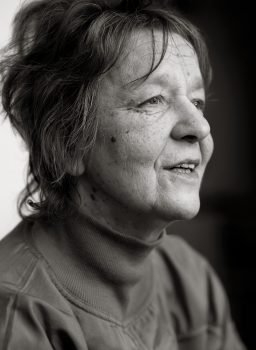
Sirkka Turkka. Photo: Pertti Nisonen
1.
I met Sirkka Turkka towards the end of the sixties; she was a friend of a girl-friend of mine.
We called her Hemuli. Not that she bore any resemblance to the Hemulen of the Moomin books, but she did view the world with the same charitable curiosity as some of Tove Jansson’s immortal characters.
In the evenings Hemuli would speak with wit and wisdom, as the sky darkened, then paled towards dawn. Her words were spontaneous: she talked of nature, of the city, always with a gentle understanding, a compelling magic which dissolved ideas into music, full of a sad beauty, echoes of loneliness, painful and happy memories. She looked life straight in the eye, without illusions.
What I’m saying, Sirkka Turkka was a master of the spoken word. She was a story-teller, a ballad-singer, a reciter of epic tales, creating literature of a kind no longer recognized as literature. More…
Hiding the soul
30 September 2002 | Authors

Photo Irmeli Jung
The world makes people anxious, is the thesis of the writer Petri Tamminen in his new book, Piiloutujan maa (‘The land of the hider’). Well, if this is true, what do you do then? Rage and fight – or go into hiding?
The people in Tamminen’s world choose a hiding place. Fortunately, the world is full of them, and they are not only places, but also states of mind and modes of behaviour.
The writer and freelance reporter Petri Tamminen (born 1966) made his debut with a volume of short prose entitled Elämiä (‘Lives’, see Books from Finland 3/1994), in which people’s life stories are presented in about 200 words; entire decadesflash by in a sentence, or lives are summed up in a single event, often an apparently insignificant one. The comic and the tragic lie side by side, and are often not reached by language, but what the author does not choose to say. Next came the short story book Miehen ikävä (‘Male blues’, 1997) and the novel Väärä asenne (‘The wrong attitude’, 2000), which described the nightmares of a new father, plagued with a horror of bacteria. More…
The private I? Me and my home
17 June 2014 | Reviews
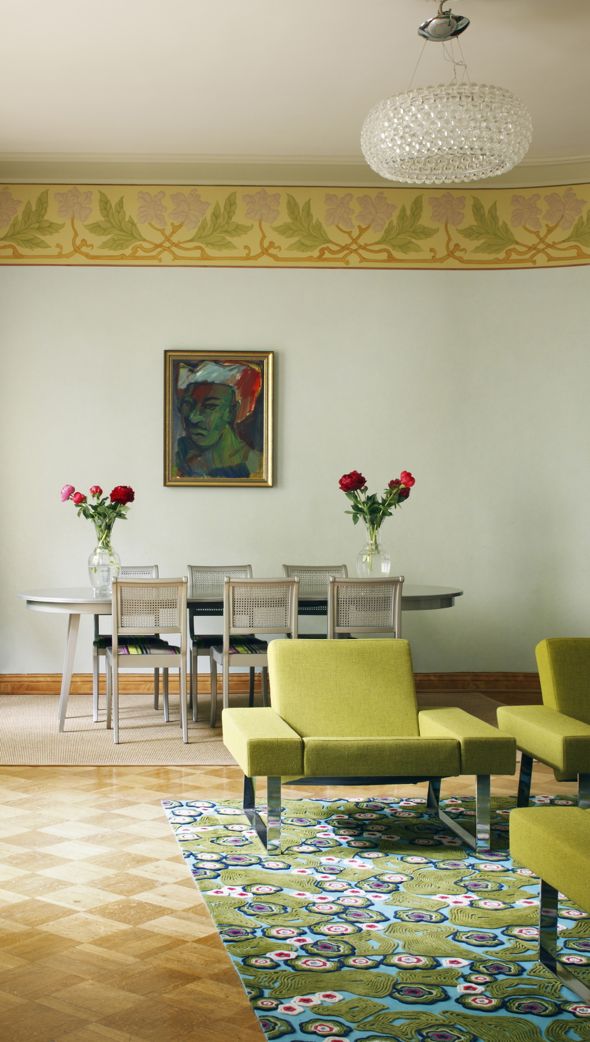
Art Nouveau with a modern twist. Photo: Avaimia ajattomiin suomalaisiin sisustuksiin / Jaanis Kerkis
Avaimia ajattomiin suomalaisiin sisustuksiin
[Keys to timeless Finnish interiors]
Design: Hanni Koroma, text: Sami Sykkö, photographs: Jaanis Kerkis
Helsinki: Gummerus, 2014. 123 pp., ill.
ISBN 978-951-20-9507-0
€32.90, hardback
Katja Lindroos
MOMO. Koti elementissään
[MOMO. The home in its element]
Photography: Riikka Kantinkoski, Niclas Warius
Helsinki: Siltala, 2013. 154 pp., ill.
ISBN 978-952-234-164-8
€32.90, hardback
www.momokoti.fi (in Finnish only)
‘Interior decoration’ has become an extremely popular pastime in Finland – as elsewhere where the standard of living allows it.
Innumerable magazines and blogs keep churning out photos of rooms with large white, cushioned sofas, glossy white kitchen cabinets and white floors on which furniture seems to float forlornly. Walls are decorated with wooden or metallic letters forming words: love; home, sweet home. In the kitchen the bread bin bears the word BREAD. (Bookcases, with actual books, are rare.)
Why is it that in our age which worships ‘individuality’, trends rule? More…
Monikulttuurisen maamme kirja. Suomen kielen ja kulttuurin lukukirja [The book of our multicultural land. A reader of Finnish language and culture]
23 October 2014 | Mini reviews, Reviews
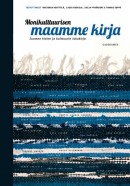 Monikulttuurisen maamme kirja. Suomen kielen ja kulttuurin lukukirja
[The book of our multicultural land. A reader of Finnish language and culture]
Toim. [Ed. By] Marjukka Kenttälä, Lasse Koskela, Saija Pyhäniemi, Tuomas Seppä
Helsinki: Gaudeamus, 2013. 252 pp.
ISBN 978-952-495-253-8
€ 34, hardback
This book opens a fascinating, often entertaining and eminently readable perspective on Finnishness and Finnish culture. It contains short Finnish texts supplied with introductions, from the Kalevala and the writings of Finland’s national author Aleksis Kivi to the present day. There are also Finnish translations of the work of Finnish-Swedish authors. The older texts are drawn from the literary ‘canon’, in works by J.L. Runeberg, Z. Topelius, Juhani Aho, Maria Jotuni, Eino Leino, F.E. Sillanpää, Väinö Linna and Tove Jansson. Among the excerpts that date from more recent times there are even pop and rock lyrics. The writing often throws light on some aspect of Finnishness, sometimes with a critical or ironic note. There is also writing by immigrants. Interspersed with the literary examples are short essays giving the views of experts on subjects like Finnish history, language or sport. Some of the texts conclude with a glossary of unfamiliar words and terms. The explanations are arranged in order of their appearance in the text: for the casual reader seeking the meaning of a word, alphabetical order would have been more practical, though even then some phrases might have remained unnoticed.
Translated by David McDuff
The wisdom of the harvester
30 September 2007 | Authors, Reviews

Eeva Tikka. Photo: Gummerus
In our fast-paced times, many people throw themselves into the fast-flowing current of stimulus. Eeva Tikka has remained on the shore, and on her own two feet. Her works include environmentally polemical tales and poems marked by nature mysticism and religious searching, but she is best known for her short prose.
Tikka (born 1939), who has won four Government Literature Prizes, worked as a biology teacher before beginning her career in writing. Her works dealing with everyday life, human relationships, and northern Karelian nature have been translated into five languages. More…
Another morning, another day
Poems from Unen kaivo (‘The well of dreams’, WSOY, 1936). Introduction by Satu Grünthal
IN THE MIRROR
Strange and truly wondrous
in the mirror you look at me.
All I really know is
that you I cannot be.
With my eyes you survey me,
with my lips you smile, too,
what I see in the mirror
is not me, but you, just you.
Whoever you are – astral morning,
eternal night – in the frame
like a wraith, a ghostly phantom,
invisible I remain. More…
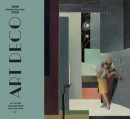
Art Deco / ja taiteet / i konsten / and the arts
6 June 2013 | Mini reviews, Reviews
 Scientific editor: Laura Gutman
Editor: Susanna Luojus
Helsinki: Suomalaisen Kirjallisuuden Seura (the Finnish Literature Society), 2013. 179 p., ill.
Texts in Finnish and Swedish, summaries in English
ISBN 978-952-222-430-9
€38, hardback
This work was published simultaneously with the opening of the exhibition ‘Art Déco and the Arts. France–Finlande 1905–1935’, running at the Amos Anderson Art Museum in Helsinki from March to 21 July. Antiquity was the primary source of inspiration for this broad artistic movement in France, after the breakthrough of Fauvism in 1905. In Finland this antimodern – and yet at the same very modern – movement manifested itself most clearly in industrial art, in the 1920s in classicism and 1930s in functionalism. But from early on, Finnish painters and sculptors also kept an eye on the French art and artists – among them Maurice Denis, the spokesman of the antimodernists. The dialogue between the visual and the performative arts (theatre and dance) in Finland is also examined. Samples of Art Deco architecture are mostly absent, as the emphasis is on painting and sculpture. Some less well-known artists of the period (painter Nikolai Kaario, sculptor and engraver Eva Gyldén) are introduced. The exhibition and the richly illustrated book introduce both Finnish and French works – from many museums and collections in France – of both industrial and fine arts, in pictures and in words by nine specialists, offering the reader fresh and interesting comparisons.
Humankind in disguise
30 September 2002 | Authors, Reviews

Thomas Warburton
Thomas Warburton (born 1918) has for sixty years tossed off words, poems, narratives, translations, literary histories and articles. He transforms Finnish and English literature into Swedish (he has also has translated several of Tove Jansson’s Moomin stories into English) and writes about ancient Japanese culture.
It comes as no surprise that Thomas Warburton’s latest book is called Förklädnader (‘Disguises’). Having such a long experience he knows how to get under the skin of so many literary characters in order to draw forth their stories. More…
Advanced search
31 May 2016 |
You can search for texts using author names or free search terms, and filter categories or tags.
Find texts matching either just one search term (OR query) or require all words to appear (AND query). Use quotes when searching for phrases, for example “search phrase”.