

Search results for "tommi+musturi/2010/05/song-without-words/2009/09/what-god-said"
The private I? Me and my home
17 June 2014 | Reviews
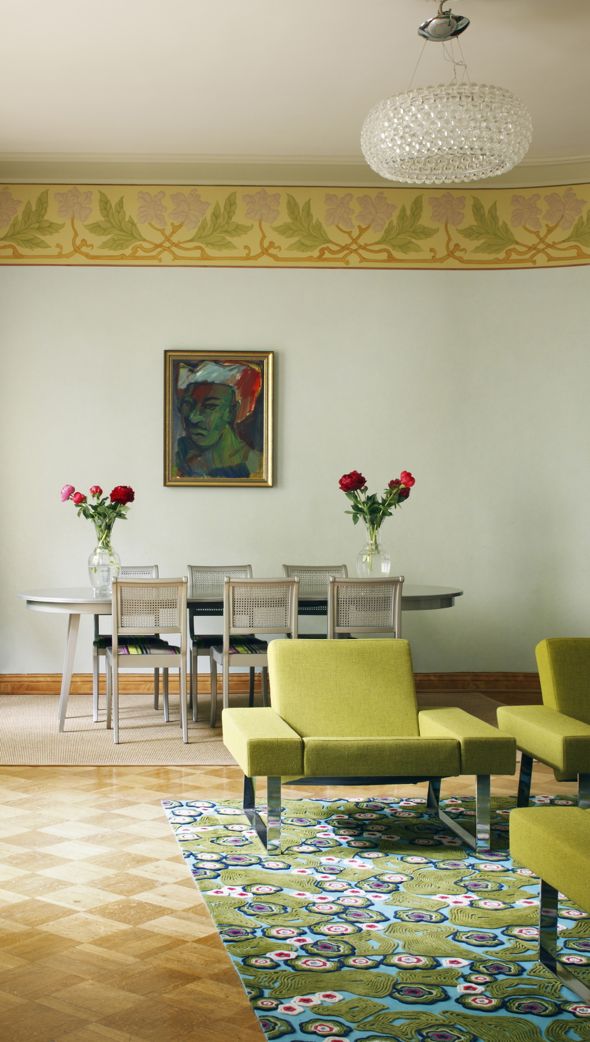
Art Nouveau with a modern twist. Photo: Avaimia ajattomiin suomalaisiin sisustuksiin / Jaanis Kerkis
Avaimia ajattomiin suomalaisiin sisustuksiin
[Keys to timeless Finnish interiors]
Design: Hanni Koroma, text: Sami Sykkö, photographs: Jaanis Kerkis
Helsinki: Gummerus, 2014. 123 pp., ill.
ISBN 978-951-20-9507-0
€32.90, hardback
Katja Lindroos
MOMO. Koti elementissään
[MOMO. The home in its element]
Photography: Riikka Kantinkoski, Niclas Warius
Helsinki: Siltala, 2013. 154 pp., ill.
ISBN 978-952-234-164-8
€32.90, hardback
www.momokoti.fi (in Finnish only)
‘Interior decoration’ has become an extremely popular pastime in Finland – as elsewhere where the standard of living allows it.
Innumerable magazines and blogs keep churning out photos of rooms with large white, cushioned sofas, glossy white kitchen cabinets and white floors on which furniture seems to float forlornly. Walls are decorated with wooden or metallic letters forming words: love; home, sweet home. In the kitchen the bread bin bears the word BREAD. (Bookcases, with actual books, are rare.)
Why is it that in our age which worships ‘individuality’, trends rule? More…
Monikulttuurisen maamme kirja. Suomen kielen ja kulttuurin lukukirja [The book of our multicultural land. A reader of Finnish language and culture]
23 October 2014 | Mini reviews, Reviews
 Monikulttuurisen maamme kirja. Suomen kielen ja kulttuurin lukukirja
[The book of our multicultural land. A reader of Finnish language and culture]
Toim. [Ed. By] Marjukka Kenttälä, Lasse Koskela, Saija Pyhäniemi, Tuomas Seppä
Helsinki: Gaudeamus, 2013. 252 pp.
ISBN 978-952-495-253-8
€ 34, hardback
This book opens a fascinating, often entertaining and eminently readable perspective on Finnishness and Finnish culture. It contains short Finnish texts supplied with introductions, from the Kalevala and the writings of Finland’s national author Aleksis Kivi to the present day. There are also Finnish translations of the work of Finnish-Swedish authors. The older texts are drawn from the literary ‘canon’, in works by J.L. Runeberg, Z. Topelius, Juhani Aho, Maria Jotuni, Eino Leino, F.E. Sillanpää, Väinö Linna and Tove Jansson. Among the excerpts that date from more recent times there are even pop and rock lyrics. The writing often throws light on some aspect of Finnishness, sometimes with a critical or ironic note. There is also writing by immigrants. Interspersed with the literary examples are short essays giving the views of experts on subjects like Finnish history, language or sport. Some of the texts conclude with a glossary of unfamiliar words and terms. The explanations are arranged in order of their appearance in the text: for the casual reader seeking the meaning of a word, alphabetical order would have been more practical, though even then some phrases might have remained unnoticed.
Translated by David McDuff
The wisdom of the harvester
30 September 2007 | Authors, Reviews

Eeva Tikka. Photo: Gummerus
In our fast-paced times, many people throw themselves into the fast-flowing current of stimulus. Eeva Tikka has remained on the shore, and on her own two feet. Her works include environmentally polemical tales and poems marked by nature mysticism and religious searching, but she is best known for her short prose.
Tikka (born 1939), who has won four Government Literature Prizes, worked as a biology teacher before beginning her career in writing. Her works dealing with everyday life, human relationships, and northern Karelian nature have been translated into five languages. More…
Another morning, another day
Poems from Unen kaivo (‘The well of dreams’, WSOY, 1936). Introduction by Satu Grünthal
IN THE MIRROR
Strange and truly wondrous
in the mirror you look at me.
All I really know is
that you I cannot be.
With my eyes you survey me,
with my lips you smile, too,
what I see in the mirror
is not me, but you, just you.
Whoever you are – astral morning,
eternal night – in the frame
like a wraith, a ghostly phantom,
invisible I remain. More…
Art Deco / ja taiteet / i konsten / and the arts
6 June 2013 | Mini reviews, Reviews
 Scientific editor: Laura Gutman
Editor: Susanna Luojus
Helsinki: Suomalaisen Kirjallisuuden Seura (the Finnish Literature Society), 2013. 179 p., ill.
Texts in Finnish and Swedish, summaries in English
ISBN 978-952-222-430-9
€38, hardback
This work was published simultaneously with the opening of the exhibition ‘Art Déco and the Arts. France–Finlande 1905–1935’, running at the Amos Anderson Art Museum in Helsinki from March to 21 July. Antiquity was the primary source of inspiration for this broad artistic movement in France, after the breakthrough of Fauvism in 1905. In Finland this antimodern – and yet at the same very modern – movement manifested itself most clearly in industrial art, in the 1920s in classicism and 1930s in functionalism. But from early on, Finnish painters and sculptors also kept an eye on the French art and artists – among them Maurice Denis, the spokesman of the antimodernists. The dialogue between the visual and the performative arts (theatre and dance) in Finland is also examined. Samples of Art Deco architecture are mostly absent, as the emphasis is on painting and sculpture. Some less well-known artists of the period (painter Nikolai Kaario, sculptor and engraver Eva Gyldén) are introduced. The exhibition and the richly illustrated book introduce both Finnish and French works – from many museums and collections in France – of both industrial and fine arts, in pictures and in words by nine specialists, offering the reader fresh and interesting comparisons.
Humankind in disguise
30 September 2002 | Authors, Reviews

Thomas Warburton
Thomas Warburton (born 1918) has for sixty years tossed off words, poems, narratives, translations, literary histories and articles. He transforms Finnish and English literature into Swedish (he has also has translated several of Tove Jansson’s Moomin stories into English) and writes about ancient Japanese culture.
It comes as no surprise that Thomas Warburton’s latest book is called Förklädnader (‘Disguises’). Having such a long experience he knows how to get under the skin of so many literary characters in order to draw forth their stories. More…
Advanced search
31 May 2016 |
You can search for texts using author names or free search terms, and filter categories or tags.
Find texts matching either just one search term (OR query) or require all words to appear (AND query). Use quotes when searching for phrases, for example “search phrase”.
Aqua Regia
30 June 2000 | Archives online, Fiction, poetry
Poems from Kuningasvesi (‘Aqua Regia’, WSOY, 1999). Introduction by Peter Mickwitz
Aqua Regia
Aqua regia, aqua regia,
thus dissolve into you
tallow candles and wing-wax,
and in the distilled sun's bowl
gold's will is broken.
Equal in you are ergot
and lightning-rod platinum,
 no difference between feather and lead,
if you perish to become what you love
you are the dawn's own.
Medieval landscape
He is a man who takes the measure
of words as if each one of them
were an angel. Rarely do they
agree peaceably to dance
with gravity.
You can see him sowing
his hymns under the wrong balconies,
and that is when even one
stammering syllable feels
like lightning striking your hip.
Sufficient ransom, if you remember
the name oft he one you long for.
His own the man curses
like a fleur de lys, burnt
seal on a shoulder.
Diogenes
You citizen of the world and the barrel
troublemaker in the town square

Whose heart is a mustard seed
and whose memory-is quicklime

Who fraternizes with stray dogs
and hates coins more than fleas

Tell us what they taste like
raw cuttlefish and lupine

What it feels like to search lantern in hand
 for the sun buried in shame

Tell us how great is the freedom
 envied even by Alexander

How small an empire compared
to a slave's brash request:

'Sell me to that man.
 He needs a master.'
Translated by Anselm Hollo
From Bosnia with love
31 March 2002 | Authors, Reviews

Photo: Pertti Nisonen
Daniel Katz’s new novel Laituri matkalla mereen (‘A jetty to the sea’, WSOY, 2001), tells the story of the impossible romance between the Bosnian wife of a blind Finnish colonel and a history teacher. Introduction by Tuva Korsström
At some point 250 years ago, a Swedish monarch decided to grant town status to some villages in the estuary of Kuhnusjoki (‘Sluggish river’) on the south-west coast of Finland.
There the little town lies today and is, with its environs, the setting for Daniel Katz’s novel Laituri matkalla mereen (‘A jetty to the sea’). It’s the late 1990s, early autumn, and this year the autumn gales come early. The history teacher Henry Loimu goes down to the bank of the river to repair his jetty in the gusts of wind. More…
Funny stuff
1 April 2009 | In the news
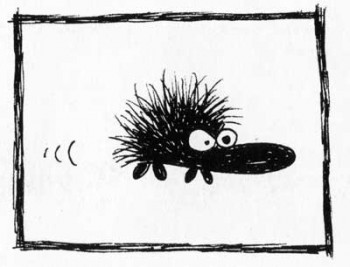
Milla Paloniemi's swearing hedgehog
For the first time, comic books rule the latest bestsellers list of Finnish fiction.
A cartoon series called Fingerpori by Pertti Jarla evidently tickles the Finnish funny bone, as three of his collections occupy the second, sixth and eighth places on the February top ten list, compiled by the Booksellers’ Association of Finland. More…
On Bo Carpelan
30 September 1977 | Archives online, Authors
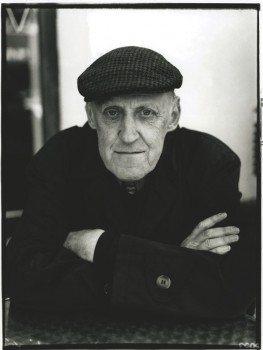
Bo Carpelan. Photo: Ulla Montan
For a small country Finland is richly endowed with poets. Of particular interest, in view of the smallness of the Finland-Swedish population (about 7% of the total), is the number of poets who speak and write Swedish as their first language and consistently produce work of outstanding quality. International recognition of the work of one of these poets came earlier this year with the award of the Nordic Council Literary Prize to Bo Carpelan.
Carpelan’s first volume of verse, Som en dunkel värme (‘Like a dark warmth’) appeared in 1946. Since then he has brought out a further ten volumes of poetry and six prose works (all published by Schildt, Helsinki). It would be difficult, and probably premature, to attempt any detailed analysis of the fusion of influences and inspiration that have come together in Carpelan’s poetry. It is clear, however, that his early work has points of contact with the Finland-Swedish modernism of the 1920s and that he followed with particular interest the 40-talists, a group of Swedish poets active in the 1940s: the influence of their heavy, profuse imagery can be discerned in his early collections.
Critics identify two main periods in Carpelan’s poetry. The first of these is represented by his first volume and by Du mörka överlevande (‘You dark survivor’, 1947), Variationer (‘Variations’, 1950), Minus sju (‘Minus seven’, 1952) and Objekt för ord (‘Objects for words’, 1956). The second period begins with the collection Landskapets förvandlingar (‘The changing landscape’, 1957) and was followed by Den svala dagen (‘The cool day’, 1961), 73 dikter (’73 poems’, 1966), Gården (The courtyard’, 1969), Källan (‘The spring’, 1973) and most recently by I de mörka rummen, i de ljusa (‘In the dark rooms, in the bright ones’, 1976). In all his poetry Carpelan sees life as a mystery, but his approach to this mystery changes and develops. In his earlier works his language is deft, yet at the same time private and intimate, later it becomes sharp and simple. More…
Sanna Tahvanainen & Sari Airola: Silva och teservicen som fick fötter [Silva and the tea set that took to its feet]
13 January 2012 | Mini reviews, Reviews
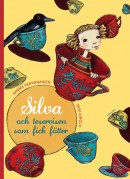 Silva och teservicen som fick fötter
[Silva and the tea set that took to its feet]
Kuvitus [Ill. by]: Sari Airola
Helsingfors: Schildts, 2011. 32 p.
ISBN 78-951-50-2053-6
€ 21.20, hardback
Silva ja teeastiasto joka sai jalat alleen
Suomennos [Translation from Swedish into Finnish]: Jyrki Kiiskinen
Helsinki: Schildts, 2011. 32 p.
ISBN 978-951-50-2054-3
€ 21.20, hardback
Sari Airola’s ability to depict different emotions makes her one of the most interesting Finnish illustrators of children’s books. Airola has long lived in Hong Kong and one can often sense an oriental spirit in her work. In this book, she makes use of Asian textile printing plates to enliven the surfaces of the images. The subject of this debut children’s book by Tahvanainen (born 1975), who is also a poet and novelist, evokes empathy with family situations that deviate from the norm. Silva lives in a big house with her mother, an isolated control freak and migraine sufferer. When her mother suffers an episode, Silva is unable to establish any contact with her and feels insecure. Although the text is allegorical, the book’s message, which concerns a parent’s caring responsibilities and a child’s need to be loved, remains accessible to children. Once the migraine attack is over, the mother goes out to look for Silva; mother and daughter are reconciled when Silva, at last, puts her fears into words.
Translated by Fleur Jeremiah and Emily Jeremiah