

Search results for "tommi+musturi/2010/05/song-without-words/2009/09/what-god-said"
The daughter
A short story from Meddelande (‘Messages’, Schildts, 1998)
Mother, hello! It’s me … can’t hear you very well. I rang a while ago, but maybe you were having your nap?
(Cheerfully) Yes, of course, you can take a nap whenever you like. I can always phone back.
But Mother, listen to what I’m saying now: that’s the last thing I want you to do. It’s awful if you’re just sitting there by the phone, waiting and waiting. You mustn’t do that. I can phone later when I phone, you know that. How’re things?
But that’s good. Great. And you’ve made your evening cup of tea? More…
Writes of passage
20 June 2013 | This 'n' that
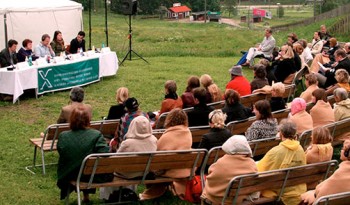
Debating the word: participants at the Lahti Reunion. Photo: LIWRE
The 26th Lahti International Writers’ Reunion took place at Messilä Manor (some 120 km from Helsinki, on Lake Vesijärvi) from 15 to 18 June.
Chaired by Virpi Hämeen-Anttila and Joni Pyysalo, writers from more than 20 countries held discussions in Finnish, English and French.
This summer the theme was ‘Breaking walls’. ‘Problems demand answers, answers demand questions. If attitudes harden, arms talk, and everyone erects a wall around himself, where is literature in the equation? Is the highest wall right there inside the writer? Or is literature itself a protecting wall? What happens when walls break down?’
The first Writers’ Reunion took place in Lahti – first at Mukkula Manor – fifty years ago; more than a thousand writers, translators, critics and other professionals both Finnish and foreign have come to Lahti to discuss writing. The Reunion has always been open to the public as well.
The biannual Reunion began life in 1963, during the Cold War. Writers from both sides of the Iron Curtain met under the oaks of Mukkula. In the Reunion’s blog some participants and organisers share their experiences of the past; here, the meeting’s one-time international secretary Marianne Bargum recalls the late 1970s and early 1980s:
‘…following in the footsteps of the legendary publisher Erkki Reenpää who knew everybody and all languages, I did my best to persuade big stars to come to Mukkula. Some writers had difficulties when they realised that they were not as well known in Finland as in their own countries. The French poet Michel Deguy left after one day, very offended when nobody knew how big a name he was. (I met him in Paris some years later and he apologised.)
A scandal with huge political consequences came close when the French philosopher Bernard-Henry Lévy said some derogatory things about the Soviet head of state Brezhnev. The Russian delegate, Michael Baryshev, threatened to leave the conference, and Valentina Morozova, interpreter and politruk, had to phone the Soviet Embassy in Helsinki and explain that this was not very serious. The famous British critic and writer Al Alvarez did his best to calm down the antagonists in a panel.’
My own first personal experiences of this international fête (which could mean either wading in the mud on the way to the huge tent sheltering the discussions or basking in hot sunshine followed by the most gentle nightless nights), from the sunny summer of 1983: interviewing Salman Rushdie and Jayne Anne Phillips, among others, for the Finnish Broadcasting Company. Another time the bag containing some hundred copies of the latest issue of Books from Finland, fresh from the printing press, sat on a bus heading for Lahti while I sat on the one behind – which then broke down in the middle of the road, and this was before mobile phones. The driver did have a radio phone though, and the participants got their copies in time.
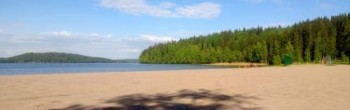
Soccer on the sand: Messilä beach. Photo: LIWRE
Among the traditions is a midnight football match between Finns and foreigners: the summer night is light and long. This time the result of the Finland against the rest of the world was convincing 6-3 to Finland.
Utopia or dystopia?
15 October 2013 | This 'n' that
 ‘The fate of our societies lies in equity’, claims Martti Ahtisaari – winner of the Nobel Peace Prize in 2008 – in his foreword to a study entitled A recipe for a better life: Experiences from the Nordic countries (2013).
The study was compiled and written by Heikki Hiilamo and Olli Kangas with Johan Fritzell, Jon Kvist and Joakim Palme and published by Crisis Management Initiative (a Finnish, independent, non-profit organisation founded in 2000 by Ahtisaari, President of Finland from 1994 to 2000). It is available here.
‘The Nordic experience’ is presented in chapters dealing with the trustworthiness of the society, the role of the state, the amount of efficiency and inefficiency as well as the homogeneity of the Nordic societies and the social investments of these societies in their citizens.
(The Nordic countries consist of Denmark, Finland, Iceland, Norway and Sweden as well as their associated territories – with different levels of autonomy – the Faroe Islands and Greenland [Denmark] and Åland [Finland].)
         ‘"The Nordic enigma" is a successful marriage between hard-core competitive capitalism
          and the pursuit of egalitarian policies’.
The study provides a concise summary of how these societies function with additional comments on the socio-historical development of independent Finland. It presents the reader with pros and cons, arguments and facts.
        ‘For some analysts the Nordic welfare state is a dystopia to be avoided at all costs....
        It is simply argued that that the welfare state destroys the incentives to work.’
        ‘Despite their strong welfare states and heavy tax burdens – often said to be poison
        to competitiveness – the Nordic countries are doing well in economic terms.’
The reader is indeed challenged to ponder the best recipes for a better life. Last but not least: how will the ‘recipes’ need to be adapted in the future?
A view to a kill
31 December 1997 | Archives online, Fiction, Prose
Extracts from the novel Klassikko (‘The classic’, WSOY, 1997). Pete drives an old Toyota Corolla without a thought for the small animals that meet their death under its wheels – or anything else, for that matter. Hotakainen describes the inner life of this environmental hazard with accuracy and precision
Pete sat in his Toyota Corolla destroying the environment. He was not aware of this, but the lifestyle he represented endangered all living things. The car’s exhaust fumes spread into the surroundings, its aged engine sweated oil onto the pavement, and malodorous opinions withered the willowherbs by the roadside. Granted that Pete was an environmental hazard, one must nevertheless ask oneself: how many people does one like him provide with employment? He leaves behind him a trail of despondent girlfriends who require the services of human relations workers, popular songwriters, and social service officials; during his lifetime, he spends tens of thousands of marks in automotive shops and service stations, on spare parts and small cups of coffee; he benefits the food industry by being a carefree purchaser of TV dinners and soft drinks. Pete is the perfect consumer, an apolitical idiot who votes with his wallet, the favorite of every government, even though no one seems interested in putting him to work, least of all himself. Every government, regardless of political power struggles, encourages its people to consume. Pete needs no encouragement, he consumes unconsciously, and one might ask: is there anything that he does consciously, the Greens and left-wingers would like him to? Does Pete make smart long-range decisions? Hardly.
The Finlandia Junior Prize 2014
20 November 2014 | In the news
 Maria Turtschaninoff’s third fantasy book for young people, Maresi. Krönikor från röda klostret / Maresi. Punaisen luostarin kronikoita (‘Maresi. Chronicles of the Red Convent’, Schildts & Söderströms; Finnish translation by Marja Kyrö, publisher Tammi) was awarded the Finlandia Junior Prize, worth €30,000, on 20 November.
The winner was chosen by the scriptwriter and film director Johanna Vuoksenmaa who, in her awarding speech, said that it is ‘an exceptionally powerful fantasy book which, in addition to telling an exquisite, wise and exciting story, also provides a welcome correction to the gender division of fantasy book characters, which has been slightly skewed ever since Tolkien. Maresi reminds me that even today there are places in the world where readers are not sought for books, where knowledge is not on offer to young, thirsty minds. People’s opportunities to know and learn are limited and human rights trampled upon.’
The other five candidates were the following:
Written and illustrated by Saku Heinänen, Zaida ja lumienkeli (‘Zaida and the snow angel’, Tammi) is the story of a little girl whose school days are not always happy; Puiden tarinoita. Puuseppä (‘Stories by trees. The carpenter’, Books North) is a fairy-tale written by Iiro Küttner and illustrated by the graphic artist and cartoonist Ville Tietäväinen; Jyri Paretskoi’s first novel Shell’s Angles ja Kalajoen hiekat (‘Shell’s Angles and the Kalajoki sands’, Karisto) is a humorous story for young teenagers; Min egen lilla liten / Oma pieni pikkuruinen (‘My own tiny little thing’, Schildts & Söderströms, Teos) is a picture story about longing for closeness told by Ulf Stark and illustrated by Linda Bondestam; a picture book about a little squirrel by Mila Teräs, Olga Orava ja metsän salaisuus (‘Olga Squirrel an the forest’s secret’, Lasten Keskus) is illustrated by Karoliina Pertamo.
Ihmisten eläinkirja. Muuttuva eläinkulttuuri [The people’s book of animals. Our changing relationship with the animal kingdom]
22 April 2010 | Mini reviews, Reviews
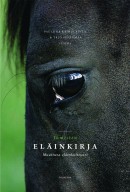 Ihmisten eläinkirja. Muuttuva eläinkulttuuri
[The people’s book of animals. Our changing relationship with the animal kingdom]
Toimittaneet [Ed. by]: Pauliina Kainulainen & Yrjö Sepänmaa
Helsinki: Gaudeamus Helsinki University Press. 235 p., ill.
ISBN 978-951-570-786-4
€ 31, paperback
This book adopts a multidisciplinary approach in its examination of the relationship between humans and animals, highlighting historical, ethical and philosophical connections. The authors include humanists, theologians, anthropologists and artists. They address issues such as animal and nature conservation, animal breeding and husbandry, attitudes towards animals in myth and religion, and depictions of animals in Finnish art. Humans’ relationship to animals can hardly be said to have been consistent: in some religions, certain animals were worshipped as gods, whereas others viewed them as symbols of evil. We treat our pets as members of the family, while livestock animals are subjected to more and more cost-effective production methods. The architect Juhani Pallasmaa introduces readers to the master architects of the animal world and their highly refined, diverse architectural solutions, from which people have learnt a great deal.
Mikko Rimminen & Kyösti Salokorpi
Beastly beatitudes
31 December 2001 | Archives online, Fiction, Prose
From Hämärä luonto. Aamunkoista Yön tuhmaan lintuun (niiden käyttäytymysestä ja elämästä yleensä) (’Natura Obscura. From the Moth of Dawn to the Naughty Bird of Night. On their behavior and life in general’, Tammi, 2001. Illustrations by Tatu Tuominen)
Anas cummea
Rubber duck
There are three species living on Earth which, it can be assumed, will survive a possible nuclear catastrophe: the cockroach, the rat and the rubber duck. Of these, the rubber duck is perhaps the most durable. Nothing affects it.
As soon as it emerges from the shell, the rubber duck secretes around its down an insulating layer of gum elastic for it cannot survive among bacteria or other non-mathematical creatures. Here begins the journey toward perfect self-sufficiency.
When young, the rubber duck looks at the world from behind its transparent membrane, protected from causes of disease, bad influences and modern poetry. With age, the rubber layer strengthens and becomes cartilaginous. Finally, the rubber duck lives alone in its own microcosmos, where there are no inter-species competition, nest-usurpers or elephant seals that mishandle their young. On the other hand, it has no room, either, for sunsets, litters of furry soft toys, or the lusty touch of lovers.
Sometimes the rubber duck finds itself in an existential panic: is there anyone, anything, outside the insulating layer? And does it itself exist? Who is speaking? Wrapped up in these thoughts, it reels around, bouncing from one bath to another, one season to the next. More…
After thirty years
31 March 1987 | Archives online, Fiction, Prose
This, the very first Finnish science fiction story, is an extract from Viktor Pettersson’s (1849-1919) Efter trettio år (‘After thirty years’), published in 1886. Introduction by Matti Apunen
On 31 August 1916 father and daughter went up on the ‘deck’ of the air balloon Atlantic. Atlantic was just one of the comfortably furnished air vehicles that plied the regular route between the New and Old Worlds. Pleasure trips between these continents were now made, preferably, by air balloon rather than by ship, because the journey took half the time – a mere three days; and this despite the fact that the standards of comfort in ships were now excellent, since they were made of cardboard and furnished with electric motors. In addition, air balloon travellers avoided sea-sickness and the associated unpleasantnesses. Of course, they did suffer from ‘airsickness’, but the symptoms of this disease made themselves felt in a much more bearable form. For they actually made the sufferer happy, enthusiastic and friendly, so that he wanted to embrace the Lord and the whole world. Dried-up and creaky old bachelors became as lovable and sympathetic as confessors who have made their vow of celibacy; spiteful and pompous wives and spice-selling madames smelling of wormwood became in a second as devoted and sweet-natured as a mademoiselle in a shop selling drinking water. It was like being under the influence of some wonderful aphrodisiac. More…
Home and solitude
30 September 1984 | Archives online, Authors
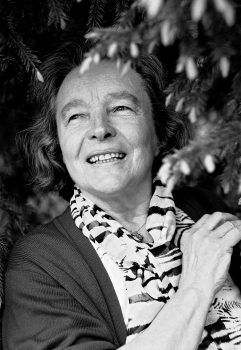
Eeva Kilpi. Photo: Veikko Somerpuro
By Eeva Kilpi’s own admission, the genre of the short story seems best suited for her themes. But she has also gained recognition as a novelist and poet, both inside and outside Finland. Among the many Finnish authors who have read and traveled widely, Kilpi assumes a somewhat unique position: the wider contemporary world with its interlocking problems can be sensed as the broader context of her writing; yet the foreground actions of her stories, with a few notable exceptions, take place in Finland, often in the backwoods of the Eastern border districts. Likewise, her main characters are unmistakably Finnish, from teenagers spouting Helsinki slang to old folks lapsing into a colorful Karelian dialect.
Eeva Kilpi was born in 1928 in Hiitola on the Karelian isthmus. Her latest novel, Elämän evakkona (‘Life’s refugees’, 1983) demonstrates again the author’s capacity for casting into the foreground gripping individual life stories while opening up in the background the epic journey of Finnish Karelians, uprooted in the last war from home and village and sent wandering around Finland in search of new livelihoods, homes and roots. Kilpi’s story is poignantly Finnish and reflects the journey she herself at the age of eleven started with her family from Hiitola. But it fits into the larger context of our own time, which produces growing numbers of evacuees and refugees with stories largely untold. More…
Blowing in the wind
26 November 2010 | Reviews
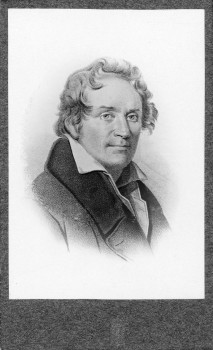
Clarinettist who travelled: Bernhard Crusell
Bernhard Crusell: Keski-Euroopan matkapäiväkirjat 1803–1822
[Bernhard Crusell: Travel Diaries from Central Europe, 1803–1822]
Suom. ja toim. [Translated into Finnish and edited by] Janne Koskinen
Helsinki: Suomalaisen kirjallisuuden seura [Finnish Literature Society], 271 p., ill.
ISBN 978-952-222-090-5
€28, hardback
Born the son of a poor bookbinder on the west coast of Finland, Bernhard Crusell (1775–1838) had talents as a clarinettist and composer that brought him considerable fame, both in his native country and further afield. Hannu Marttila reads the diaries he wrote on his travels in Europe, where his meetings with the great and the good chart the emergence of the new Romantic sensibility
‘Felix is a most beautiful child, and he is also said to be very unassuming. In his compositions one immediately recognises the signs of genius and good training. He continues to study under Zelter, and, thanks to an anticipated large inheritance, he, too, may become an independent composer. People here think he may even become another Mozart.’ More…
From life to life
30 June 1997 | Archives online, Fiction, poetry
Poems from Taivas päivystää (‘Sky on duty’, WSOY, 1996). Introduction by Tero Liukkonen
Flitting from dream to dream. Vanishings.
And you can’t even look.
What you looked with has been taken.
Then there’s more you know.
How helpless you are.
Then you know what Bottom meant
awake from his dream and trying to remember
what he’d lost. Then he did wake.
‘Man’s but a patched fool,’ he said,
‘if he’ll offer to say what methought I had.’
                                                                          Everything had gone topsy-turvy
                                                                          but she just went on feeling
                                                                                      she was hanging her head,
                                                                          she just went on feeling she was searching the lawn
                                                                                                   for a four-leaf clover,
                                                                          and the lawn had covered everything up
                                                                          and not a soul was troubling her.  More...
The last lap
30 June 2001 | Archives online, Fiction, Prose
A short story from Ilmatasku (‘Air pocket’, Otava, 2000). Introduction by Soila Lehtonen
Father arrived by taxi with his black suitcases.
He stood in the hallway, casting a glance over father’s shoes, his trouser-legs. Under his arm was a folded newspaper; it fell to the ground when father bent to undo his shoelaces.
The newspaper was written in strange letters. It felt as if the saliva would not leave his mouth however hard he swallowed. Mother jumped back and forth; mother’s mouth chattered. He scratched the wall with his nail; it was scored with pencil lines recording how much he had grown.
When father straightened up, he filled the whole room. More…