

Search results for "tommi+musturi/2010/2009/10/writing-and-power"
Asko Sahlberg: Herodes [Herod]
28 November 2013 | Mini reviews, Reviews
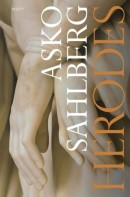 Herodes
[Herod]
Helsinki: WSOY, 2013. 680 pp.
ISBN 978-951-0-39546-2
€40, hardback
Sahlberg’s short, concise novels about Finland’s recent past are here followed by a massive volume set in the early days of Christianity, in Judea and Galilee. Sahlberg’s accurate use of language, his pithy dialogue and vivid sense of history guarantee a reading experience. John the Baptist is the novel’s great prophet; the short, bow-legged Jeshua remains in his shadow. The main character, however, is Herod Antipas, the Roman tetrarch, and Herod’s wife and his servant are also central. Representing the imperial power in the Judea area is the prefect Pontius Pilate. Herod is a sympathetic character who has, throughout his life, alternately enjoyed and suffered from the use of power. How does power change a man? What is the meaning of trust and loyalty – not to mention love – when life is full of fear, doubt and extortion, poisoners and agitators? Sahlberg (born 1964) also opens up perspectives on the examination of our own time. The novel was on the Finlandia Prize shortlist.
Translated by Hildi Hawkins
Family mysteries
31 March 2003 | Archives online, Fiction, poetry
Extracts from Einen keittiö, Eines kök (‘Eine’s kitchen’, Tammi, 2002). Introduction by Satu Koskimies
This sort of detached block of flats is as much of a living organism
as the folk dwelling in it.
For above are the brains and below are the intestines and outlets.
The upper floors were flaunting their kitchen taps, sink-tops,
lion-clawed sofas, mahogany chests and
sapphire-pendant crystal chandeliers, flashing the violet-tones of sea and
rain. More…
Olli Bäckström: Polttolunnaat. Eurooppa sodassa 1618–1630 [Trial by fire. Europe at war 1618–1630]
31 July 2013 | Mini reviews, Reviews
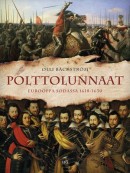 Polttolunnaat. Eurooppa sodassa 1618–1630
[Trial by fire. Europe at war 1618–1630]
Helsinki: Suomalaisen Kirjallisuuden Seura (Finnish Literature Society), 2013. 558 p.
ISBN 978-952-222-394-4
€39, paperback
The Thirty Years War of 1618-48 which ravaged Europe, extending its influence to overseas colonies, has been considered a religious conflict in which several countries were involved for reasons of power politics. Olli Bäckström, who belongs to the younger generation of Finnish military historians, sees the first twelve years of the war as a separate entity that bears similarities to the so-called asymmetric conflicts of our own time, such as those in Africa, which are fought by mercenaries and non-state actors for whom war is an industry and way of life. The book begins by describing the situation in Europe in the early seventeenth century, and the background of the war. Contemporary researchers view it as a religious conflict that originally began in Bohemia and then turned into a political power struggle, but Bäckström sees also the early phase as remarkably nuanced. The Nordic states of Denmark and Sweden (of which Finland was a part) were also in pursuit of fame and power on the battlefields of Central Europe, although Sweden did not really take part in the war until the next phase. Bäckström vividly portrays the alliances formed by the various political actors in order to safeguard their interests, and the methods of warfare employed by the armed forces in the service of the different rulers.
Translated by David McDuff
Star-Eye
31 March 1984 | Archives online, Children's books, Fiction
A story from Läsning för barn (‘Reading for children’,1884). Introduction by George C. Schoolfield
There was once a little child lying in a snowdrift. Why? Because it had been lost.
It was Christmas Eve. The old Lapp was driving his sledge through the desolate mountains, and the old Lapp woman was following him. The snow sparkled, the Northern Lights were dancing, and the stars were shining brightly in the sky. The old Lapp thought this was a splendid journey and turned round to look for his wife who was alone in her little Lapp sledge, for the reindeer could not pull more than one person at a time. The woman was holding her little child in her arms. It was wrapped in a thick, soft reindeer skin, but it was difficult for the woman to drive a sledge properly with a child in her arms.
When they had reached the top of the mountain and were just starting off downhill, they came across a pack of wolves. It was a big pack, about forty or fifty of them, such as you often see in winter in Lapland when they are on the look-out for a reindeer. Now these wolves had not managed to catch any reindeer; they were howling with hunger and straight away began to pursue the old Lapp and his wife. More…
Journalist 3.0
22 May 2014 | Non-fiction, Tales of a journalist
Illustration: Joonas Väänänen
As the world becomes more and more difficult to understand, the media, strapped for cash and forced for reduce expenses, sack their expert writers. Jyrki Lehtola assesses the new breed of cut-price journalists
Some time in the distant past it was possible for a reader to reflect that here was an educated journalist writing pithily. It would be nice to know more of his or her thoughts.
There used to be talk of such concepts as the ‘objective truth’, and editors shunned talking about themselves, or even speaking or writing in the first person. There was just the world, which the journalist, the conduit of truth, conveyed to the public.
Now, although most of us would prefer to know nothing about journalists and their private lives, journalists have brought their lives strongly into the public arena. Objectivity is dead; there are merely millions of subjects who perhaps share the same experiences, perhaps not, and, misled by some idealised concept of community, we are the beneficiaries of journalists writing about what it’s like to be a mum, how challenging life as a mother and journalist can be. More…
You@me
30 September 1999 | Authors, Interviews

Photo: Liisa Takala
In Leena Krohn’s novel, Pereat mundus (1998) the central role is played by a number of characters called Håkan. All of them are different, living in different times and different places, but they are still Everymans: you and me. In the following e-mail interview, Maria Säntti asks Krohn about her relationship with language, imagination, the world – and virtual reality
Date: Fri Jul 23 18:04:24 1999 To: Leena Krohn <krohn@kaapeli.fi> From: Maria Santti <maria@kaapeli.fi> Subject: Let the interview begin!
Dear Leena,
I have just read Pereat mundus, which I like very much. I have many questions to ask you about it; I shall try to gather my thoughts, but I think I am troubled by the problem of the first sentence. I am alarmed even to contemplate the maze of questions and answers the first question will lead us to.
Over the past thirty years you have published a couple of dozen collections of poetry, short stories and essays, and, since Tainaron (1985), ‘novels, sort of’. This is how Pereat mundus defines its own genre on its title page. Sometimes your works incline toward novels, as in Umbra, 1990, sometimes toward collections of short stories – Matemaattisia olioita ja jaettuja unia (‘Mathematical creatures and shared dreams’, 1992) and sometimes collections of essays – Rapina ja muita papereita (‘Rustle and other papers’, 1989). How did you find this open ‘epistolary novel’ form for your work? More…
Money, Morals and Love
31 March 1980 | Archives online, Authors
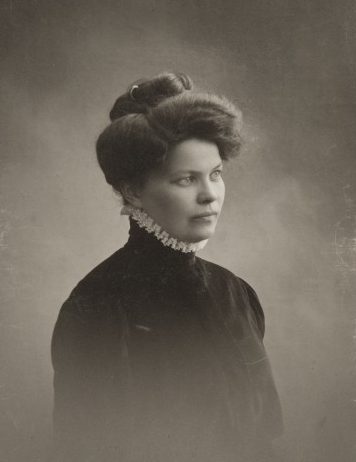
Maria Jotuni. Photo: Atelier Nyblin / CC-BY-4.0
Maria Jotuni‘s reputation as a writer rests on her daring and highly individual portrayals of women and on her gifts as a dramatist. Her works concentrate on analyses of the human condition, the contradictions, the frustrations, the fantasies. As the creative ‘observer’ she is both deeply sympathetic and ruthlessly revealing.
Maria Jotuni, whose centenary is celebrated this year, grew up in the eastern Finnish province of Savo and her early work draws richly on that background for subject matter and local colour. Her style, which over the years was honed and polished into a unique form of expression, certainly owes something to the lilting rhythms of the Savo dialect – and something to the lyricism of the Finnish Bible, with which she was familiar from her earliest years. Maria Haggrén, as she was born, was the second of six children; they lived in Kuopio, the home town of J. V. Snellman (1806–81), a man who did much to formulate the Finnish national identity, and of Minna Canth (1844–97), one of Finland’s major woman writers. The Haggréns were not wealthy, but they believed strongly in the pursuit of learning and knowledge. The home also provided a fruitful contact with rural life with opportunities to listen to the chatter and tales of the farm boys and servant girls. More…
Head in a cloud
27 May 2011 | Articles, Non-fiction
Thinking, reading, writing, buying… Teemu Manninen explores the new freedoms, literal and poetic, offered by cloud computing, where what you can do is no longer limited by what you happen to have on your computer

High in the sky: cumulus clouds. Photo: Michael Jastremski, Wikimedia
I’m sitting in a rocking chair on the porch of a cottage by a lake. My fingers tap and slide on the surface of a black glass panel, a kind of instrument used in the composing of literature. Each tap equals a letter, a series of taps equals a word, a symphony of taps becomes a paragraph, a paragraph an essay.
The glass panel remembers these letters and words and the writings they become, and knows them by their names, but it could also record anything I see or hear. I could even talk to it and it would understand my commands, as if some nether spirit were captured inside, a magic genie slaved to do my bidding. More…
The Writer’s dilemma
30 June 1984 | Archives online, Authors, Interviews
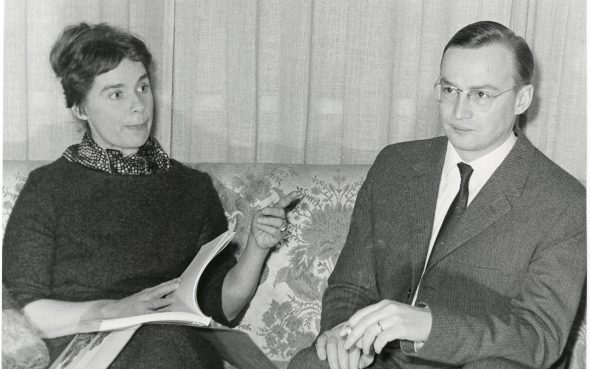
Poets Marja-Liisa Vartio and Paavo Haavikko. Photo: SKS archives
Philip Binham interviews Paavo Haavikko
I think it’s impossible to be just a writer. That would mean isolating oneself completely from the outside world – so it’s important to have other work.
The appointment is on 5 April 1984 in Paavo Haavikko’s city office. Clearly a newly-inhabited office – he recently left his post as Literary Editor for the Otava Publishing Company to become a literary consultant under the letterhead of Arthouse Ltd. A desk jumbled high with papers and photos on which my tape recorder perches precariously; Haavikko is currently working on a history of a leading Finnish industrial enterprise, Wärtsilä. Typewriters, a phone, a few odd chairs, a secretary. Haavikko himself is business-like: well-cut grey suit, well-trimmed greying hair and beard, neat dark-blue tie: When I play the recording over, our voices echo oddly in the bare, high-ceilinged rooms.
PB: May I start by asking you something about your reading?
PH: That’s a very difficult question for me because up to now I’ve had two jobs – as a writer and a publisher, so my own reading has been more or less non-existent. Writing has taken up all my leisure time. And I thought, now that I’m not in the publishing business any more I’d have time for such reading – but so far I haven’t had any, so that seems to be something for the future. More…
Second nature
15 February 2010 | Articles, Non-fiction
 We hear a lot about how the internet is going to transform the reading and the marketing of books. But what about the act of writing? Teemu Manninen reports from the frontline of a new generation of authors for whom life has always been digital
When we think of the future of publishing in these times of electronic reading devices, audiobooks, and the internet, when it seems as if the whole material being of literature is about to be transformed, we may ask how the marketing of books will change.
What happens when publishing goes online? How will authors cope with the new culture of the internet? More…
In memoriam Bo Carpelan 1926–2011
24 February 2011 | Authors, In the news
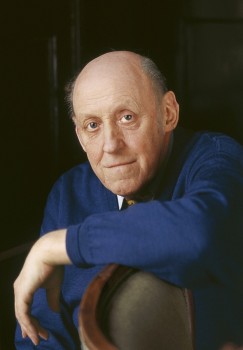
Bo Carpelan. Photo: Irmeli Jung
I write one winter’s day,
write off the day and the night, the planets,
go into my house from a harsh sun
and extend those shadows that are swordlike aimed.
It is a day of drifting snow
and with a voice from that which is I
or was.
(From The Cool Day. English translation by David McDuff, published in Homecoming, Carcanet, 1993)
Bo Carpelan, one of the great names of Finnish literature, died in his home city of Helsinki on 11 February. Carpelan’s first collection of poetry appeared in 1946, his last in 2010.
In his poems and prose he frequently described his childhood in apartment buildings filled with the smell of cooked herring, the noise of quarrels and the sound of the news on the radio. Prosaic life is turned into poetry, images and music, the apartment house is built from the rooms of a dream.
Bo Carpelan loved music. His novel Axel (English translation by David McDuff, 1989), is about his paternal grandfather’s brother, who was a friend of Jean Sibelius and the composer’s first critic. Axel was an unsuccessful musician who chose to live through someone else, and Carpelan relates him to the theme of the dignity of rejected human beings. More…
Our favourite things
29 January 2010 | Letter from the Editors
Every reader has his or her favourite book. It is possible to define, with acceptable criteria, when a work of fiction is ‘a good novel’: do the plot, characterisation and language work, does it have anything to say? But when is a ‘good’ novel better than another ‘good’ novel? More…