

Search results for "jari tervo"
Decent people
30 December 1998 | Fiction, Prose
The former newspaper reporter Jari Tervo (born 1959), now a successful novelist and quiz-show celebrity, writes about the seamier side of life. His subjects are mostly petty criminals and losers, but his crisp language is always a winner. And he can find a story even in a pork chop…. A short story from Taksirengin rakkaus (‘The love of the taxi-driver’, WSOY, 1998). Introduction by Suvi Ahola
The shopkeeper ran after the thief and caught him. The people in the parking lot of the S-Market made a fuss. The thief took fright when he found himself grasped by the scruff of the neck by a man the size of a baseball player. The shopkeeper removed the thief’s stomach. It turned out to be a packet of pork chops. They were not on special offer.
The thief stammered. The shopkeeper just had time to think that was the worst thing after snivelling when the thief started to snivel. The shopkeeper began to feel infuriatingly sorry for the thief’s arm, which was in a sling. Even his clothes were ugly. He let the thief go with a kick. I’m too good to be a shopkeeper, the shopkeeper thought delightedly, thanked the onlookers for their applause and put the packet of chops back on the shelf, where it was bought by a housewife. More…
Marja-Leena Tiainen: Kahden maailman tyttö [The girl from two worlds]
18 January 2012 | Mini reviews, Reviews
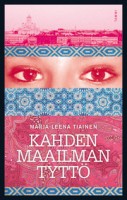 Kahden maailman tyttö
[The girl from two worlds]
Helsinki: Tammi, 2011. 261 p.
ISBN 978-951-31-5937-5
€ 26.65, hardback
Marja-Leena Tiainen (born 1951) has dealt with unemployment, immigration, and racism in her works, in ways that are accessible to her young readership. She researches her topics with care. The idea for this book dates back to 2004, when the author made the acquaintance of a Muslim girl who lived in a reception centre in eastern Finland; her experiences fed into Tara’s story. Tiainen’s central theme, ‘honour’ violence in the Muslim community, is surprisingly similar to Jari Tervo’s Layla (WSOY, 2011). Tiainen’s is a traditional story about a girl growing up and surviving, but the novel’s strong points are the authentic description of everyday multiculturalism, and the intensity of the narration. The reader identifies with Tara’s balancing act, which she must carry out in the crossfire of her father’s authority, family tradition, and her own dreams. In spite of everything, the community also becomes a source of security and support for Tara. The narrative arc is coherent and, despite the numerous overlapping time-frames, the tension is sustained right up to the final, conciliatory solution.
Translated by Fleur Jeremiah and Emily Jeremiah
Once upon a time…
13 January 2012 | Articles, Non-fiction
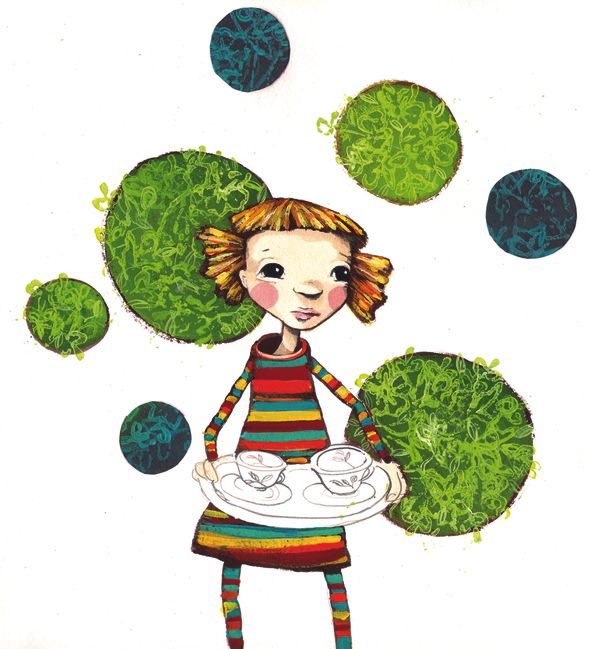
Sari Airola's illustration in Silva och teservisen som fick fötter (‘Silva and the tea set that took to its feet’, Schildts) by Sanna Tahvanainen
The future of book publishing is not easy to predict. Books for children and young people are still produced in large quantities, and there’s no shortage of quality, either. But will the books find their readers? Päivi Heikkilä-Halttunen takes a look at the trends of 2011, while in the review section we’ve picked out a selection of last year’s best titles
The supply of titles for children and young adults is greater than ever, but the attention the Finnish print media pays to them continues to diminish. Writing about this genre appears increasingly ghettoised, featuring only in specialist publications or internet chat rooms and blogs.
Yet, defying the prospect of a recession, Suomen lastenkirjakauppa, a bookshop specialising in children’s literature, was re-established in central Helsinki in autumn 2011, following a ten-year break. Pro lastenkirjallisuus – Pro barnlitteraturen ry, the Finnish society for the promotion of children’s literature, has been making efforts to found a Helsinki centre dedicated to writing and illustration for children. The society made progress in this ambition when it organised a pilot event in May 2011. More…
Boys Own, Girls Own? –
Gender, sex and identity
30 December 2008 | Essays, Non-fiction
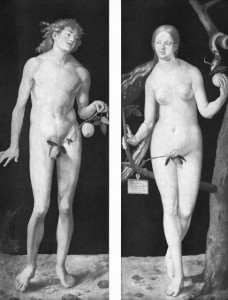
Knowing good and evil: Adam and Eve (Albrecht Dürer, 1507)
In Finnish fiction of the present decade, both in poetry and in prose, there seems to be at least one principle that cuts across all genres: an overt expression of gender, writes the critic Mervi Kantokorpi in her essay
Relationships and family have always been central concerns of literature; questions about gender and individual identity have received a new emphasis in Finnish literature from one season to the next. The gender roles represented in contemporary literature appear to become ever more stereotypical. The question is no longer only of the author consciously setting his or her gender up as the starting point for expression, as has already long been the case with modern literature written by women. More…
Make or break?
17 November 2011 | This 'n' that
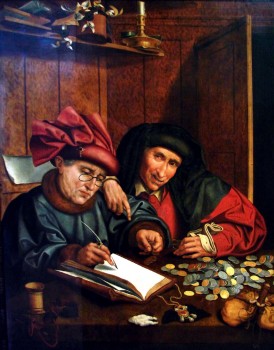
Two tax collectors: anonymous painter, after Marinus van Reymerswaele (ca. 1575–1600). Musée des Beaux-Arts de Nancy. Wikimedia
In Finland, tax returns are public information. So, every November the media publish lists of the top earners in Finland, dividing them into the categories of earned and investment income. Every November it is revealed who are millionaires and who are just plain rich.
The Taloussanomat (‘The economic news’) newspaper offers a list (Finnish only) of the 5,000 people who earned most last year (in terms of both earned and investment income, together with the proportion of income they have paid in tax). You can also search lists of various status and professions: rock/pop stars, media, sports, MPs, celebrities, politicians of various political parties…
So let’s take a look at Taloussanomat’s selected list of authors: number one is the celebrity author Jari Tervo (309,971 euros, tax percentage 45); number two, the internationally famous Sofi Oksanen (302,634 euros, 46 per cent); the next two are Sinikka Nopola, writer of children’s books, (264,000) and Arto Paasilinna (262,300; now after an illness, retired as a writer), translated into more than 30 languages since the 1970s. (The film critic and author Peter von Bagh made almost 900,000 euros – not by writing books, but by selling his share of a music company to an international enterprise.)
As tax data are public in Finland, there’s vigorous and decidedly informed public debate on how much money, for example, directors of public pension institutions and government offices or ministers and other top politicians are paid, and how much they should be paid: what is equitable, what is reasonable? A million dollar question indeed…
Among the European Union countries, it is only in Finland, Sweden and Denmark that there is no universal minimum wage. Here, wages are determined in trade wage negotiations. The average monthly salary in the private sector in 2010 was approximately 3,200 euros. In contrast to that, Olli-Pekka Kallasvuo, the Nokia CEO and President, who tops the 2010 tax list, earned a salary of 8 million last year, because – and precisely because – he was sacked (and replaced by the Irishman Steven Elop).
The CIA’s Gini index measures the degree of inequality in the distribution of family income in a country. The more unequal a country’s income distribution, the higher is its Gini index. The country with the highest number is Sweden, 23; the lowest, South Africa, 65 (data from both, 2005). Finland’s figure is 26.8 (2008), Germany 27 (2006), the European Union’s 34. The United Kingdom stands at 34 (2005), and the USA at 45 (2007). The figure in Finland seems to be on the rise though, as the figure back in 1991 was 25.6.
There’s been plenty of research and debate on economic inequality and the ways it harms societies. This link takes you to a fascinating video lecture (July 2011 – now seen by almost half a million people) by Richard Wilkinson, British author, Profefssor Emeritus of social epidemiology.
In other words
21 June 2012 | This 'n' that
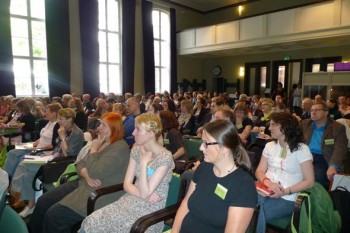
Wordworkers meet: the translators' congress in Helsinki, 11–14 June. Photo: Hannele Jyrkkä
From Finnish or Swedish into 32 languages: in mid June FILI (the Finnish Literature Exchange) held the biggest international meeting of translators of Finnish literature of all time.
The congress, entitled Kääntäjän sana/Översättarens ord (Translator’s word) was planned with one eye on the Finnish theme of the 2014 Frankfurt Book Fair.
The former Lisa Hagman School, now the House of Learning, offered the premises for workshops and lectures for 120 professional translators and almost 70 scholars of language and literature.
Participants translating from both Finnish and Finland-Swedish were offered opportunities to meet writers, listen to lectures from experts in language and literature and gain feedback from other active professional readers. More…
Snowbirds
2 November 2011 | Extracts, Non-fiction
The short winter days of the northerly latitudes are made brighter by snow cover, which almost doubles the amount of available light. Reflection from the snow is an aid for photographers working outdoors in winter conditions. A new book, entitled Linnut lumen valossa (‘Birds in the light of snow’), presents the best shots by four professionals, Arto Juvonen, Tomi Muukkonen, Jari Peltomäki and Markus Varesvuo, who specialise in patiently stalking the feathered survivors in the cold
The photographs and texts are from the book Linnut lumen valossa (‘Birds in the light of snow’, edited by Arno Rautavaara. Design and layout by Jukka Aalto/Armadillo Graphics. Tammi, 2011)
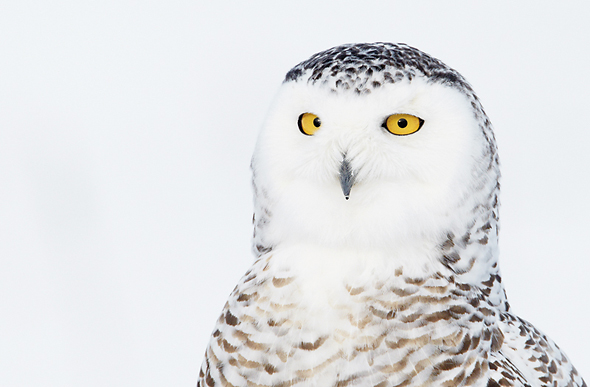
Snowy owl. Photo: Markus Varesvuo, 2010
A sweep is as lucky as lucky can be
27 August 2009 | Authors, Reviews
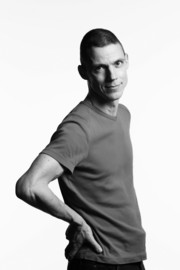
Jari Järvelä. Photo: Ville Palonen
The heroine of Jari Järvelä’s new novel begins telling the story of her life from inside an oven, beneath which a murderer is stoking a fire: a gripping start.
The reader of Mistä on mustat tytöt tehty? (‘What are black girls made of?’) has to wait until the end of the novel to find out what happens to the captive female chimney sweep, Katariina or ‘Rööri’ (‘Pipey’). In those moments in the oven, Pipey’s life flashes before her eyes.
In his previous novels, Jari Järvelä (born 1966) has concentrated on exploring people on the margins of Finnish history; rather than portraying the lives of significant figures, he chooses instead to depict everyday people and their day-to-day lives.
In his recent trilogy, Järvelä gave an account of the years between Finland’s independence in 1917 and the beginning of the Second World War. (The final part of this trilogy, Kansallismaisema [‘National landscape’, 2006] was featured in Books from Finland 4/2006). Since 1995 his output has included seven novels, collections of short stories and radio plays. More…
Back to the sources
23 October 2014 | Essays, Non-fiction, On writing and not writing
In this series, authors discuss the difficulties of their trade. Jari Järvelä finds it difficult to stop gathering source material which then gets piled in towers on his desk and in sacks around it. He knows that it’s got to stop though – for when it does, the stories will finally emerge, and life is a bliss… for a moment
When I was younger I thought that writing a novel began with the moment when I sat down at my desk and pressed a key for the first time. A. Hmmm…no, H. No, let’s make that S. No no no, I need a more original beginning…Z!
That’s not the case. The writing of a novel begins between two and twenty years before the choice of the first letter and the first word. Sometimes longer.
In the case of my novel Särkyvää (‘Fragile’, 2014), I know the exact moment of its birth.
Before I began to make a career as an author, I spent a year as a teacher at Hamari school in Porvoo. It was the beginning of the 1990s. Hamari was an old sawmill community on the sea, full of wooden houses more than a century old and motor boats put-putting toward the horizon. The headmaster looked more like a sea dog than a teacher; one morning he announced that it was his fortieth birthday. After that he sat down on the staff-room sofa, fell into deep thought and suddenly ejaculated, ‘Why the hell does a person have to gather so much junk in their life?!’ More…
Midwinter in a minor key
23 December 2009 | Letter from the Editors
Finland’s end-of-year celebrations, both Christmas and New Year, take place in a thoroughly muted mode. At noon on Christmas Eve the Christmas Peace is rung out from the mediaeval cathedral in Turku, with the pious and seldom realised hope that peace and harmony will be unbroken for the following twelve days.
It’s true, though, that there’s little of the carousing that characterises Christmas celebrations further south; by and large, people stay behind closed doors, and there’s plenty of time, in the dark mornings and evenings and the brief twilight between them, to eat and drink and sleep – and, for those whose souls are not entirely claimed by the television and food-induced torpor, to read. More…
Seekers and givers of meaning: what the writer said
2 October 2014 | This 'n' that
 ‘All our tales, stories, and creative endeavours are stories about ourselves. We repeat the same tale throughout our lives, from the cradle to the grave.’ CA
‘Throughout a work’s journey, the writer filters meanings from the fog of symbols and connects things to one another in new ways. Thus, the writer is both a seeker of meaning and a giver of meaning.’ OJ
‘Words are behind locks and the key is lost. No one can seek out another uncritically except in poetry and love. When this happens the doors have opened by themselves.’ EK
‘I realised that I had to have the courage to write my kind of books, not books excessively quoting postmodern French philosophers, even if that meant laying myself open to accusations of nostalgia and sentimentality.’ KW
‘If we look at the writing process as consisting of three C:s – Craft, Creativity and Chaos – each one of them is in its way indispensable, but I would definitely go for chaos, for in chaos lies vision.’ MF
‘In the historical novel the line between the real and the imagined wavers like torchlight on a wall. The merging of fantasy and reality is one of the essential features of the historical novel.’ KU
‘The writer’s block isn’t emptiness. It’s more like a din inside your head, the screams of shame and fear and self-hatred echoing against one another. What right have I to have written anything in the first place? I have nothing to say!’ PT
‘…sometimes stanzas have to / assume the torch-bearer’s role – one / often avoided like the plague. / Resilient and infrangible, the lines have to / get on with their work, like a termite queen / laying an egg every three seconds / for twenty years, / leaving a human to notice / their integrity. ’ JI
In 2007 when Books from Finland was a printed journal, we began a series entitled On writing and not writing; in it, Finnish authors ponder the complexities, pros and cons of their profession. Now our digitised archives make these writings available to our online readers: how do Claes Andersson, Olli Jalonen, Eeva Kilpi, Kjell Westö, Monika Fagerholm, Kaari Utrio, Petri Tamminen and Jouni Inkala describe the process? Pain must coexist with pleasure…
From 2009 – when Books from Finland became an online journal – more writers have made their contributions: Alexandra Salmela, Susanne Ringell, Jyrki Kiiskinen, Johanna Sinisalo, Markku Pääskynen, Ilpo Tiihonen, Kristina Carlson, Tuomas Kyrö, Sirpa Kähkönen – the next, shortly, will be Jari Järvelä.
What if?
30 December 2001 | Articles, Authors

 For an extraordinary period between 1944 and 1956 part of Finland – the Porkkala peninsula, close to Helsinki – was leased to the Soviet Union as a military base. Inspired by the photographs by Jan Kaila, Olli Jalonen explores those silenced and mysterious years, which prompted Finns to ask the question: what if the whole of Finland had succumbed to the same fate?
In the autumn of 1944, the Soviet Union set up an enormous military base close to Helsinki. The Porkkala area, which had been forcibly leased from Finland for 50 years, was returned to the Finns early, in 1956. Completely divorced from its surroundings and strongly armed, the foreign power’s base was like a bear sleeping in Finland’s back yard. It has left in the minds of Finns hidden images of silence, fear and mystery. More…
Finlandia Prize for Non-Fiction 2011
24 November 2011 | In the news
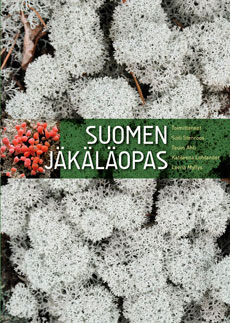 ‘Scientific, aesthetic, timely: the work is all of these. A work of non-fiction can be both precisely factual and emotional, full of both information and soul. A good non-fiction book will surprise. I did not expect to be enthused by lichens, their variety and colours,’ declared Professor Alf Reen in announcing the winner of this year’s Finlandia Prize for Non-Fiction on 17 November.
The winning work is Suomen jäkäläopas (‘Guidebook of lichens in Finland’), edited by Soili Stenroos & Teuvo Ahti & Katileena Lohtander & Leena Myllys (The Botanical Museum / The Finnish Museum of Natural History). The prize is worth €30,000.
The other works on the shortlist of six were the following: Kustaa III ja suuri merisota. Taistelut Suomenlahdella 1788–1790 [(‘Gustav III and the great sea war. Battles in the Gulf of Finland 1788–1790’, John Nurminen Foundation), written by Raoul Johnsson, with an editorial board consisting of Maria Grönroos & Ilkka Karttunen &Tommi Jokivaara & Juhani Kaskeala & Erik Båsk; Unihiekkaa etsimässä. Ratkaisuja vauvan ja taaperon unipulmiin (‘In search of the sandman. Solutions to babies’ and toddlers’ sleep problems’ ) by Anna Keski-Rahkonen & Minna Nalbantoglu (Duodecim); Operaatio Hokki. Päämajan vaiettu kaukopartio (‘Operation Hokki. Headquarters’ silenced long-distance patrol’), an account of a long-distance patrol strike in eastern Karelia during the Continuation War in 1944, by Mikko Porvali (Atena); Trotski (‘Trotsky’, Gummerus; biography) by Christer Pursiainen; and Lintukuvauksen käsikirja (‘Handbook of bird photography’) by Markus Varesvuo & Jari Peltomäki & Bence Máté (Docendo).