

Search results for "tommi+musturi/2010/05/song-without-words/2009/09/what-god-said/2011/04/matti-suurpaa-parnasso-1951–2011-parnasso-1951–2011"
Poems
30 June 1985 | Archives online, Fiction, poetry
Introduction by Bo Carpelan
	A flower beckons there, a secent beckons there, enticing my eye.
A hope glimmers there.
	I will climb to the rock of the sky, I will sink in the wave:
a wave-trough. I am singing tone, and the day smiles in riddles.
*
	Like a sluice of the hurtling rivers I race in the sun:
to capture my heart; to seize hold of that light in an inkling:
sun, iridescence.
	In day and intoxication I wander. I am in that strength:
the white, the white that smiles.
*
	To my air you have come: a trembling, a vision! I know neither
you nor your name. All is what it was. But you draw near: a
daybreak, a soaring circle, your name.
A fifth season
30 December 2000 | Fiction, poetry
Poems from Elävän mieli (‘A mind alive’, WSOY, 1999). Introduction by Lauri Otonkoski
In sparser gusts of wind
metaphors sough through the mind,
spinning as on the much-frequented
boulevards of a great park.
Even one’s most private thoughts are as common
as public transport, what a relief,
as shared as our anatomies and our bacteria,
for there is only one thread in the skein of the Norns
and the same fabric is always being woven
from the whims of fate: is that not a relief?
Treacherous individuality suffices only
for a fingerprint.
Metaphors always the same,
but constantly born anew
like a mind alive. More…
Upstairs, downstairs
31 March 2000 | Archives online, Fiction, Prose
From Harmia lämpöpatterista (‘Trouble with the radiator’, Gummerus, 1999). Introduction by Tero Liukkonen
The view
From here, I can see straight into their bedroom. The thin man chases the red-haired mountain of lard; round and round the room they go: the man is swinging something in his hand, I can’t see what, while the lard-mountain squeals until the man throws her onto the bed. The same thing happens every night; I can’t see the bed. Too low, and I wouldn’t want to, besides; lewd ugly makes me sick that I can even think of it.
Downstairs a young man is always watching TV, sitting there motionless all evening. The blue flickers, never turns on the light, a young man. He has long, slender legs and arms, but his face I can’t see, it’s too dark. There are painting tools on his window sill. More…
Helene Schjerfbeck. Och jag målar ändå [Helene Schjerfbeck. And I still paint]
16 December 2011 | Mini reviews, Reviews
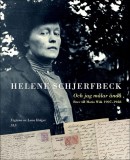 Helene Schjerfbeck. Och jag målar ändå. Brev till Maria Wiik 1907–1928
[Helene Schjerfbeck. And I still paint. Letters to Maria Wiik 1907–1928]
Utgivna av [Edited by]: Lena Holger
Helsingfors: Svenska Litteratursällskapet i Finland; Stockholm: Bokförlaget Atlantis, 2011. 301 p., ill.
ISBN (Finland) 978-951-583-233-7
ISBN (Sweden) 978-91-7353-524-3
€ 44, hardback
In Finnish:
Helene Schjerfbeck. Silti minä maalaan. Taiteilijan kirjeitä
[Helene Schjerfbeck. And I still paint. Letters from the artist]
Toimittanut [Edited by]: Lena Holger
Suomennos [Translated by]: Laura Jänisniemi
Helsinki: Suomalaisen Kirjallisuuden Seura, 2011. 300 p., ill.
ISBN 978-952-222-305-0
€ 44, hardback
This work contains a half of the collection of some 200 letters (owned by the Signe and Ane Gyllenberg’s foundation), until now unpublished, from artist Helene Schjerfbeck (1862–1946) to her artist friend Maria Wiik (1853–1928), dating from 1907 to 1928. They are selected and commented by the Swedish art historian Lena Holger. Schjerfbeck lived most of her life with her mother in two small towns, Hyvinge (in Finnish, Hyvinge) and Ekenäs (Tammisaari), from 1902 to 1938, mainly poor and often ill. In her youth Schjerfbeck was able to travel in Europe, but after moving to Hyvinge it took her 15 years to visit Helsinki again. In these letters she writes vividly about art and her painting, as well as about her isolated everyday life. Despite often very difficult circumstances, she never gave up her ambitions and high standards. Her brilliant, amazing, extensive series of self-portraits are today among the most sought-after north European paintings; she herself stayed mostly poor all her long life. The book is richly illustrated with Schjerfbeck’s paintings (mainly from the period), drawings and photographs.
Juhani Koivisto: Suurten tunteiden talo. Kohtauksia Kansallisoopperan vuosisadalta [The house of great emotions. Scenes from a century of the Finnish National Opera]
30 June 2011 | Mini reviews, Reviews
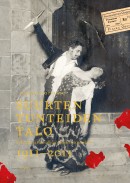 Suurten tunteiden talo. Kohtauksia Kansallisoopperan vuosisadalta
[The house of great emotions. Scenes from a century of the Finnish National Opera]
Helsinki: WSOY, 2011. 229 p., ill.
ISBN 978-951-0-37667-6
€ 45, paperback
2011 marks the one-hundredth anniversary of the founding of the Finnish National Opera. This richly illustrated and entertaining book describes events that have been absent from previous ‘official’ historical accounts. Readers will encounter over a hundred opera denizens who have made audiences – and, according to many anecdotes, each other – laugh and cry. The initial stages of the opera and ballet were modest in scope when viewed from outside, but the trailblazers involved were tremendous talents and personalities. The brighest star was the singer Aino Ackté, who enjoyed an international reputation. Gossip about intrigues and artistic differences at the opera house over the decades is confirmed in candid interviews with performers. The content of the book is based on archival sources, letters, memoirs, interviews and stories told inside the opera house. Juhani Koivisto, the Opera’s chief dramaturge, clearly has an excellent inside knowledge of his subject. Translated by Ruth Urbom
In the mirror
5 April 2011 | Reviews
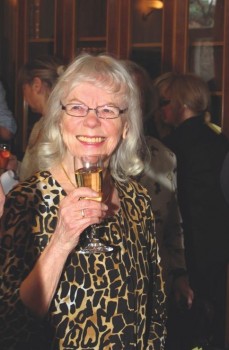
Aila Meriluoto. Photo: Tiina Pyrylä/WSOY
One of the more attractive aspects of Finnish literature is the juxtaposition of poetry-writing generations. 2011 sees the debut of both the 82-year-old Martta Rossi and new poets born in the 1980s.
Compared to them, the 87-year-old Aila Meriluoto is an old hand: Tämä täyteys, tämä paino (‘This fullness, this weight’, WSOY, 2011) is her 14th volume of poetry.
Since her first collection, which appeared 65 years ago, the grande dame has published more than 20 works: poetry, prose, diaries, books for children and young people, biographies and translations, among them poetry by Harry Martinson and Rainer Maria Rilke. More…
Scent of greenness
21 April 2011 | Fiction, poetry
‘Time the unstoppable’ features in the last collection of poems, Gramina, by Bo Carpelan (1926–2011), who reads timeless poetry while writing his own verses. In his introduction, Michel Ekman quotes the American poet and philosopher Ralph Waldo Emerson, who thought books should stimulate the reader’s thoughts instead of merely being devoured
Poems from the collection Gramina. Marginalia till Horatius, Vergilius och Dante (‘Gramina. Marginalia to Horace, Virgil and Dante’, Schildts, 2011)
Surf on the net –
in the net you are
with mouse and waiting spider

Fills life’s piggy bank
until it is emptied
The paved road of envy
where you stumble
Be sufficient unto oneself?
And who is this ‘self’
who doesn’t introduce himself? More…
Sun and shade
3 August 2011 | Extracts, Non-fiction
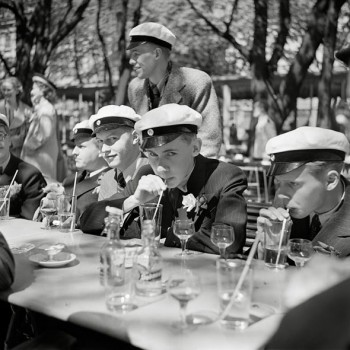
Springtime: the new graduates celebrate the beginning of summer. Photos: ©Jussi Brofeldt
Documentary film-making and photography arrived in Finland in the 1920s with pioneers like Heikki Aho and Björn Soldan, who founded a film company in 1925 in Helsinki. They also took thousands of photographs of their city; in a selection taken in the turbulent 1930s, people go on about their lives, rain or shine
Photographs from Aho & Soldan: Kaupunkilaiselämää – Stadsliv – City life. Näkymiä 1930-luvun Helsinkiin (‘Views of Helsinki of the 1930s’, WSOY, 2011)
Photos: Aho & Soldan@Jussi Brofeldt. Texts, by Jörn Donner and Ilkka Kippola, are published in Finnish, Swedish and English.
The exhibition ‘City life‘ is open at Virka Gallery of the Helsinki City Hall from 1 June to 4 September.
Aho and Soldan were half-brothers, Heikki the eldest son of the writer Juhani Aho (1861–1921; an extract from one of his novels is available here) and the artist Venny Soldan-Brofeldt. (Juhani Aho changed his original Swedish surname, Brofeldt, to Aho in 1907), Björn Soldan was Aho’s son from an extramarital relationship. More…
Profiles
2 October 2014 | Fiction, Prose
Rosa Liksom’s first book, in 1985, was a collection of short prose; she has also written novels, children’s books, plays, comic and picture books. Her new book, Väliaikainen (‘Temporary’, Like, 2014) – a return to her signature very short prose – features beasts, machines and men
He’s there in the living room. We’ve gotta be very quiet. I left the computer on, and the reading lamp. I’ll go in and turn them off, quietly. Or the computer at least. I can watch Emmerdale on the little tv in the kitchen. You wait here. OK, I turned off the computer but I left the lamp on so I wouldn’t wake him up. I put his nap blanket over him. He’s laying on his left side now. That’s good. Whenever he wakes up on his right side he gets awfully grumpy. Let’s go in the kitchen so we don’t disturb him. The poor guy. It’s been hours since he’s had a good sleep. You know, I think it’s the depression again. It started on Monday when he was supposed to go to his guide’s job.He didn’t taste his breakfast, even though I brought it to him in bed. I had to go to the hospital, my shift was starting, and he just laid there in the bedroom with his eyes open… I don’t know how long it’s gonna last this time. Last month he was depressed for three days. I think it’ll pass more quickly this time because he’s napping a little bit, and licking his paw now and again.
Disintegration
31 December 1992 | Archives online, Fiction, Prose
From Pythonin yö (‘Night of the python’, Gummerus, 1992). Introduction by Kaija Valkonen
I feel as if the disintegration has already started. I do not want it, I am not yet ready. And I do not want to discuss it with the doctors; I know that they would not understand, and the thing I am talking about has nothing to do with my state of health. It is not an illness; it is something more insidious. It occurs under the cover of health. It is a deception.
It is hard to say when it started, but whenever I try to remember, a certain day comes into my mind. It can hardly be the beginning, how could disintegration start with joy? But it was a day that contained many elements of dissolution: a strong wind, the ice breaking, quickly moving clouds. At one point I picked up an old tub in the corner of the shed, its hoops fell off and it collapsed, ringing. More…
Art or politics?
16 February 2012 | This 'n' that
You’re going about your business in Helsinki Railway Station on a cold winter’s day — waiting for your train, buying tickets or newspapers or just taking short-cut through the building to keep warm – when suddenly the bloke next to you bursts into song. And not just him: along with a couple of dozen others, he makes the air ring with the patriotic song Finlandia, sung in harmony and perfectly in tune. (The video can be viewed at http://www.youtube.com/watch?v=wO63xt2jWtc) More…
Letters from Tove
6 October 2014 | Extracts, Non-fiction
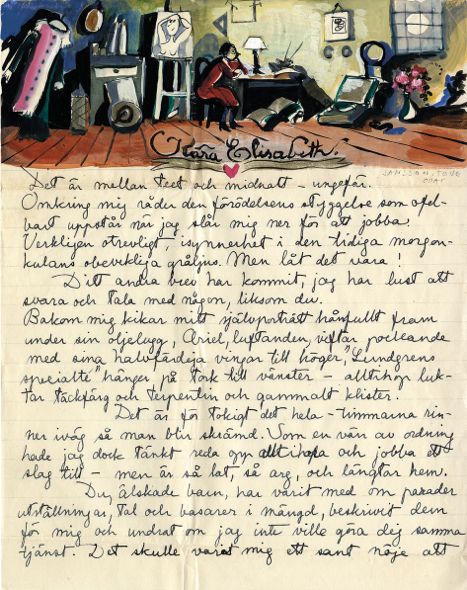
Early days: Tove Jansson went to Stockholm to study art when she was just 16. A letter to her friend Elisabeth Wolff, from November 1932
Artist and author Tove Jansson (1914–2001) is known abroad for her Moomin books for children and fiction for adults. A large selection of her letters – to family, friends and lovers – was published for the first time in September. In these extracts she writes to her best friend Eva Konikoff who moved to the US in 1941, to her lover, Atos Wirtanen, journalist and politician, and to her life companion of 45 years, artist Tuulikki Pietilä.
Brev från Tove Jansson (selected and commented by Boel Westin and Helen Svensson; Schildts & Söderströms, 2014; illustrations from the book) introduced by Pia Ingström
7.10.44. H:fors. [Helsinki]
exp. Tove Jansson. Ulrikaborgg. A Tornet. Helsingfors. Finland. Written in swedish.
to: Miss Eva Konikoff. Mr. Saletan. 70 Fifty Aveny. New York City. U.S.A.
Dearest Eva!
Now I can’t help writing to you again – the war [Finnish Continuation War, from 1941 to 19 September 1944] is over, and perhaps gradually it will be possible to send letters to America. Next year, maybe. But this letter will have to wait until then – even so, it will show that I was thinking of you. Curiously enough, Konikova, all these years you have been more alive for me than any of my other friends. I have talked to you, often. And your smiling Polyfoto has cheered me up and comforted me and has also taken part in the fortunate and wonderful things that have happened. I remembered your warmth, your vitality and your friendship and felt happy! At first I wrote frequently, every week – but after about a year most of it was returned to me. I wrote more after that, but the letters were often so gloomy that I didn’t feel like saving them. Now there are so absurdly many things I have to talk to you about that I don’t know where to begin. Koni, if only I’d had you here in my grand new studio and could have hugged you. After these recent years there is no human being I have longed for more than you. More…
Finland(ia) of the present day
2 December 2010 | In the news

Mikko Rimminen. Photo: Heini Lehväslaiho
The Finlandia Prize for Fiction 2010, worth €30,000, was awarded on 2 December to Mikko Rimminen (born 1975) ; his novel Nenäpäivä (‘Nose day’, Teos) was selected by the cultural journalist and editor Minna Joenniemi from a shortlist of six.
Appointed by the Finnish Book Foundation, the prize jury (Marianne Bargum, former publishing director of Söderströms, researcher and writer Lari Kotilainen and communications consultant Kirsi Piha) shortlisted the following novels:
Joel Haahtela: Katoamispiste (‘Vanishing point’, Otava), Markus Nummi: Karkkipäivä (‘Candy day’, Otava), Riikka Pulkkinen: Totta (‘True’, Teos), Mikko Rimminen: Nenäpäivä (‘Nose day’, Teos), Alexandra Salmela: 27 eli kuolema tekee taiteilijan (’27 or death makes an artist’, Teos) and Erik Wahlström: Flugtämjaren (in Finnish translation, Kärpäsenkesyttäjä, ‘The fly tamer’, Schildts). Here’s the FILI – Finnish Literature Exchange link to the jury’s comments.
Joenniemi noted the shortlisted books all involve problems experienced by people of different ages. How to be a consenting adult? How do adults listen to children? Contemporary society has been pushing the age limits of ‘youth’ upwards so that, for example, what used to be known as middle age now feels quite young. And, for example, in Erik Wahlström’s Flugtämjaren (now also on the shortlist for the Nordic Literature Prize 2011) the aged, paralysed 19th-century author J.L. Runeberg appears full of hatred: being revered as Finland’s national poet didn’t make him particularly noble-minded.
According to Joenniemi, Rimminen’s novel ‘takes a stand gently’ in its portrayal of contemporary life – in a city where a lonely person’s longing for human contacts takes on tragicomical proportions. Joenniemi finds Rimminen’s language ‘uniquely overflowing’. Its humour poses itself against the prevailing negative attitude, turning black into something lighter.
Rimminen has earlier published two collections of poems and two novels (Pussikaljaromaani, ‘Sixpack novel’, 2004, and Pölkky, ‘The log’, 2007) . Pussikaljaromaani has been translated into Dutch, German, Latvian, Russian and Swedish.
Solzhenitsyn and Silberfeldt: Sofi Oksanen publishes a best-seller
25 April 2012 | In the news
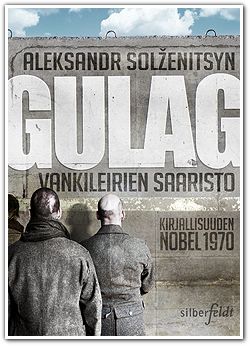
Nobel Prize 1970: Aleksandr Solzhenitsyn
After falling out with her original publisher, WSOY, in 2010, author Sofi Oksanen – whose third novel, Puhdistus (Purge, 2008), has become an international best-seller – has founded a new publishing company, Silberfeldt, in 2011, with the aim of publishing paperback editions of her own books. Its first release was a paperback version of Oksanen’s second novel, Baby Jane.
Oksanen’s new novel, Kun kyyhkyset katosivat (‘When the pigeons disappeared’), again set in Estonia, will appear this autumn, published by Like (a company owned by Finnish publishing giant Otava).
However, in April Silberfeldt published a new, one-volume edition of the autobiographical novel The Gulag Archipelago by the Nobel Prize-winning author Alexandr Solzhenitsyn. This massive book was first published in the West in 1973, in the Soviet Union in 1989.
A Finnish translation was published between 1974 and 1978. Back in those days of Cold War self-censorship, Finnish publishers felt unable to take up the controversial book, and the first volume was eventually printed in Sweden. The work, finally published in three volumes, has long since been unavailable.
This time the 3,000 new copies of Solzhenitsyn’s tome sold out in a few days; a second printing is coming up soon. Oksanen regards the work as a classic that should be available to Finnish readers.
Tiia Aarnipuu: Jonkun on uskallettava katsoa. Animalian puoli vuosisataa [Someone’s got to dare to look. Half a century of Animalia]
28 July 2011 | Mini reviews, Reviews
 Jonkun on uskallettava katsoa. Animalian puoli vuosisataa
[Someone’s got to dare to look. Half a century of Animalia]
Helsinki: Like Kustannus, 2011. 209 p., ill.
ISBN 978-952-01-0582-2
€ 33, paperback
This book has been published to mark the 50th anniversary of Animalia, the Federation for the Protection of Animals. The public image of the organisation has varied between one of a conservative club of ladies and gentlemen and that of a radical terrorist group. Animalia was founded in 1961, inspired by Johan Börtz, a Swede who gave lectures on the plight of animals used in experiments. Animalia began making visits to inspect animal testing facilities, which were completely unregulated in the early 1960s. Gradually the animal rights movement became more radicalised, somewhat later than in places such as Britain. Animal rights became a subject of wider debate in Finland in the 1980s. In the 1990s, the organisation was falsely linked with attacks made on fur farms by direct-action youth groups. Animalia’s stance has been to renounce vandalism and violence. In February 2010 Animalia launched its largest-ever information campaign, aimed at ridding Finland of fur farms by 2025.
Translated by Ruth Urbom