

Search results for "tommi+musturi/2010/05/song-without-words/2009/09/what-god-said/2011/04/matti-suurpaa-parnasso-1951–2011-parnasso-1951–2011"
If grief smoked
31 March 1989 | Archives online, Fiction, poetry
Poems from six collections of poetry. Introduction by Herbert Lomas
The City
How the houses have ascended in this city,
the abysses deepened, the water blackened,
soon to be creeping along the streets.
The railings are rusting through,
the water table’s rising,
the cellars are slopping.
Fear is rising, or being covered up
behind strangling discretion,
outbreaks of crime.
The best thing
30 September 2004 | Fiction, poetry
Poems from Valekuun reitti (‘The path of the false moon’, WSOY, 2004). Introduction by Herbert Lomas
At first light I put my hand
     in the hollow of a white willow –
once someone's cigarette box
had been left there –
     now a bird flew out
going seaward.
Touch of a wingquill on the back of my hand.
     It flew higher.
          In the evening
I felt its touch on my shoulder blade.
Jingle-bells
30 September 1992 | Archives online, Fiction, Prose
An extract from Täällä Pohjantähden alla (‘Here beneath the North Star’), part one, chapter five. Introduction by Pekka Tarkka
Tähti, the rectory’s black carriage-horse, trotted from croft to croft, flashing his white spats. In the sledge, behind the driver, was the rector’s wife, wearing her husband’s heavy fur coat and sitting up very straight.
She began at Koskela. Jussi had finished his rent-work for the week, so she had to drive out to the croft. The little sleigh-bells tinkled so prettily that the boys overcame their shyness and came outside to marvel. These were quite unlike the simple, tinny ‘jingles’ that the old crofters had on their sledges: there was a whole row of bells attached to each half of the smart leather harness-saddle, and they sang out pleasantly and musically every time the highly-strung thoroughbred moved or even quivered. Vilppu could hardly claim to belong to the same species as this splendid creature. The boys had never before seen Tähti at such close quarters. He had wonderful blue-black eyes, and a soft pink muzzle. More…
The enchanted garden
31 December 1993 | Archives online, Fiction, Prose
An extract from Säädyllinen murhenäytelmä (‘A respectable tragedy’, 1941). Introduction by Soila Lehtonen
Artur sat on the balcony and contemplated the windowpanes, hot and bright as dragonfly’s wings. He reached into his pocket and produced an ivory cigarette-holder, inserted a fresh salt-capsule and a cigarette, and began smoking, but the cigarette was not to his taste. His mouth felt hot and dry; he probed the roof of his mouth with his tongue.
An ant was making its way across the floor; Artur’s gaze rested on the garden’s universe of flowerbeds, swarming with insects and blooms; the atmosphere in the garden had the tint of hot dust, apart from the lawn, with its limeblossom-tinged half light. He started to make for the garden: the flowers would all be needing water, and he could go for a swim in the pond. But first he wanted to take a look at his mother: she might manage an hour’s sleep in this heat. He tapped a drift of blue-grey cigaretteash onto the floor. He tiptoed heavily to the old lady’s door, making the floorboards creak, and opened it a fraction. In the green aqueous light thrown by the blind he could make out the reposing outlines of a weak, almost immaterial body; her throat and chest moved gently under her star-crocheted lace, but otherwise the old lady was sleeping lightly as a bird. More…
Twisted tongues
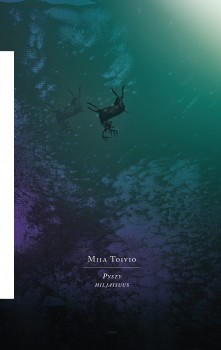 Poems from Pysty hiljaisuus (‘Vertical silence’, Teos, 2013). Introduction and commentary, Writing silence, by Mervi Kantokorpi
She said, it was I who said, alone, my feelings confused. Should I somehow have cleared my head, though all I wanted to do was write in the water? ‘Behind me I drag desire’s reflection, like the skirts of a boat sinking towards the depths,’ she once bespoke me. ‘Your skirts are heavy with algae and their smell would banish even the insects. A deer, swimming across a long lake, becomes entangled by the heel, only worsening things as it thrashes there, until it too falls straight down, never floating, to the bottom of the lake,’ I replied. She turned her back and leant against the wall. I couldn’t see her fingers as she, controlling the sound, ripped off a small, wriggling fin, closed it in her fist and turned towards me with an unnatural smile:

Midsummer madness
31 December 2005 | Archives online, Fiction, Prose
An extract from the novel Voimattomuus (‘Powerlessness’, WSOY, 2005). Introduction by Maila-Katriina Tuominen
Cast:
a man
a woman
a boy
Midsummer Eve. A cabin.Outside it’s raining a little, but the blanket of clouds is already breaking up.
It’s bright in the cabin, like daylight. The table is set.
A bunch of wild violets, torn from its means of support, droops in the middle of the table, surrounded by stemmed glasses and paper napkins folded into the shape of swans. The champagne, aquavit and white wine are still chilling.
A man and a woman walk into the cabin wearing bathrobes. She has a terrycloth towel wound around her head like a turban. They’re coming from the sauna. He looks at the table with surprise. The table is set for three.
She notices the man’s gaze and hurries into the bedroom to get dressed.
He takes a beer out of the refrigerator and sits down at the table in his bathrobe.
A long silence. More…
The Schoolmaster’s bicycle trip
30 June 2005 | Archives online, Fiction, Prose
A short story from the collection Heta Rahko korkeassa iässä (‘Heta Rahko at a great age’, Otava, 1947). Introduction by Vesa Karonen
He was an old teacher, retired, mostly known as ‘the Schoolmaster’ in this small town. It was common knowledge that he’d always been a keen gymnast and sportsman, and after retirement he began pursuing his favourite pastimes in earnest. Evidently he revelled in moving about, like a baby on the crawl, or a feisty youth. He was a man with no personal ties, with no one to patronise or distract him.
‘You grow no wiser, even with age,’ the small-town folk kept sighing. In response to one of these groans, Porki the factory owner said what they thought was almost blasphemy:
‘When did old age ever produce any wisdom? It’s always demolished any little there was….’
And meanwhile, covertly envious, he watched the youthful-looking Schoolmaster striding along his path, lean, sinewy, stern-faced, his tuft of beard only reluctantly thinning and greying. Well, there was a person who’d realised life was motion – and believed it! But Porki and the other bigwigs in the town grew bloated and obese, huffed and puffed, and yawned. More…
A modern mystery play
31 December 1983 | Archives online, Authors
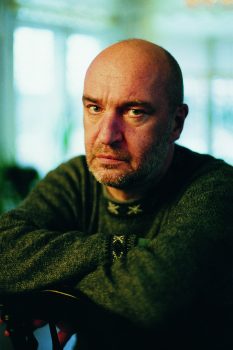
Jussi Kylätasku. Photo: Pertti Nisonen.
Jussi Kylätasku (born 1943) is a prolific writer of poetry, plays – stage and radio – film scripts and novels. Iconoclastically he casts aside the realism that is so characteristic of Finnish drama and so beloved by Finns; but at the same time Kylätasku is very Finnish: paradox is, indeed, characteristic of this infuriating writer, who has delighted critics and public alike. Perhaps the best-known of his plays is Runar ja Kyllikki (‘Runar and Kyllikki’), which was first performed in 1974; his newest work is a novel, published in November by Werner Söderström. One of his most revolutionary plays, however, is Maaria Blomma (‘Mary Bloom’), which might be called an extraordinary modern version of a mediaeval mystery play. What follows is a personal view of the director of the first performance of the play, in 1980, Väinö Vainio.
There are drama scripts, technically assured texts addressing themselves to the burning issues of the day, that inspire one at first reading to predict fruitful interpretations and lasting recognition. Unfortunately, in the Finnish theatre world such forecasts seldom come true. Almost without exception, even those plays whose first performances are successful fall into the jaws of Moloch and rapidly pass into obscurity on dim and dusty archive shelves. More…
Until the sun rises
30 September 2000 | Archives online, Fiction, poetry
Poems from Rakkaus tuli kun lähdin maan ääriin (‘Love came when I left for the ends of the earth’, Tammi, 2000). Introduction by Helena Sinervo
metaxy, like summer
The moon strokes boulders
Left warm by the day, examines
The granite, passion gone tepid
Descends from its solitude
Into sea-carved channels More…
Invisible cities
31 December 1992 | Archives online, Essays
Extracts from Leena Krohn’s collection of essays, Rapina ja muita papereita (‘Rustle, and other papers’, WSOY, 1989).
Past me hurries a man in a rustling anorak. He pushes a card into a crack in the wall. There is a whirring noise, a door opens and, shoulder first, he pushes his way into a cramped room. At eye-level is a black screen, and under it a group of buttons. On the buttons is printed: Cash. Statement. Balance. On an empty button someone has written: Holdup. A question appears on the screen, and deserves our undivided attention: Do you wish to continue with another transaction?
We do! We certainly do. The mild warmth that suffuses the automatic bank pleases me, too. Why shouldn’t it? The warmth of the machine, the heat of money, is itself one of the forms of human energy secreted by the city, however stunted and primitive it may seem as it oozes from the depths of the metal cabinet. More…
Time walks slowly
30 June 2002 | Fiction, poetry
When Eira Stenberg (born 1943) began writing in the heat of of Africa, her pen sank into the paper like a tattooing needle into the skin, she says. Her experiences there are alive in her book of poems entitled Siksi seurustelen varkaiden kanssa (‘That’s why I consort with thieves’, Tammi, 2002)
The journey
Wheels clattering, landscape speeding by the window to the past
notebook on lap she understood the journey’s essence,
that it’s a lap she lost in early childhood
when she stood up and set off walking
away from the arms that had carried her from room to room
giving views from on high as if from a mountain:
the apparitions of things, the furnishings, the tints of pictures
and the bedroom mirror they arrived in,
mother and a child, a holy image she met
again in churches and on altars everywhere
as if it were the purpose of the journey: More…
The three-minute redemption
28 March 2013 | Fiction, Prose
Artist and writer Hannu Väisänen’s alter ego, Antero – who has appeared in Väisänen’s earlier autobiographical novels – is a young artist in his new novel Taivaanvartijat (‘The guardians of heaven’, Otava, 2013). Antero is invited to create the altarpiece for a new church. He rejects conventional, ecclesiastical ‘Sunday art’ and uses simple and versatile everyday symbols; his design contains an ordinary Finnish door key, familiar to everybody. The clergymen and laywomen are appalled: is this art, is it appropriate? In this extract the frustrated Antero takes a therapeutic break – on a roller-coaster
Now I need to get another beat into my head. What can help me forget those morose, curled up creatures, their strange commands and scents? I remember the roller-coaster. And I remember the ancient lore that it’s good to ride the roller-coaster with a lover before you attempt anything else. I go home quickly, throw down my sketch-book and my unnecessarily businesslike briefcase, exchange my suit, which was supposed to indicate devotion, for a windcheater, arrange my hair more carelessly, get on my bike and cycle to the funfair where I know the roller-coaster, the genuine, real, old-fashioned, clanking roller-coaster, to be.
Who could have been the first person to imagine the delights of the roller-coaster? Into whose happy capacity for daydreaming did it fall? Who saw those massive iron tentacles in their figure-eight shapes, those stretched and knotted rings of eternal joy? Who understood that on such a ride shame and anxiety would fall out of one’s pockets? It’s claimed that the first roller-coaster was invented by Catherine the Great. The monarch, with her multifarious patronage of culture, commissioned in Oranienbaum, St Petersburg, the first Montagne Russe amid the amusements of the wise: a Russian mountain with its ice-paths, raised into the air, which melted with the coming of spring. Who else could understand this organ-stirring amusement as deeply as the Great Wife with her hundreds of lovers. In the grip of mortal fear, I too always pray: before I am laid in earth, before the crematorium’s oven, take me once more to the roller-coaster. More…
The universal eye
30 June 1985 | Archives online, Authors
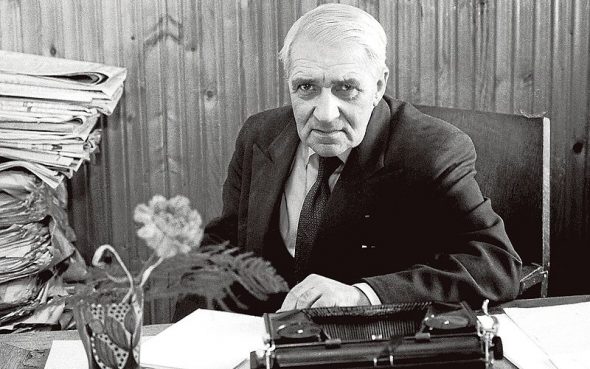
Gunnar Björling. Photo: Holger Eklund
Gunnar Björling (1887-1960) began his poetic career at the age of 35 with the collection of verse Vilande dag (‘Resting day’, 1922), which revealed the influence of romantic idealism and clearly showed its author’s preoccupation with ethical and philosophical problems of existence. Names such as those of Pascal and Spinoza, Guyau and Tagore, Dostoyevsky and Strindberg occur throughout this collection, the basis of which was formed by Björling’s study of the work of the great Finland-Swedish moral philosopher Edvard Westermarck, from whom the poet derived his concept of relativity and his philosophy of the unbounded. The dammed-up energy that can be sensed in this first volume breaks out with full force in Krosset och löftet (‘The cross and the promise’, 1925): with this, the phase of idealistic expectation comes to an end and Björling the expressionist emerges, giving utterance to ‘unbounded life’, in all its clarity and confusion, yet still within the same framework of ‘growing boundedness’: ‘We live in the concrete, and this gives our abstractions fateful wings.’ More…