

Search results for "harjunpää/2010/10/mikko-rimminen-nenapaiva-nose-day"
Re-inventing the book: on the papernet, pod and the unbook
20 May 2009 | Articles, Non-fiction
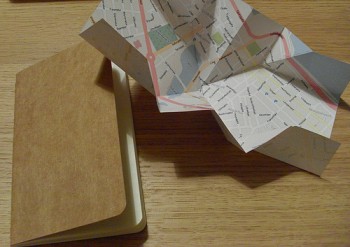
Mind-map: using the papernet to produce books just for you. - Photo: Brian Suda
Just as Books from Finland finally goes online, the brightest minds of the internet are forecasting a return to paper. In the first of a series of articles, the poet and scholar Teemu Manninen celebrates the second coming of the book
Last week I did something I’ve never done before. I uploaded the manuscript of my third book on to the website Books on Demand, an internet print-on-demand (‘pod’) service, chose the format (a large 19×22 cm size with a hard cover), selected a picture for my cover, copy-pasted a poem by Clark Ashton Smith – an American science fiction and fantasy writer – on the back flap and ordered a copy. More…
The book and the rose
3 May 2012 | In the news
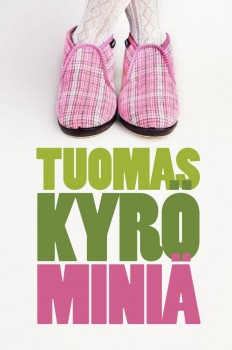 The twenty-third of April – Shakespeare’s birthday – is the international day of the book and the rose. The tradition derives, however, not from England but from Barcelona, where the tradition was for men to give women roses while women gave men books.
This year Finnish booksellers decided to celebrate the occasion by publishing a new novel which was given for free to all customers who made a purchase worth €10. This was the only way to get hold of a copy; the print run was 3,000 copies.
The chosen work was a new novel by Tuomas Kyrö, entitled Miniä (‘Daughter-in-law’). The narrator is the daughter-in-law of the main character of Kyrö’s two popular novels, Mielensäpahoittaja (‘Taking offence’) and Mielensäpahoittaja ja ruskeakastike (‘Taking offence: the brown sauce’). The grumpy old man from the country comes to stay with his son and his daughter-in-law in the capital – which inevitably results in practical (and mainly comical) discordance of various sorts.
The anchor
31 March 1990 | Archives online, Fiction, Prose
An extract from the novel Leo (Söderströms, 1989). Introduction by Marianne Bargum
A summer quickly goes by and the beginning of autumn rolls merrily away. The middle of October is the time when things start slackening off, the harvest over, the flax brought in and the time for slaughter approaching. It is growing darker and the storm rumbles over the village, howling even more wildly out there in the darkness where the ships are gradually beginning to struggle home.
In stormy weather, we become touchy and angry. We think about those out there, and are irritated by minor matters people safe on the mainland make such a furore about. We conscientiously go to church the nearer autumn looms, and there we pray ardently for all those in peril on the sea. But then we have the pastor in the pulpit, irritable and angry like the rest of us, and he takes the opportunity to give us a reminder.
‘Out there in the storm the skipper calls on God, but when the storm dies down, he gives thanks for his own skill’, he begins. So you can work out what is to follow. Not very edified, we make our way home in the mud, in the cold wind, a shoulder like a wedge ahead of us. More…
Winner of the Nordic Council Literature Prize
6 November 2014 | In the news
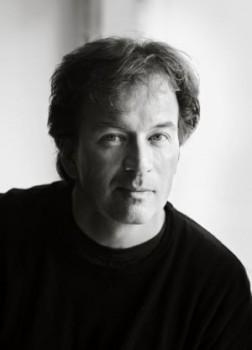
Kjell Westö. Photo: Kata Portin
The Nordic Council Literature Prize 2014 went to Kjell Westö and his novel Hägring 38 (‘Mirage 38’, 2013; in Finnish, Kangastus 38). The prize, awarded since 1962 and worth €47,000, was given on 29 October at a ceremony in Stockholm.
Among the 13 nominees was another Finn, the poet Henriikka Tavi with her collection Toivo (‘Hope’, 2011).
The jury said: ‘The Nordic Council Literature Prize goes to the Finnish writer Kjell Westö for the novel Mirage 38, the evocative prose of which breathes life into a critical moment in Finland’s history [the time before the Winter War, 1939–1940] – one that has links to the present day.’ Here, more on Westö and his winning novel.
Life in the mist
30 December 2001 | Authors

Photo: C-G Hagström
Although most famous for her classic Moomin tales for children, Tove Jansson (1914–2001) also wrote extensively for adults. Maria Antas is surprised by the unexpected coldness of many of these stories of art and solitude
It was easy to love Tove Jansson. The creator of the Moomin characters, painter, author of children’s books and books for adults, she was the public symbol of a rare combination of pure wisdom and human kindness. Finns needed her. As she records in the fragmentary letters that make up the short story ‘Meddelande’ (‘Messages’), people turned to her in order to ask for advice on the most diverse matters: how does one become a good artist, help me to understand my parents, my cat has died: help me! More…
The universal eye
30 June 1985 | Archives online, Authors
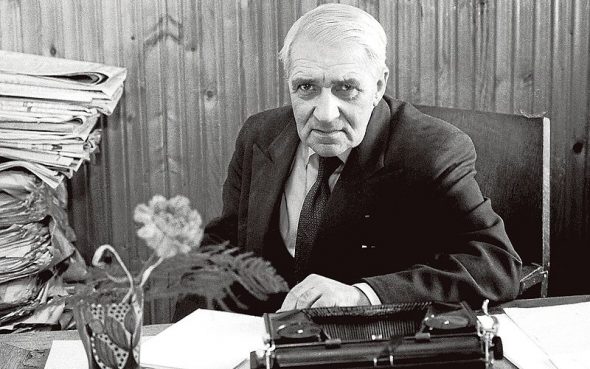
Gunnar Björling. Photo: Holger Eklund
Gunnar Björling (1887-1960) began his poetic career at the age of 35 with the collection of verse Vilande dag (‘Resting day’, 1922), which revealed the influence of romantic idealism and clearly showed its author’s preoccupation with ethical and philosophical problems of existence. Names such as those of Pascal and Spinoza, Guyau and Tagore, Dostoyevsky and Strindberg occur throughout this collection, the basis of which was formed by Björling’s study of the work of the great Finland-Swedish moral philosopher Edvard Westermarck, from whom the poet derived his concept of relativity and his philosophy of the unbounded. The dammed-up energy that can be sensed in this first volume breaks out with full force in Krosset och löftet (‘The cross and the promise’, 1925): with this, the phase of idealistic expectation comes to an end and Björling the expressionist emerges, giving utterance to ‘unbounded life’, in all its clarity and confusion, yet still within the same framework of ‘growing boundedness’: ‘We live in the concrete, and this gives our abstractions fateful wings.’ More…
Finlandia Prize candidates 2011
17 November 2011 | In the news
 The candidates for the Finlandia Prize for Fiction 2011 are Eeva-Kaarina Aronen, Kristina Carlson, Laura Gustafsson, Laila Hirvisaari, Rosa Liksom and Jenni Linturi.
Their novels, respectively, are Kallorumpu (‘Skull drum’, Teos), William N. Päiväkirja (‘William N. Diary’, Otava), Huorasatu (‘Whore tale’, Into), Minä, Katariina (‘I, Catherine’, Otava), Hytti no 6 (‘Compartment number 6’, WSOY) and Isänmaan tähden (‘For fatherland’s sake’, Teos).
Kallorumpu takes place in 1935 in Marshal Mannerheim’s house in Helsinki and in the present time. Laila Hirvisaari is a popular writer of mostly historical fiction: Minä, Katariina, a portrait of Russia’s Catherine the Great, is her 39th novel. Gustafsson’s and Linturi’s novels are first works; the former is a bold farce based on women’s mythology, the latter is about guilt born of the Second World War.
The jury – journalist and critic Hannu Marttila, journalist Tuula Ketonen and translator Kristiina Rikman – made their choice out of 130 novels. The winner, chosen by the theatre manager of the KOM Theatre Pekka Milonoff, will be announced on the first of December. The prize is worth 30,000 euros. It has been awarded since 1984, to novels only from 1993.
The fact that this time all the candidates are women has naturally been the object of criticism: why are the popular male writers’ books of 2011 missing from the list?
Another thing that these novels share is history: five of them are totally or partially set in the past – Finland in 1935, Paris in the 1890s, Russia/Soviet Union in the 18th century and in the 1980s, and 1940s Finland during the Second World War. Even the sixth, Huorasatu, bases its depiction of the present day in women’s prehistory, patriarchy and the ancient myths.
The jury’s chair, Hannu Marttila, commented: ‘This book year is sure to be remembered for a generational and gender change among those who write literature about the Second World War in Finland. Young woman writers describe the war with probably greater diversity than before. From the non-fiction writing of recent years it is clear that the struggles and difficulties of the home front are increasingly being recognised as part of the general struggle for survival, and on the other hand the less heroic aspects of war, the shameful and criminal elements, have also become acceptable as objects of study.’
Marttila concluded his speech: ‘When picking mushrooms in the forest, I have learned that it is often worth humbly peeking under the grass, and that the most glaring cap is not necessarily the best…. Perhaps it is time to forget the old saying that there is literature, and then there is women’s literature.’
Poems
30 September 1977 | Archives online, Fiction, poetry
Poems from I de mörka rummen, i de ljusa (‘In the dark rooms, in the bright ones’, 1976). Introduction by Kai Laitinen
1
He covers his grey floor with glowing carpets.
He has bought them cheap. No one sees they are fakes
except The Great Specialist – but he never comes.
He covers the windows with curtains like waves of silk
and wraps himself up in his food with a blind look of hunger.
Those who follow him – the wife, the children – have to run.
He goes quickly through the dark as though it were hounding him.
He is right: it is hounding him, it catches up with him
when he wakes defenceless in the night. He is abandoned:
all the time there is a noise in the rooms, a burglary,
he is afraid and does not move but in the dark holds
his hand to his eyes, it is cold and strange.
Each day he goes to his life and comes from it.
He is like a wagon. A wagon has its uses.
It trundles heavily past sidestreets and down to the harbour.
He stops: it is light over the sea, a light
hidden by clouds. As though he had seen it once, before.
What he sees is nothing, stretching far away.
There are waves, but they are all standing still. More…
Suomalaiset tutkimusmatkat [Finnish scientific expeditions]
23 December 2009 | Mini reviews, Reviews
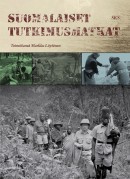 Suomalaiset tutkimusmatkat
[Finnish scientific expeditions]
Toim. [Edited by] Markku Löytönen
Helsinki: Suomalaisen Kirjallisuuden Seura, 2009. 480 p., ill.
ISBN 978-951-746-774-2
€ 64, hardback
This book is a comprehensive survey of Finnish scientific expeditions from the 18th century up to the present day. It covers the sciences that traditionally involve field research: geology and palaeontology, botany and zoology, geography, oceanography, archaeology, linguistics, and anthropology. The book consists of 13 chapters written by experts in their respective fields. The best-known expeditions undertaken by Finns are A. E. Nordenskiöld’s voyage to the North-East Passage, J. G. Granö’s expedition to the Altai Mountains and Rafael Karsten’s travels with Amazonian headhunters. Other chapters tell of current fieldwork projects involving Finns, including research in the Amazon region and Antarctica, as well as the high Arctic. This book does not confine itself to Earth-bound scientific research; it even includes cosmology and space research – areas where scientific equipment developed by Finns have played important roles.
Tweet! Oink! Ow!
14 June 2012 | This 'n' that
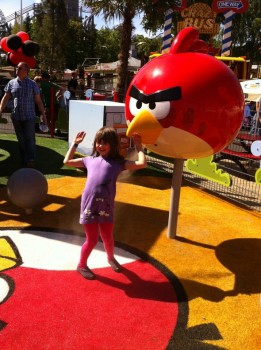
Fan fun: Angry Birds theme park, Tampere. Photo: Hildi Hawkins
For anyone who’s not a fan, it can be hard to see what has made the Finnish-born game Angry Birds the number one paid smartphone app in the world.
Catapulting wingless birds at pigs seems an unlikely route to hours of focused fun; but then, the same could seem true, prima facie, of moving a set of unrelated figures around a chequerboard according to some rather arbitrary rules. There are similarities, though – as 10-year-old Sophia said, ‘Angry Birds is a lot like chess – only more fun.’
So, when the most junior members of the Books from Finland editorial team – Max (3), Tia (6) and the above-mentioned Sophia (see their previous review here) – discovered that the world’s first officially sanctioned Angry Birds theme park was opening during their visit to Finland, it was obvious they had to be there for the occasion.
Friday 8 June was a fabulously sunny day for a trip to Tampere, Finland’s second city, and its famous Särkänniemi fun fair, on a spectacular location between two lakes. Angry Birds Land was packed with the nursery- and primary-aged children it’s intended for. More…
On the road, in the world
21 March 2013 | Reviews
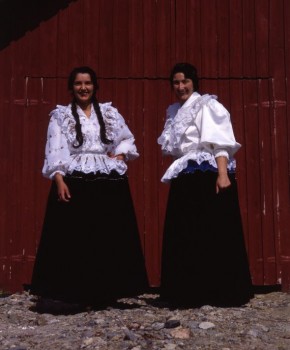
In Romani dress: Finnish Romani women still wear their traditional velvet skirts (which weigh 5-8 kilos). Photo: Topi Ikäläinen, 1983
Suomen romanien historia
[A history of Finland’s Romani people]
Toimittanut [Edited by] Panu Pulma
Helsinki: Suomalaisen Kirjallisuuden Seura (the Finnish Literature Society), 494 p., ill.
ISBN 978-952-222-364-7
€57, hardback
The Romani people set out from India around a thousand years ago; there are those who even claim that they originated in Egypt long before that. This latter account was favoured among the Romani in Europe, and so their leaders took to styling themselves the Dukes of ‘Egypt Minor’ or ‘Little Egypt’.
The Romani of Europe are generally considered to have come from northern India in the 15th century. They arrived in Finland – which at that time was part of Sweden – in 1512.
Five hundred years later, it seems a fitting time to publish Suomen romanien historia, a volume edited by Panu Pulma, PhD, a university lecturer in Finnish and Nordic history, with chapters contributed by a total of 14 additional experts.
The Romani who reached Stockholm, also in 1512, were said to be from ‘Egypt Minor’. This purported connection with Egypt is the origin behind the English word gypsy. The Swedish word zigenare (related to the German Zigeuner) did not come into use until the 17th century. More…
More Tumpkin tales
30 June 1992 | Archives online, Children's books, Fiction, poetry
Poems from Tiitiäisen pippurimylly (‘The Tumpkin’s pepper mill’, Otava, 1991). Kirsi Kunnas’s classic children’s books, Tiitiäisen satupuu (‘The Tumpkin’s story tree’) and Tiitiäisen tarinoita (‘The Tumpkin’s tales’), appeared in 1956 and 1957
Mr Saxophone and Miss Clarinet
Mr Saxophone
	went moony
	beginning to fret
about Miss Clarinet:
	Moan moan moan
	darling little crow!
	I love you so!
moaned Mr Saxophone.
Miss Clarinet
was very upset:
	I won't be owned!
	And I'm no little crow!
	I sob like a dove,
	and even about love
	I sing alone!

	Oh moan moan moan
groaned Mr Saxophone.