

Search results for "tommi+musturi/2010/05/song-without-words/2009/09/what-god-said"
Finding a voice
13 November 2014 | Authors, Reviews

Pajtim Statovci. Photo: Tommi Tuomi
Here it is, finally: Pajtim Statovci’s debut novel is the first book of literary merit written in Finnish by an author who originally came to Finland from the former Yugoslavia, Kosovo. Kissani Jugoslavia (‘Yugoslavia, my cat’, Otava, 2014) is a wild depiction of identity, told simultaneously from the perspectives of the mother of an immigrant family and her son. Statovci builds a keen sense of tension between the narrative of the Albanian woman and that of her youngest son.
Born in Podujevë, Kosovo, in 1990, Statovci came to Finland at the age of two. He is studying comparative literature at the University of Helsinki and film and television scriptwriting at the Aalto University. The French and Norwegian translation rights to Kissani Jugoslavia were sold before the book had even been published. More…
Runeberg Prize 2013 for poetry
8 February 2013 | In the news
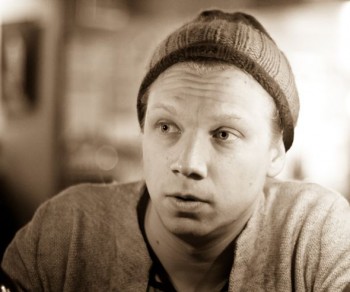
Olli-Pekka Tennilä. Photo: Aleksis Salusjärvi, 2012
The Runeberg Prize for fiction, awarded on 5 February, this year for the twenty-seventh time, went to a book of poetry by Olli-Pekka Tennilä (born 1978).
Tennilä’s second work, Yksinkeltainen on kaksinkeltaista (‘Doubly simple’, a pun: yksinkertainen = simple, kaksinkertainen = double, keltainen = yellow), published by Poesia, makes use of a child’s open-minded use of language and studies the world of the bees. Tennilä is one of the founding members of Osuuskunta Poesia, a poetry cooperative, and is currently its publishing director.
The prize, worth €10,000, was awarded on 5 February – the birthday of the poet J.L Runeberg (1804–1877) – in the southern Finnish city of Porvoo.
The jury, writer Tommi Melender, critic Siru Kainulainen and theatre manager Dan Henriksson – representing the prize’s founders, the Uusimaa newspaper, the city of Porvoo, both the Finnish and Finland-Swedish writers’ associations and the Finnish Critics’ Association – chose the winner from a shortlist of eight books. In their opinion the winning work is both ‘a structurally controlled and expressively vital whole; it demonstrates how the linguistic logic of a small child can be employed again as an adult.’
The other seven finalists were a book of essays, Toinen jalka maassa ja muita esseitä (‘One foot on the ground and other essays’, WSOY) by Markku Envall, two poetry collections, Keisarin tie (‘The emperor’s road’, Otava) by Lassi Hyvärinen and Kuolinsiivous (‘Death cleaning’, WSOY) by Eeva Kilpi, two collections of short stories, Kadonnut ranta (‘Lost shore’, WSOY) by Tiina Laitila Kälvemark and Till dig som saknas (‘To you who are missing’, Schildts&Söderströms) by Peter Sandström, as well as two novels, Rikosromaani (‘Crime novel’, Otava) by Petri Tamminen and Neuromaani (‘Neuromane’, Otava) by Jaakko Yli-Juonikas.
Kirja muuttuvassa tietoympäristössä [The book in a changing information environment]
21 August 2014 | Mini reviews, Reviews
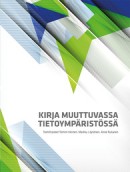 Toim. [Ed. by] Markku Löytönen, Tommi Inkinen, Anne Rutanen
Helsinki: Suomen tietokirjailijat ry. [The Finnish Association of Non-Fiction Writers], 195 p., ill.
ISBN 978-952-67356-3-4
paperback; available also online:
http://www.suomentietokirjailijat.fi/jasenyys/julkaisut/kirja-muuttuvassa-tietoymparisto/
In the Western world the experience of reading is undergoing a critical change. There is even talk of a third information revolution. Books are increasingly acquiring electronic form, and the future of the printed book is being called into question. Kirja muuttuvassa tietoympäristössä contains the considered opinions of 18 experts on what is taking place in the field of non-fiction, and gives an overview of the literature on the current situation, which is seen from the point of view of the bookstore, the library, the author and the publisher. There is a discussion of intellectual property issues, developments in technology, and changes in the use of teaching materials, language, and reading habits. Finland is a leading country in both literacy and reading. The number of books has slowly declined in recent years, but it seems that the country’s youth has maintained an interest in books, and in fiction in particular. Although printed reference works of the encyclopedia type have given way to the information provided by the Internet, it is likely that literature and reading will preserve their status as a part of human culture.
Translated by David McDuff
Finlandia Prize for Non-Fiction 2011
24 November 2011 | In the news
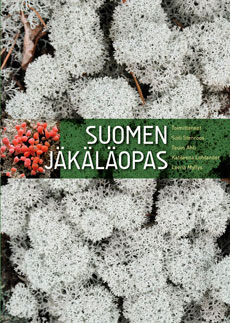 ‘Scientific, aesthetic, timely: the work is all of these. A work of non-fiction can be both precisely factual and emotional, full of both information and soul. A good non-fiction book will surprise. I did not expect to be enthused by lichens, their variety and colours,’ declared Professor Alf Reen in announcing the winner of this year’s Finlandia Prize for Non-Fiction on 17 November.
The winning work is Suomen jäkäläopas (‘Guidebook of lichens in Finland’), edited by Soili Stenroos & Teuvo Ahti & Katileena Lohtander & Leena Myllys (The Botanical Museum / The Finnish Museum of Natural History). The prize is worth €30,000.
The other works on the shortlist of six were the following: Kustaa III ja suuri merisota. Taistelut Suomenlahdella 1788–1790 [(‘Gustav III and the great sea war. Battles in the Gulf of Finland 1788–1790’, John Nurminen Foundation), written by Raoul Johnsson, with an editorial board consisting of Maria Grönroos & Ilkka Karttunen &Tommi Jokivaara & Juhani Kaskeala & Erik Båsk; Unihiekkaa etsimässä. Ratkaisuja vauvan ja taaperon unipulmiin (‘In search of the sandman. Solutions to babies’ and toddlers’ sleep problems’ ) by Anna Keski-Rahkonen & Minna Nalbantoglu (Duodecim); Operaatio Hokki. Päämajan vaiettu kaukopartio (‘Operation Hokki. Headquarters’ silenced long-distance patrol’), an account of a long-distance patrol strike in eastern Karelia during the Continuation War in 1944, by Mikko Porvali (Atena); Trotski (‘Trotsky’, Gummerus; biography) by Christer Pursiainen; and Lintukuvauksen käsikirja (‘Handbook of bird photography’) by Markus Varesvuo & Jari Peltomäki & Bence Máté (Docendo).
Crime, no punishment
24 June 2014 | In the news
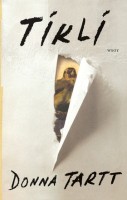 Summer is the season for crime – where buying and reading books is concerned. When spring ends and summer begins, several whodunits and thrillers appear on the list of best-selling books compiled by the Finnish Booksellers’ Association. However, on the translated fiction list Donna Tartt rules with her novel The Goldfinch (Tikli, WSOY).
For the third time since March, number one on the Finnish fiction list in May was Tommi Kinnunen’s first novel, Neljäntienristeys (‘The crossing of four roads’, WSOY). In March this title reached the top after favourable reviews – in the Helsingin Sanomat daily paper in particular.
The narrative spans a century, beginning in the late 19th century, and is set mainly in Northern Finland. The Swedish publisher Norstedts was the first to buy the translation rights.
The next two on the list are crime novels: Cowboy (Otava) by Reijo Mäki and Mustat sydämet (‘Black hearts’, Crime Time) by Seppo Jokinen. The new ‘granny crime’ book by Minna Lindgren, the sequel to her Kuolema Ehtoolehdossa (‘Death at Twilight Grove’, 2013, Teos), entitled Ehtoolehdon pakolaiset (‘Twilight Grove refugees’) is number five; the resourceful 90-year-plus protagonists may not be criminals themselves, but odd things are certainly happening in the home for the elderly again. Lindgren’s first book is making its way into other languages as well.
Soiva laulukirja (‘The singing songbook’, Tammi), edited by Soili Perkiö, tops the list of books for children and young people: the push of a button delivers a piano accompaniment to any one of 50 Finnish songs. It may prove to be particularly popular with parents as entertainment for their kids on long car journeys.
Five of the other nine of the best-selling books on the translated fiction list – on which Tartt was number one – are about serial killers and other murderers.
The non-fiction list is headed by a collection of messages from the spiritual world: the pop star Katri Helena (born 1945) who debuted in 1963, has written down what she feels her dead loved ones have chosen to tell her. Taivaan tie (‘Heaven road’, Otava) deals with love, conscience, good deeds and the good life. One might wonder though why this selection of aphoristic observations is included in the non-fiction category.
On the list there are also books on baking cakes and cooking, and, as usual in summer, on nature, as people retreat to their summer homes to lie in hammocks to listen to birdsong and read about serial killers.
Gorgonoids
31 March 1993 | Archives online, Fiction, Prose
From Matemaattisia olioita tai jaettuja unia (‘Mathematical creatures, or shared dreams’, WSOY, 1992). Introduction by Soila Lehtonen
The egg of the gorgonoid is, of course, not smooth. Unlike a hen’s egg, its surface texture is noticeably uneven. Under its reddish, leather skin bulge what look like thick cords, distantly reminiscent of fingers. Flexible, multiply jointed fingers, entwined – or, rather, squeezed into a fist.
But what can those ‘fingers’ be?
None other than embryo of the gorgonoid itself.
For the gorgonoid is made up of two ‘cables’. One forms itself into a ring; the other wraps round it in a spiral, as if combining with itself. Young gorgonoids that have just broken out of their shells are pale and striped with red. Their colouring is like the peppermint candies you can buy at any city kiosk. More…
Misery me
Extracts from the collection of short prose, Mielensäpahoittaja (‘Taking offense’, WSOY, 2010)
Past pushing up daisies
Well, yeah, so I took offense when the doctor said that considering my age I’m in tip-top shape. His theory was that my 25-kilometre ski circuits would keep an old coot like me in shape, if they didn’t kill me first. He said if I were to start just sitting on the couch and waiting, then the Reaper would be on my back in no time.
I don’t ski for my health. I ski because it’s pretty in the forest, and when a body is sweating he doesn’t think a whole lot. More…
One night stand
31 March 1987 | Archives online, Fiction, Prose
Stories from Yhden yön pysäkki (‘One night stand’, 1985) and Unohdettu vartti (‘The forgotten quarter’, 1986). Introduction by Pekka Tarkka
At the beginning of November it really started to freeze. A month earlier than usual. There was little snow to speak of, but the ground froze hard as bone.
Tamed by hunger, reindeer clustered along the roadsides and on the village outskirts. Many of them ended their misery by flinging themselves under the timber-lorries in the evening dark. Bony and bloody carcasses littered the ditches and field-edges.
Then the snowstorms came. It snowed without stop for nearly two weeks. At times the whole landscape was reduced to a white line. Snowdrifts mounted round the houses and up the snow fences. The reindeer carcasses lay about under the snowbanks, waiting for spring. More…
A long dream
9 October 2009 | Fiction, Prose
A short story from Jälkikasvu (‘Offspring’, Otava, 2009)
‘I was eating a late breakfast, without a care in the world, when it happened.’
He snaps off the recorder. He has said the same thing three times now, but he always loses his train of thought right there. Why is it so difficult to continue? In his mind, the next part feels quite clear, but the words simply won’t come out of his mouth. He ought to say that his wife left him yesterday, on the twelfth of February, at 10:48 AM, following a three-minute fifteen-second briefing. More…
We’re all perfect
31 December 1990 | Archives online, Fiction, poetry
Poems from Laki (‘The law’, 1990)
The Law
No one’s stupid – there are
people deprived of the wise,
and those with self-respect
knocked flat. No one’s
hardened – there are people with
calloused wounds.
No one’s blind – there are
people cataracted by custom. Be different:
heal wounds and look up – wake
your dear one in mid-sleep, hug her.
(We’re all perfect.) More…
Close encounters
31 March 2003 | Archives online, Fiction, Prose
Stories from Konservatorns blick (‘A conservator’s gaze’, Schildts, 2002). Introduction by Fredrik Hertzberg
Unmarried and randy in a hotel foyer
The hotel foyer in Baghdad was swarming with people as anxious to advertise themselves as westerners at the opening of an art exhibition. I bumped into a man who quickly introduced himself, handed me his card and wondered whether I had an engagement that evening.
‘No,’ I said, truthfully.
‘Then kindly come home with me at nine,’ he said, with a florid gesture in the direction of my breasts.
‘No thank you,’ I answered. ‘I do have an engagement, I’ve just remembered.’ More…
Money makes the world go round
31 August 2012 | Fiction, Prose
Extracts from the novel Mr. Smith (WSOY, 2012). Introduction by Tuomas Juntunen
I have a confession to make.
I couldn’t have lived on my salary. Most people would solve this by taking out a loan, living on credit. I’ve never lived in debt. Instead I’ve had to make my modest capital grow by investing it – through the company, of course, because irrespective of their colour governments generally understand companies better than small investors. You have to make money somewhere other than the Social Security Office.
Work doesn’t make money; money makes money.
You have to let money do the work.
This is nothing short of a profound human tragedy: most people are forced to waste the majority of their lives, to use it in the service of complete strangers, for unknown purposes, doing something for money that they would never do if they didn’t have to. The most shocking thing is that people actively seek out this state of affairs, strive towards it; it is a goal towards which society lends us its full support, no less.
Such wage slavery is called ‘work’. More…
Pekka the brave
31 December 1983 | Archives online, Children's books, Fiction
An extract from Pekka Peloton (‘Pekka the brave’, 1982). Introduction by Leena Kirstinä
The other ghost was now very close to the Bear. The inhabitants of the Green Woods had pulled back out of its way in terror but the poor Bear couldn’t even get himself to budge. Miserable, he had covered his eyes and slumped down in his own fur.
‘Psst,’ the ghost whispered. ‘Hi, Bear, it’s only me.’ And the ghost poked the Bear in the ribs. ‘It’s me, Pekka. Come on, open your eyes!
But the Bear didn’t make a move to do what Pekka had asked and Pekka began to get worried. He knew the Wolf wouldn’t stay put for a very long time and little by little would start to wonder what this was all about. ‘Dear Bear,’ Pekka said in a louder voice, and punched him as hard as he could. ‘Get up! We haven’t much time … ‘ Pekka’s voice was trembling. ‘Look! I’ve got the key to your courage right here … ‘ More…
Lemminkäinen unfazed
30 September 2000 | Archives online, Fiction, poetry, Prose
An English translation by Anselm Hollo of Runo XI from Kalevala 1999, Kai Nieminen’s new translation of the national epic (1849), into contemporary Finnish. Interview with Kai Nieminen by Anselm Hollo
But now it is time to tell about Lemminkäinen, a.k.a. Ahti the Islander. Young Ahti was handsome and cheerful. His mother raised him on the shores of a headland where he went fishing, ate fish and grew up strong smart and straight. But his character had a flaw: a womanizer is what he became, our Lemminkäinen (also known as Wandering Mind). He spent his days chasing the girls, his nights making love to them.
Below and above the surface
13 March 2014 | Extracts, Non-fiction
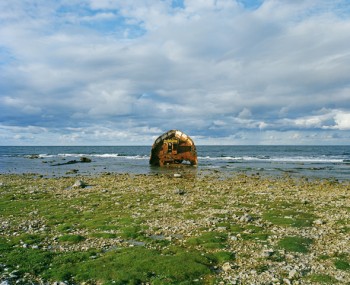
Fårö, Gotland, Sweden. Photo: Lauri Rotko
The Baltic Sea, surrounded by nine countries, is small, shallow – and polluted. The condition of the sea should concern every citizen on its shores. The photographers Jukka Rapo and Lauri Rotko set out in 2010 to record their views of the sea, resulting in the book See the Baltic Sea / Katso Itämerta (Musta Taide / Aalto ARTS Books, 2013). What is endangered can and must be protected, is their message; the photos have innumerable stories to tell
We packed our van for the first photo shooting trip in early May, 2010. The plan was to make a photography book about the Baltic Sea. We wanted to present the Baltic Sea free of old clichés.
No unspoiled scenic landscapes, cute marine animals, or praise for the bracing archipelago. We were looking for compelling pictures of a sea fallen ill from the actions of man. We were looking for honesty. More…