

Search results for "tommi+musturi/2010/05/song-without-words/2009/09/what-god-said"
A happy day
12 August 2010 | Fiction, Prose
‘Muttisen onni eli laulu Lyygialle’ (‘Muttinen’s happiness, or a song for Lygia’‚) a short story from Kuolleet omenapuut (‘Dead apple trees’, Otava, 1918)
‘Quite the country gentleman, eh, what, hey?’ says Aapeli Muttinen the bookseller. ‘Like the poet Horace – if I may humbly make the comparison, eh, dash it? With his villa at Tusculum, or whatever the place was called, given to him by Maecenas, in the Sabine hills, wasn’t it? – dashed if I remember. Anyway, he served Maecenas, and I serve – the public, don’t I? Selling them books at fifty pence a copy.’
Muttinen’s Tusculum is his little plot of land in the country. A delightful place, comforting to contemplate when the first signs of summer are beginning to appear, after a winter spent in town in the busy pursuit of Mammon, under skies so grey that the wrinkles on Muttinen’s forehead must have doubled in number. A summer paradise of idleness… More…
The path-walker
A short story from Sisustus (‘Interior decoration’, Tammi, 2000)
I do not know where I came from. Suddenly, I was just there. I stood on my feet. They support me. I look out of my eyes. I do not see them.
Sounds arrive in my ears. Moment by moment, I distinguish them better. I see the landscape through which I am walking. I distinguish the trees from each other. The path runs between them, and I stare at them, as if staring into a twilight that, when you look more closely, splits into trees, bushes, birds. I feel the roots through the soles of my shoes. I feel the softness of the moss, the pine-cones and the little stones. More…
The Earth is a snowball
31 March 1995 | Archives online, Prose
A short story from Resa runt solen (‘Journey round the sun’, Schildts, 1994). Introduction by Ann-Christine Snickars
It is a day in August and even though I can sense that the end of the summer is nearer than the beginning, my hours are still as long as days. I am a child and live in the midst of summer’s eternity.
This morning I wake up earlier than anyone else. It isn’t usually that way. Usually Mårten is the first of us two to get up, but now he is asleep with his face turned to the wall. I stay in bed for a while, listening. It is also quiet in the other room, where Mama is asleep. Now I remember that it’s today Papa is coming out to see us after working in the town all week.
I open the curtain a little and see that the sky is blue and not grey with heavy rainclouds as it has been these past few days. I quickly put on my few clothes, a thin striped cotton sweater, my shorts and my brown plimsolls. I push the door open, stand on the steps and breathe a morning air that still smells more of summer than of autumn. I listen to the familiar sounds: twittering birds, the wind in the treetops and crying gulls over the bay. More…
The only time for loving
31 December 1998 | Archives online, Fiction, poetry
Poems from Iloiset harhaopit (‘Happy heresies’, WSOY, 1998). Introduction by Herbert Lomas
Thief
Down from the top floor crept
a kind thief
and loaded a bed with silver,
nicked from a house in the harbour.
‘Ah,’, he said, like Weiss: ‘an
impecunious lot – no hope of swag.
The lady’s purse is empty, nothing but
matches, sugar, a teabag.
Too few frocks in the wardrobe too
for a pretty lady.’
Morning, and the bedside chair
is piled with frocks from the neighbour’s line.
A proper thief is smitten
and shows his philosophy of crime,
and I’m a poet!
Neither foxes nor police dogs stir my heart
but I do love the sheer out-and-out howling
dottiness of our time. More…
Night decorator
31 March 2007 | Archives online, Fiction, Prose
A short story from the collection Yönseutuun (‘Around nighttime’, WSOY, 2006). Introduction by Jani Saxell
Hardly a night went by.
I didn’t want to offend him in any way by my indifference, but as I went to bed I was totally beat, squeezed dry by my day. My most important chore at home was to guard my own rest; people’s survival depended on it being consistent and nourishing. I didn’t concentrate on anything else in my free time.
But often when I was ready for bed, a sharp metal ‘zzzip’ would come from the direction of the living room. A little later I would hear a drawn-out ‘clllack!’, which told me the measuring tape had retracted into its case, the newest interior design had taken shape on the back of some receipt, and Y would soon be coming to see if I was awake and open to suggestions. More…
Writing silence
6 June 2013 | Fiction, poetry, Reviews
In contemporary poetry the ‘lyric I’ of previous decades often hides behind language; the poem’s speaker is not the poet him/herself, narrative is not the norm. The website of a Finnish family magazine in 2007 discussed this: ‘OMG, this thing called contemporary poetry – crap!’; ‘Who knows what kind of psychopharma the writer’s on!’; ‘No meanings, just words one after the other. Why can’t people write something sensible?’ But the writer – and the reader – of contemporary poetry deliberately ventures onto the boundaries of language, and art requires readers (listeners, viewers) to make the decision of what they consider ‘sensible’. Mervi Kantokorpi explores and interprets two new collections of poetry
I read two of this spring’s new collections of poetry one after the other: Kivirivit (‘Stone lines’, Otava 2013) by Harry Salmenniemi and Pysty hiljaisuus (‘Vertical silence’, Teos 2013) by Miia Toivio. The experience was perplexing.
These two works are completely different from one another as regards their individual poetics, and yet the similarities between the themes that arise from them was arresting. Both works seem to inhabit an internal world of sorrow and depression, a world where the function of poetry is to forge and show its readers a path out of the anxiety. In their silence – and even emptiness – both collections have two faces: one lit up, the other darkened by grief. More…
A greater solitude
30 December 2004 | Fiction, Prose
Extracts from the novel Runoilijan talossa (‘In the house of the poet’, Tammi, 2004)
Images of love
The double door to the patio is tightly swollen into the framework, so tight I’m chary of using force to prize it open. The windows might break. The lower part remains stuck, as if screwed to a carpenter’s bench, while the upper part gapes – leans out as if longing to liberate itself from its lintel. That’s an image of love: one part longs to be free, the other part holds on fast. I get a toolbox from the cleaning cupboard and try to hammer a chisel into the space between the bottom edge and the threshold. I succeed, but the chisel marks the door, defacing it. That’s an image of love too. More…
Northern exposure
3 September 2005 | Archives online, Fiction, Prose
Extracts from the novel Valon reunalla (‘At the edge of light’, Teos, 2005). Introduction by Kristina Carlson
Kari
The village despised all those who left. They hated us too, though we were still only planning our final escape.
We used to escape the village. We would hide from its gaze in the forest or the cemetery where the gravestones were so close together that there was no room for the trees to grow. We knew why the freight train brought the village so many dead and so few living. It was the village’s fault. It had a wicked soul. The grown-ups didn’t know it. We knew it, but no one asked us. Death was within us; it was alive. Asking would have been too dangerous….
On the backs of the headstones we carved our own marks with the end of a knife. We blew out the candles laid at the graves of suicide victims. We worshipped them in the dark and no new candles were ever brought to their graves. The parents of those who died so young drove south. They were looking for stations with real waiting rooms and staff that made announcements. They sat on the hard benches waiting, waiting for the trains to come, at the right time; hoping the years wouldn’t wreak havoc after all, hoping they’d roll slowly back along the tracks, to brighten as they approached the village, giving life once again to their children. And everything could start over. More…
Damned nihilists
30 December 2008 | Extracts, Non-fiction
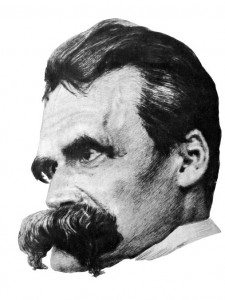
Much misunderstood: father of the superman, Friedrich Nietzsche.
The term nihilism is often bandied about, but often badly misunderstood. In extracts from his new book, Ei voisi vähempää kiinnostaa. Kirjoituksia nihilismistä (‘Couldn’t care less. Writings on nihilism’, Atena, 2008), the social scientist and philosopher Kalle Haatanen discusses the true legacy of Friedrich Nietzsche, nihilism’s high priest
The word nihilist is derived from the Latin: ‘nihil’ means, simply, ‘nothing’. When someone is labelled as nihilist or seen as representing nihilism, this has always been a curse, a mockery or an accusation, whether in philosophy, politics or everyday conversation. More recently, the word has generally been used to refer to people who do not believe in anything – people whose world-view is without principle, without ideals, barren. More…
The Last War Hero
31 March 1981 | Archives online, Fiction, Prose
An extract from 30-åriga kriget (‘The Thirty Years’ War’). Introduction by Markku Envall
First he heard the noise.
It was an unfamiliar noise and therefore doubly dangerous. Viktor grabbed his machine-pistol. It was a sputtering noise, like that of a cracked machine-gun. But it came from above. And what came from above could be dangerous, Viktor knew.
Then he saw the helicopter, flying just above the tree-tops. He had never seen a helicopter before. Nor had he ever seen the circular markings carried by the aircraft as a sign of the nationality. More and more nations were getting involved, he had had a visit from an American, for all he knew this might be a plane from Australia. The Russians must be in a tight corner if they had to keep sending their allies into the firing line.
He bitterly regretted having let the American sergeant get away.
Now they were after him in real earnest. It must have been the Yankee who had sent them.
Viktor directed a long burst of fire at the plane, which was now hovering almost motionless in the air, like a bee over a flower. The bullets shattered the roboter blades, splinters flew in all directions, and the helicopter dived at a steep angle and plunged into the lake. Viktor leapt to his feet and shouted “Hurrah!” and proceeded to execute a gleeful victory dance. He had shot down an enemy aircraft. More…
Fruits of reading
30 December 1998 | Authors, Interviews

Photo: Promedia
This is an edited version of an interview published in Leva skrivande. Finlandssvenska författare samtalar (‘Living by writing. Finland-Swedish writers in conversation’), edited by Monika Fagerholm (Söderströms, 1998)
Bo Carpelan is one of the most translated of Finnish writers; his novel Axel (1986) attracted international attention when it was published in English translation. Here, in our occasional series of interviews with writers, he is in conversation with fellow poet Mårten Westö
Mårten Westö: The American writer Paul Auster has said: ‘A young person who wants to be an artist or a writer is above all influenced by art. But a young writer has nothing to say. One has a love of literature, but one can only imitate other writers to begin with. It takes a long time before one finds one’s own way.’ What do you think of that statement?
Bo Carpelan: Of course there’s a lot in what he says. At the same time I am convinced that one must have at least the shadow of one’s own voice from the very outset, otherwise what one writes turns out to be merely plagiarism. But to start with one does probably tend to work in close association with tradition. That was also true of me, but in my own view I didn’t continue – as has often been asserted – in the wake of Finland-Swedish modernism. It is of course quite possible that later on I returned to it, but the basis of my activity was probably the American New Criticism: the large anthologies on criticism and poetry that I read in the 1950s. Those influences have left their clearest traces in the very comprehensive bibliography of my academic work on the Finland-Swedish poet Gunnar Björling. In the last chapter of the dissertation I also tried to draw my own guidelines as to what I mean by poetry: that it is concrete and synthetic. More…
Living with a genius
23 June 2015 | Extracts, Non-fiction
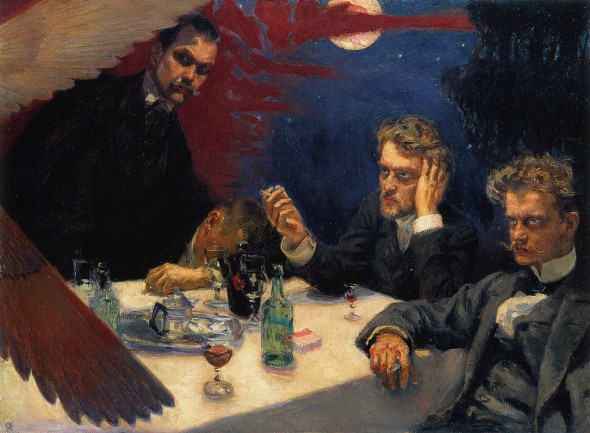
Akseli Gallen-Kallela’s painting Symposium (1894). From left: Akseli Gallen-Kallela, the composer Oskar Merikanto, the conductor Robert Kajanus and Jean Sibelius. Aino Sibelius was not pleased with this depiction of her husband depicted during a drinking session with his buddies
It is 150 years since the birth of Finland’s ‘national’ composer, Jean Sibelius. Much has been written about his life; Jenni Kirves’s new book casts light on his wife, Aino (1871–1969), and through her on the composer’s emotional and family life.
Aino, Kirves remarks in her introduction, has often been viewed as an almost saintly muse who sacrificed her life for her husband. But she was flesh and blood, and the book charts the difficulties of life with her brilliant husband from the very beginning – his unfaithfulness during their engagement, how to deal with a sexually transmitted infection he had contracted, his alcohol problem, the death of a child. It was Aino’s choice, time and again, to stand by her man; she felt it was her privilege to support her husband in his work in every possible way. ‘For me it is as if we two are not alone in our union,’ she wrote, far-sightedly, as a young bride. ‘There is also an equally rightful third: music.’
Aino’s own family, the Järnefelts, were a considerable cultural force in Finland, supporters of Finnish-language education and the growing independence movement. Her brothers included the writer Arvid Järnefelt, the artist Erik Järnefelt and the composer Armas Järnefelt. It was Armas who introduced her to his friend Jean Sibelius.
Aino bore Sibelius – known in family circles as Janne – six daughters, and offered her husband her unfailing support through 65 years of married life. ‘I must have you,’ Sibelius wrote, ‘in order for my innermost being to be complete; without you I am nothing… For this reason you are as much an artist as I am – if not more.’
As an old lady, Aino remarked of her own life that it had been ‘like a long, sunny day.’

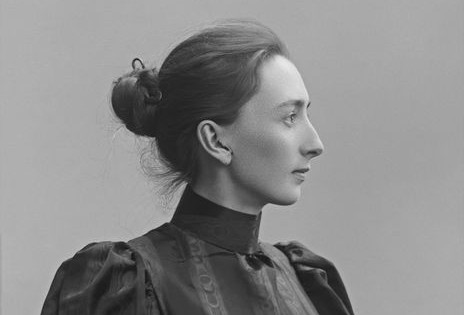
Aino Sibelius, 1891. Photo: National Board of Antiquities – Musketti.
An excerpt from Aino Sibelius: Ihmeellinen olento (‘Aino Sibelius: wondrous creature’, Johnny Kniga, 2015). We join the young couple in 1892 as they prepare for their long-awaited wedding.
At last, the wedding!
In the spring of 1892 the wedding really began to seem possible, as Janne’s symphonic poem Kullervo was very favourably received and Janne finally began to believe that he could support Aino. His financial situation was still, however, far from brilliant, and there were only two weeks to the wedding, as Janne wrote on 27 May 1892: ‘All the same, we must really be very careful about money. You will keep the cashbox and we will decide on everything together.’ The wedding grew closer and three days later Janne wrote triumphantly:
Do you understand, Aino, that we shall be man and wife in 1 ½ weeks – that we shall be able to kiss each other however we like and wherever we like (!) – and live together and have a household together – eat and make coffee together – it’s just so lovely.
A couple of weeks before the wedding, however, Janne wrote to Aino about some wishes for Aino in the future:
A skill with which a married artist can be protected from regressing is that the ‘wife’ understands to make him as little as possible into a model citizen. The man must not be allowed to be a paterfamilias with a pipe in his mouth, drowsy and docile; he must continually seek as many impressions as before, that’s clear, isn’t it? The kind of marriage whose main goal is the bringing of children into the world is repugnant to me – there are most certainly other things to do for those who work in the arts. More…
Dear diary
18 October 2012 | Authors, Extracts, Non-fiction, poetry
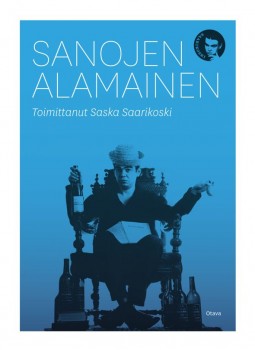 The poet and translator Pentti Saarikoski (1937–1983) was a legend in his own lifetime, a media darling, a public drinker who had five children with four women. His oeuvre nevertheless encompasses 30 works, and his translations include Homer and James Joyce. The journalist Saska Saarikoski (born 1963) has finally read all that work – in search of the father whom he seldom met. The following samples are from his annotated selection of Pentti Saarikoski’s thoughts over 30 years, Sanojen alamainen (‘Servant of words’, Otava, 2012; see Figuring out father)
I try to write books whose reading will bring enjoyment, in other words not entertaining ones.
Suomentajan päiväkirjat (‘Translator’s diaries’, 1970)
The term ‘world literature’ was invented by Goethe to describe the importance of Goethe.
Päiväkirjat (‘Diaries’, 1978)
A work of art is bad if it ‘makes you think’. About something other than itself. What is wrong with ‘art for art’s sake’ – or bread for bread’s sake? Art is art and bread is bread, and people need both in their diet.
Päiväkirjat (‘Diaries’, 1978) More…
The son of the chimera
30 September 1999 | Fiction, Prose
A short story from Pereat mundus. Romaani, eräänlainen (‘Pereat mundus. A novel, sort of’, WSOY, 1998)
I was born, but not because anyone wanted it to happen. No one even knew it was possible, for my mother was a human being, my father a chimera. He was one of the first multi-species hybrids.
Only one picture of my father survives. It is not a photograph, but a water-colour, painted by my mother. My father is sitting in an armchair, book in hand, one cloven hoof placed delicately on top of the other. According to my mother, he liked to leaf through illustrated books, although he never learned to read. He is wearing an elegant, muted blue suit jacket, but no trousers at all. Thick grey fur covers his strong legs, right down to his hoofs. Small horns curve gracefully over his convex forehead. Striking in his face are his round, yellow eyes, his extraordinarily wide mouth, his tiny chin and his surprisingly large but flat nose. More…