

Search results for "tommi+musturi/2010/2009/10/writing-and-power"

Text and textuality

31 March 1999 | Archives online, Authors, Reviews

In winter, the writer Riikka Ala-Harja walks the last 50 metres of her journey home across ice. She lives in a large villa on an island near the centre of Helsinki. When the ice begins to melt she takes a pole with her in case she falls into the water. Ala-Harja does not, however, consider herself particularly brave on this account. She likes her island.

One of the main characters of her first novel, Tom Tom Tom, Elsa Kokko, known simply as Kokko, also lives on an island, but only in summer. Born in 1967, Ala-Harja, who trained as a dramaturge, says she has been ‘wringing out’ her novel for years. In 1990 she won first prize in the J.H. Erkko competition for short stories, and she has, among other things, written five radio plays, four stage plays and scripts for cartoons, directed dramatic texts, held an art exhibition of autobiographical texts and images made on plywood with tacks and thread, and teaches creative writing at the Theatre Academy and at the University of Industrial Art and Design, as well as at a sixth-form college. More…

Juha Mannerkorpi (1915–1989) and the metamorphosis of the self

30 June 1982 | Archives online, Authors
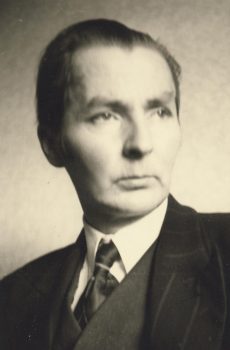
Juha Mannerkorpi. Photo: SKS Archives

Juha Mannerkorpi. Photo: SKS Archives

The chapter, entitled ‘About calendars and other documents’, is a section of Juha Mannerkorpi’s book, Sudenkorento eli erään pakaraisen esittävät seikkailut (‘The dragonfly, or the representative adventures of a certain buttocks’, 1970). The main character is a writer, Caleb Buttocks, a long-term diabetic who can get around only on crutches and spends most of his days sitting in his room smoking and drinking beer. Pain and depression are his daily companions.

In the beginning, Caleb Buttocks attempts a real adventure: lifting himself out of the swamp like Baron von Münchhausen and going on an outing with his wife. The adventure comes to a bad end; he is not up to it. Thereafter, he has to be content with ‘representative adventures’: dreams, memories, and nightmares which are interwoven with the present time.

Sudenkorento is largely a first-person narrative which operates on many levels and the language of which is exceptionally rich. The narrator makes use of many different elements: fairy tales, poems, fantasies realistic narratives, and reminiscences. Sudekorento can be considered the most important book by Juha Mannerkorpi (1915-1980), and represents a synthesis of his earlier writing, which includes some twenty works since 1946: poems, plays, radio-plays, novels, and short stories. After the publication of Sudenkorento Mannerkorpi wrote a short diary-like work, Päivänsinet (‘Heavenly blue’, 1979), a study of the will to live in the shadow of a serious illness, diabetes, which is a subject he often dealt with in his work. Characteristic of Mannerkorpi’s writing are his analyses of the relationship of the self with the world and his explication of existential questions. In the European literary milieu, he is closest to Camus, Sartre and Beckett, all of whom he has translated into Finnish. More…

Higher goals

31 December 1987 | Archives online, Fiction, Prose

An extract from the novel Tammerkosken sillalla (‘On Tammerkoski bridge’, 1982). Introduction by Panu Rajala

I had thought there were a lot of books in the libraries in Oulu. But both those libraries were totally overshadowed when, having climbed up to the top of the Messukylä Workers’ House, I began to cast my eyes along the bookshelves in the attic. A tallish and refined-looking librarian responded when I exclaimed aloud.

‘Just under seven thousand volumes altogether. Some of them are out on loan. We’d like to have a lot more books, but getting the money to buy them is like getting water from a stone.’

‘But you’ve already got an incredible amount compared to what we have in the rural library at home… In Taivalkoski during the war all we had was two cupboardsful.’

‘You didn’t have a lot of choice there,’ agreed the librarian. More…

Poems with rounded corners

30 September 1992 | Archives online, Fiction, poetry

Poems from Talvirunoja (‘Winter poems’, Art House, 1990) and Runot! Runot (‘Poems! Poems’, WSOY, 1992)

A prayer for the trees and the rocks

Around noon I start praying 
	 for the trees and the rocks
     to whom we have always been merciless.
What have we done? 
    What are we doing?

In the valley of the scribbling species

Man and Woman are two animal species, sufficiently close 
to allow procreation.
	They live in a cage called The Human Being,
in a place known as
		the Valley of the Scribbling Species. 
    Woman is the more important animal
But Man built the cage.

More…

Face, book

23 June 2011 | Letter from the Editors
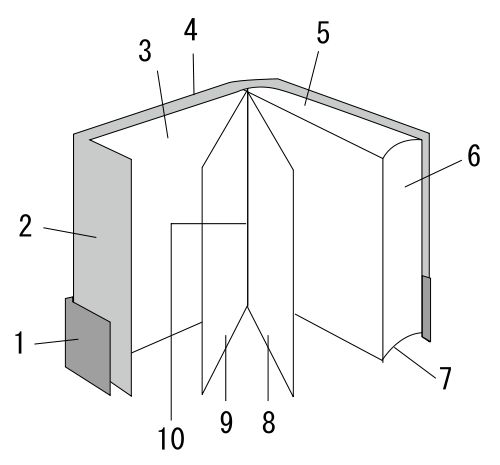
What are books made of? Picture: Wikipedia

‘The worst of all is if the writer forgets writing and starts turning out books.’

This thought is from the poet Vilja-Tuulia Huotarinen’s introductory talk at the Lahti International Writers’ Reunion (LIWRE), which took place at Messilä Manor between 19 and 22 June. ‘There’s too much talk of the stunting of the book’s lifespan and the economic life of the publishers,’ she continues. A writer ‘must not forget that he or she is responsible to the work of art, nobody else, not even the readers.’

Today, book publishers are responsible to capital and productivity, and a work of literature resembles a product with an invisible best-before marker. Is its life a couple of months, like ice cream? Books delivered to the shop in September are already old-hat in February, and are best put on sale. More…

Food for thought

31 March 2006 | Archives online, Articles, Authors, Non-fiction

Are thrillers the junk food of literature – or is there any haute cuisine in the genre of crime? And who cares anyway, if the books make you tum the page? Pia Ingström takes a look at some Finnish whodunits

Finnish crime fiction has kept itself largely free of the illusions of grandeur which have made the same genre in neighbouring Sweden begin to seem ever more pretentious and ridiculous. In the recent past, Sweden has exported blockbusters by Henning Mankell, Liza Marklund and Åke Edwardson to the international crime Fiction market, followed by a great flood of successors totally lacking in originality but presented as important literary contributions to some vaguely defined ‘contemporary debate’.

In Finland, detective stories and thrillers are sensibly treated simply as detective stories and thrillers crafted according to a recognisable formula, avoiding the sort of monstrosities characteristic of Sweden which mix scenes of brutal violence clearly intended as entertainment with claims to social relevance. Finnish crime novels tend to be less pretentious, and can sometimes happily surprise the reader by their high quality.

Take for example the flashy new doorstopper by Ilkka Remes, or a rather clumsily executed but at times bizarrely original private-eye story by Anja Angel, or a bittersweet tale of Russian-Karelian blood-and-crime-brotherhood by Matti Rönkä, or a feminist offering from Leena Lehtolainen. None of these makes any great claim to the status of art – they are honestly, at times brilliantly, crafted products of the genre that here and there reveal a glimpse of one or another of the true signs of real literature – originality, pain, and individuality – even if this is not necessarily presented with consummate technical skill.

Ilkka Remes’ thirteenth book Nimessä ja veressä (‘In the name and the blood’, WSOY, 2005) is strictly speaking the product of neither art nor craft so much as of a kind of industrial design. The writer’s name is a pseudonym and he makes very few public appearances, which perfectly matches the polished anonymity of his books. His themes are international terrorism, chemical warfare and political conspiracy. His plots teem with extra-powerful secret agents from a variety of security services, and he seasons the mix with a dose of competently researched local colour. In his latest offering, Nimessä ja veressä, the story moves be­tween fundamentalist Christians in the Bible belt of northern Finland, entrepreneurs in the tourist business, and the deserts of Iraq. Its action scenes are more convincing than those in some of his earlier novels in which a surfeit of heavy artillery, explosives and scrap metal sometimes confused the picture and made it difficult to understand which of the characters survived (not that knowing this was necessarily of vital importance). Reviewers have not praised Remes for creating interesting characters. But since his latest offering has sold 119,000 copies – an astonishing number and the highest figure among last year’s bestselling books in Finland – who cares if his books don’t exactly lead the field in psychological insight?

The success of the Da Vinci Code has proved that God, Jesus and all that is hot stuff these days, and Remes surfs the trend skilfully. His main character, a Bible scholar from the dark winters of the far north, is on the trail of something unique that has cast new light on the Dead Sea Scrolls, St Thomas’s Gospel and some discoveries in Qumran and attracted the attention not only of her old schoolmates and sisters-in-belief in the northern village of Pudasjoki but of the Israeli intelligence service Mossad, too. The discoveries are then lost.

Now that he has a religious subject safely under his belt, Remes is already no doubt well advanced with his research into the avian flu pandemic that is now on its way to us.

The novels of Leena Lehtolainen are as easy to classify as the thrillers of Remes: socially-and gender-sensitive detective stories with wholesome human interest. Her plot construction is a little uneven – sometimes her motives and characters are believable, at others they seem forced. There is not much to say about her literary style – but for whatever reason, like many other people (her most recent book sold 50,000 copies in 2005). I have read all her crime novels with profit. In recent years she has alternated between a series built round the police officer Maria Kallio, and other novels in which violent crime within intimate family relationships is seen from a grassroots perspective. Possibly her family novels – Tappava Säde (‘Lethal Ray’), Kun luulit unohtaneesi (‘When you thought you’d forgotten’) and Jonakin onnellisena päivänä (‘One happy day’; Tammi) are her best, with their interesting prickly characters and greater feeling for sorrow and suffering.

However, Inspector Maria Kallio brings to the novels in which she appears a pleasant stability and fullness. Her children have now been born and her career is firmly established, but marriage complications remain and a little whiff of predictability is beginning to creep into the domestic scenes, something the reader can often identify with. Lehtolainen is quick to react to topical subjects. In her thirteenth novel Rivo Satakieli (‘Naughty Nightingale’, 2005), a prosperous prostitute is murdered as she is about to enter a television studio to take part in a live talk show. Just before this one of her associates, a young Ukrainian woman, is found on a forest path wearing nothing but a fur coat and boots with stiletto heels with her genitals brutally slashed. And one of Kallio’s female underlings, who has problems with female solidarity, becomes involved in shady business while planning her career.

If Lehtolainen is perhaps excessively politically correct from a feminist point of view, Anja Angel leans firmly in a trendier direction. Laitinen, Angel’s fat and ferocious female private detective and Laitinen’s assistant Marco in Marokkolainen makeinen (‘A Moroccan sweetmeat’, Otava, 2oo4) are both in their way queer and the relationship between them is described with warmth and sympathy, even playfully. Marco becomes rather lice besotted with a young Moroccan he’s supposed to be shadowing; their interaction is much more interesting than the strained plot. Angel is pleasantly different.

Matti Rönkä works as a news editor for Finnish television and has written three books centred on businessman and fixer called Viktor Kärppä. In Ystävät kaukana (‘Friends far away’, Gummerus, 2005), Rönkä’s fantasies of conspiracy have an altogether different and more intimate international flavour than those of Remes. Rönkä’s subject is what is popularly known in Finland as ‘eastern crime’, which includes everything from shady everyday business deals involving fake icons and old fridges to prostitution, drugs and contract murder.

Rönkä’s hero Viktor Kärppä belongs to the category ‘returning emigrant by grace of Koivisto’, i.e. he’s one of those former Soviet citizens of more or less Finnish stock who after the fall of the Soviet Union were granted Finnish citizenship and the right to ‘return’ to a homeland where they had never lived and whose language they couldn’t speak, by the President of the time, Mauno Koivisto (in office 1982­–94). Kärppä has built up a respectable building business in Finland. The sources of his original capital may not bear close inspection, but he no longer has links with drugs and prostitution, lives with a steady partner in a house of their own, and is determined to keep any unpleasant tastes or smells well away from his middle-class Finnish suburb. One day he gets an unwelcome visit from two well-dressed Russian gangsters who scare the wits out of his confused secretary and burn down his house. Someone is about to take over his firm, and it’s high time to find out who.

Rönkä’s two earlier Kärppä books, Tappajan näköinen mies (‘The man who looked like a killer’) and Hyvä veli, paha veli (‘Good brother, bad brother’) are somewhat hampered by tangled plots and a confusing cast of characters. Ystävät kaukana has a better balance between narrator and action, and the course of events is easier to grasp. Rönkä likes his principal characters. He manages to give them personality and individual dialogue, even feelings. The story is a sort of combination of melancholy road movie and picaresque novel, though normal human affections find a place in it too. The evil is not metaphysical but everyday, and the base human motives that lead to crime and deceit sit extremely well within the greater framework.

The border between Finland and Russia is one of the sharpest frontiers between prosperity and poverty in Europe, even in the whole world, and has long been a setting for undercover transactions. Rönkä presents this world with imagination and ingenuity through the story of this small-scale criminal, and the background is thoroughly researched and presented without fuss. Ystävät kaukana is a much smarter, warmer and more truthful book than it claims to be.

But no brief overview of Finnish crime fiction would be complete, however, without a mention of Matti Yrjänä Joensuu. After a career as a policeman spanning three decades and 11 novels, he is still writing though he publishes infrequently and is periodically afflicted by writer’s block. His more recent books have increasingly slipped into a kind of muffled, melancholy prose not normally associated with detective stories and thrillers. In fact, Harjunpää ja rakkauden nälkä (Harjunpää and the hunger for love’, Otava 1993) and Harjunpää ja pahan pappi (Harjunpää and the priest of evil’, 2003) are really meditations over various kinds of major deprivation, whether specifically within the family or the wider society, or more generally and existentially.

Concrete features – parts of dead bodies, crime scenes, victims and wrongdoers alike – have a marked tendency to blend into heavy metaphors for evil, want and suffering, though simultaneously preserving their original concrete quality. No one who has read Harjunpää ja pahan pappi will ever again be able to travel on the Helsinki Metro without being aware of the mysterious potential menace of the underground tunnel system and the shabby lives of those who live in it and never really belong to the daylight world.

Two of Joensuu’s book have been shortlisted for the Finlandia Prize. His concern with the requirements of the crime genre has diminished in inverse proportion to the growth of his obsession with affliction and deprivation. His innovative method of using trivial criminal material as a basis for heavily loaded symbols is literary in an individual and unpredictable way. None of the other books discussed here is unashamedly literary to the same extent.

If we were to arrange these samples of Finnish crime writing on a scale from the most formulaic to the most individual we should get: Remes – Lehtolainen – Angel – Rönkä, with Joensuu a few steps behind Rönkä, the most individual of all.

Remes’s writing is about as memorable as fish fingers, and one may well ask why any of us should be satisfied with such grub in a world that has oysters, goose liver and fresh aparagus to offer. For myself, I’m sure I could do without Remes for the rest of my life, and without fish fingers too.

But the safe comfort food of the intellect can sometimes contain surprises, so it would be rash to consider myself too fine for writers in this genre. Sometimes they have the courage to deviate from the standard recipe, and, losing themselves in some strange byway that really interests them, they may come up with something highly original.

Translated by Silvester Mazzarella

Eight novels by Matti Yrjänä Joensuu have been translated into 13 languages; his Harjunpää ja pahan pappi (‘Harjunpää and the priest of evil’, 2004) was published in England in 2006 by Arcadia Books, translated by David Hackston. Crime novels by Leena Lehtolainen have been translated into ten languages .The first translation of a thriller by Ilkka Remes, Ikiyö (‘Eternal night’, 2004), was published in Germany by dtv in 2005 under the title Ewige Nacht, translated by Stefan Moster.

Minority report

20 February 2014 | Reviews
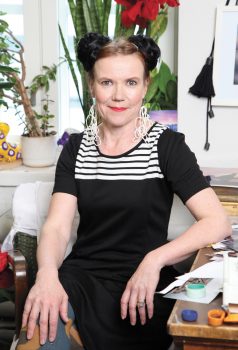
tuva.k.Tuva Korsström
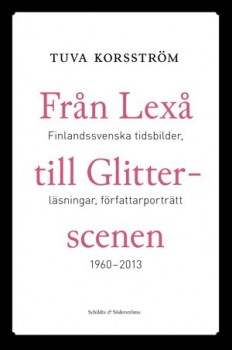
Från Lexå till Glitterscenen. Finlandssvenska tidsbilder, läsningar, författarporträtt 1960–2013
[From Lexå to the Glitter Scene. Finland-Swedish period pieces, readings, portraits of authors 1960-2013]
Helsinki: Schildts & Söderströms, 2013. 529 pp., ill.
ISBN 978-951-52-3224-3
€37.90, hardback

The only thing unequivocally separating the Swedish minority in Finland from the Finnish majority is language. Therefore the word – be it written, spoken, sung – has always occupied a privileged position amongst Finland-Swedes. This has resulted in a richness of literature and mass media, which is surprising for a minority that today numbers fewer than 300,000 people, or just over five per cent of the population. For Swedish language literature in Finland – the topic of Tuva Korsström’s book Från Lexå till Glitterscenen. Finlandssvenska tidsbilder, läsningar, författarporträtt 1960–2013 – the period following the Second World War has been a success history.

The strength and force of this literature has manifested itself in many ways: through an increasing professionalisation of the writing community, through a steady stream of new writing talent, and through increased diversification, both in terms of regions and genres. In competition for major national and Nordic prizes, such as the Finlandia Prize for Fiction, the Runeberg Prize, and the Nordic Council Literature Prize, Finland-Swedish books have been strong contenders, and authors [see the list] such as Tove Jansson, Märta Tikkanen, Bo Carpelan, Kjell Westö, and Monika Fagerholm have gained large audiences, both nationally and internationally. More…

Science facts, science fiction

31 March 1987 | Archives online, Articles, Authors, Non-fiction

Science fiction has never been one of the great success stories of the Finnish book business. But interest in the genre is nevertheless undoubtedly greater than the sales figures give us to understand. And there are other pointers: at present, for instance, five magazines entirely devoted to the subject are published in Finland.

In 1986 the astronomical society Ursa organised a science fiction writing competition, in connection with which a preliminary bibliography of Finnish science fiction was put together.

That bibliography revealed some surprising science fiction enthusiasts: some of the best-known names in Finnish literature, such as Mika Waltari and Toivo Pekkanen, turned out to have given their imaginations a holiday at some point in their careers and turned their hands to a couple of colourful pieces of science fiction. More…

Too much or too little love

31 March 1987 | Archives online, Authors, Reviews
Rosa Liksom

Rosa Liksom. Photo: Pekka Mustonen.

On the October day last year on which Rosa Liksom‘s second collection of short stories, Unohdettu vartti (‘The forgotten quarter’), was published, she also opened an art exhibition of her own work. The occasion took the form of a kind of cross between performance art and a practical joke. Young women dressed in Finnish military uniforms carried out body searches on every newcomer, changed the guard and drilled, while crackers exploded in the gallery. Many people were of the opinion that it was all no more than a silly joke. Even the art critics were not enthusiastic: they felt that Rosa Liksom’s felt pen work was derivative of a certain Danish artist who himself had copied the cartoon-like stick-men of the so-called Chicago school. But all the same, there emerged from the pictures a funny story about the artist’s adventures among the underground youth of Russia from Leningrad to Vladivostock.

Only her closest friends knew which of the soldiers in the gallery was Rosa Liksom, which her clones. Rosa Liksom is a pseudonym, and her little game of hide and seek has already lasted a couple of years. We know of her that she was born in Lapland, studied anthropology, has travelled in both East and West and lived for a long time in Copenhagen. Her writing was published for the first time in an anthology of the work of young authors, Kalenteri 84 (‘Calendar 84’, 1984). Her first work, the short story collection Yhden yön pysäkki (‘One-night stand’) was published in 1985 and achieved considerable success. More…

Dinner with Marie

30 June 2008 | Archives online, Fiction, Prose

Extracts from the novel Marie (WSOY, 2008). Introduction by Tuomas Juntunen

For once, Marie decided to plan a dinner without the same old roast beef, boiled potatoes, peas, red wine and berry kissel. And particularly no game. The thought of rabbit reminded her of the hunting trip to Porpakka, the hounds puking up rabbit skins onto the parquet floor, the smell of singed birds, the feathers that turned up even weeks later in a corner of the kitchen, the buckshot in the goose that broke her tooth. Mind you, she had to admit that brown sauce was quite good, especially as an aspic. She had tasted a spoonful once the morning after it was made, when Martta had gone out to buy milk and Marja was cleaning the drawing room, and then Martta had come back quite suddenly, and Marie had panicked and swallowed it the wrong way and had a fit of coughing. ‘Good heavens,’ Martta had said, ‘what’s the matter? I just came back to get my purse. I forgot it on the sideboard.’

The true reason for the plan was that she wanted to show them what a real French formal dinner was like, how much better it was. She planned the menu secretly for months, first in her mind, then in writing, at her bedroom dressing table – the only place she had to herself, although the door wouldn’t lock – at first on wrapping paper, which she later burnt in the tiled stove in the dining room when no one was home. More…

Movies and mores

16 April 2012 | Authors, Interviews
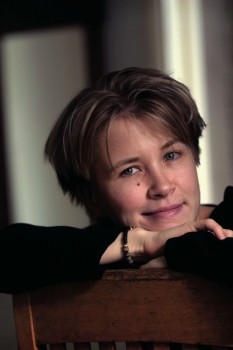
Tuuve Aro. Photo: Liisa Takala

Interview with Tuuve Aro, author of Himokone (‘Desire machine’): in these short stories she borrows titles and ambiance from the silver screen

A dark theatre, the smell of popcorn, expectation quivering in the air. Since childhood, the author and film critic Tuuve Aro (born 1973) has loved that magic moment when a new, exciting story is about to begin once again on the silver screen.

The stories in her fourth short story collection Himokone (‘Desire machine’, WSOY, 2012) have taken their names from films – Vertigo, Alien, and Invasion of the Body Snatchers, for example. The book’s title comes from a certain Dr Samuel L. Brimstone, member of the ‘Royal Film Academy of Suffolk’: according to him, a film projector is a desire machine: it doesn’t give anything, it only shows, and for that very reason it is hard to resist. More…

The 101-year anniversary celebration

30 September 1989 | Archives online, Fiction, Prose

From the collection of short stories, Saksalainen vävy (‘The German son-in-law’) , 1988. Interview by Erkka Lehtola

Järvinen thought he must have turned up at the wrong place when he saw an iron cross on a grey concrete wall. Surely the library couldn’t be holding its celebration here?

He groped in his breast pocket for the map the librarian had sent him. No: there the landmarks were, he’d followed them, he was at the right place.

He drove on a bit and saw there were cars parked behind the building. He parked next to them and got out. All the other cars were shiny, as if they’d just been washed; his was the only dirty one, its chassis a dusty grey. Rosinante came into his head, and he started wondering what Rosinante’s colour was supposed to have been: just the sort of knowledge he could fit in somewhere. Grey, he guessed – just as General Sandels’ horse in the Runeberg poem was white. And what colour was Pegasus? Didn’t know that either – it hadn’t ever even occurred to him to wonder. Almost certainly it would be there in the mythology. More…

Classroom capers

30 December 2006 | Authors, Interviews
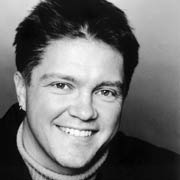
Timo Parvela

Timo Parvela

According to a celebrated 2003 report, Finnish schoolchildren emerged as world leaders in mathematics, science, literacy and problem-solving. In his books for children, the writer Timo Parvela, himself a former teacher, reveals a keen understanding of the mayhem that must lie behind such assessments. Interview by Anna-Leena Ekroos

Timo Parvela (born 1964) has received a particularly enthusiastic response to his Ella series for primary school-aged readers. Parvela has written picture books, CD-Rom scripts, books for young people and scripts for television and radio. His popular Ella series records the adventures of second-grader Ella and companions, including Pate, the headteacher’s son who’s fond of disguises, Tuukka, the young genius, Samppa, the copious weeper, and the pugnacious Buster. The gang of kids means well, but somehow, through misunderstandings, things always end in chaos. More…

The search goes on

31 December 2007 | Archives online, Essays, On writing and not writing

The Finlandia Prize-winning author Kjell Westö recalls his literary adolescence, and the moment ­– of a dark January night – when he stopped worrying about writer’s block and began to write

When I was in my twenties, my urge to write was very strong. I was driven, almost consumed, by this ever-present zeal, which tore me apart nearly as inexorably and effectively as love did. But I wrote precious little. Now, some twenty years later, I have a general idea about the traps I so unknowingly walked into. More…

Between Eros and Thanatos

30 September 1989 | Archives online, Authors

Tua Forsström’s poetry is deeply disturbing. Inside her clairvoyant linguistic structures there appear realities and visions that like icons establish a strong and direct link with visions, perceptions, memories, desires and dreams which I myself recognise but which are concealed. Reading her becomes a crossing of borders: I have been in this room before! This reality filled with ambivalence and antagonistic forces, this magnetic field between Eros and Thanatos touches me to the marrow of my experience! More…