

Search results for "tommi+musturi/2010/05/song-without-words/2009/09/what-god-said"
Age before beauty?
5 April 2012 | This 'n' that
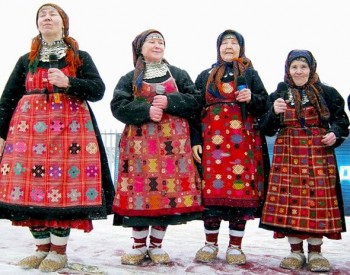
Buranovskiye Babushki: Udmurt originality. Photo: Wikipedia/Larisa Gorbunowa, 2011
We can’t be the only ones to have a secret fondness for the Eurovision Song Contest– however cheesy the offerings, however rigged or outright political the voting, however bored or drunken the presenters (or maybe that’s only in the UK). Camp, innocent, calculating, so ugly it’s beautiful (or vice versa). In fact, we suspect that’s why we like it so much.
In the 57th Contest, to be held in Azerbaijan in May, Russia is to be represented by the song ‘Party for everybody’ by a group of eight old ladies, the Buranovskiye Babushki, from the republic of Udmurtia, deep in the heartland of the Russian Federation, some 1400 kilometres from Moscow. More…
Letters to Trinidad
31 March 1990 | Archives online, Fiction, Prose
Extracts from the novel Kirjeitä Trinidadiin (‘Letters to Trinidad’, 1989). Introduction by Suvi Ahola
Elisabet suggested that they should go to the beach. Seppo would have liked to show her the coral, but his wife thought it was too far, and so they decided to go to the beach nearest the hotel.
They hired mattresses and a sun umbrella and found places in the first row, close to the water. The sea glittered, and long, shallow waves rolled towards the sand, like long, even snores. Seppo dozed for a moment, then sat up and, taking his binoculars, focused out to sea. Two warships sailed eastwards through the glittering waves. Egypt, Jordan and the Arab countries all around, Iran and Iraq close by, Libya not far away – it was like lying on a keg of gunpowder!
Elisabet went swimming, and he followed. He carried his wife through the waves, played the life-saver and dragged Elisabet’s apparently lifeless body through the waves. They dived, and Elizabet complained that the salt stung her eyes. They lay on their mattresses and when Seppo glanced at her, he felt again the sharp stab of desire, and would have liked to make love, but had to content himself with caressing her thigh. When his desire became too great he covered himself with a rowel, and Elisabet laughed.
‘Again? You’re insatiable’, she said. More…
How to build a Finlandia Prize-winning novel
4 December 2009 | In the news
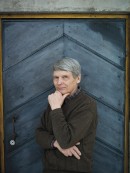
Antti Hyry
The Finlandia Prize for Fiction 2009, worth €30,000, was awarded to Antti Hyry (born 1931) on 2nd December; his novel about building a stove, Uuni (‘The stove’, Otava), was chosen by the art historian and former director of the Finnish National Gallery, Tuula Arkio, from a shortlist of six. More…
Dreaming a dream: the poetry of Helvi Juvonen
17 May 2010 | Authors, Reviews
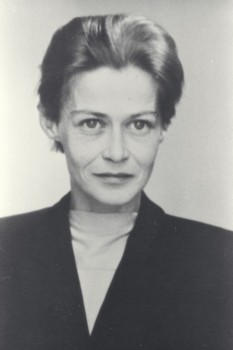
Helvi Juvonen (1950s). Photo: WSOY
The work of Helvi Juvonen is beguilingly strange; intense, eccentric, askew, it sees the world afresh. It charms by means of fairy-tale motifs and apparent nonsense; but it also offers piercing insights into suffering, loneliness, and alienation.
It combines the haunting, elliptical quality of the verse of Emily Dickinson, the nineteenth-century American poet-recluse, with the sharp, fresh imagery of the Finnish 1950s modernist Eeva-Liisa Manner. Its religiosity is complex and unsettling, its humour sly and bizarre. Hard to categorise, Juvonen is both traditional and modern: a sceptical believer, a quiet transgressor.
Juvonen (1919–1959) was known as ‘Nalle’ (teddy) as a child, and her fondness for and identification with animals emerges often her poems:
The mole sleeps,
spade-paw,
velvet-fur,
dreaming a dream, darkly soft
The poetry is also characterised by a fairy-tale logic and a kind of childlike anarchy; a goblin shares her joy with a bumblebee, a tapir talks to a stone. There is a mischievous, surreal streak in the work. The world is anthropomorphised, as in a fairy tale; the poet addresses a singing kettle.
Juvonen in fact wrote fairy tales, not published in her lifetime, like that of Little Bear dreaming as she hibernates. ‘Bon bons, bon bons,’ she says repeatedly, this stream of sound constituting joyous nonsense, an acknowledgement of the miraculous freshness of the world. More…
At the sand pit
30 September 1985 | Archives online, Fiction, Prose
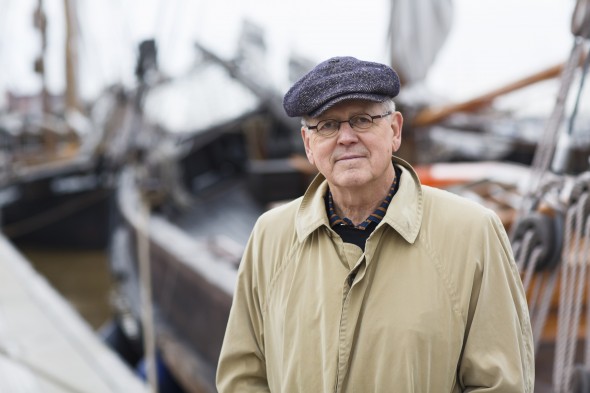
Antti Tuuri. Photo: Jouni Harala
‘After nearly 40 years of observing the Ostrobothnians, I am convinced that they have certain characteristics which explain the historical events that took place there and which also shed light on the region today. I do not know how these characteristics develop, but it appears that heredity, economic factors and even the landscape form the nature of people. Everywhere people who live in the plains are different from those who dwell in the mountains, and from those who fish the archipelagos,’ writes the author Antti Tuuri, himself an Ostrobothnian.
Antti Tuuri’s Pohjanmaa (‘Ostrobothnia’, 1982), which last January was awarded the Nordic Prize for Literature, has now been translated into each language of the Nordic countries. Tuuri’s novel describes the events of one summer day in Ostrobothnia, on the west coast of Finland, where a farming family, the Hakalas, has gathered for the reading of the will of a grandfather who emigrated to the United States in the 1920s.
The inheritance itself is insignificant, but it has brought together the four grandsons, with their wives and children. The story is narrated from the point of view of one of the brothers. The women of the family remain inside while the men take out an automatic pistol which has been kept hidden away since one of them smuggled it home from the Continuation War. The men go off to a sand pit to do some shooting and to drink some illegal home brew. There they meet their former schoolteacher, who joins in with their drinking and shooting. Some surprising events take place as the day’s action unfolds, and Tuuri’s narrator views them in an unsentimental way, describing them matter-of-factly and at times with ironic humour. The men recall the violent history of Ostrobothnia, the years of the Civil War and the right-wing Lapua movement of the 1930s.
The Nordic Prize jury commented that the novel ‘portrays the breaking up of the old society, and conflicts between generations as well as between men and women.’ Tuuri has constructed his novel on conflicts, and the result is a highly dramatic narrative.

An extract from Pohjanmaa (‘Ostrobothnia’)
A Finnish hound dog came out of the woods just beyond the sandpit, stopped at the edge of the pit and started to bark at us. The boys quickly began putting the weapon together. Veikko yelled that you were allowed to shoot a dog running loose in the woods out of hunting season. He kept asking me for cartridges; he’d shoot the dog right away, before it could tear to pieces the young game birds that couldn’t fly yet. I told him to shut up. Seppo finished putting the automatic pistol together and gave it to me. I ran to the car, put the gun down on the floor in front of the back seat and tossed a blanket over it.
When I got back, I saw the teacher coming out of the woods over by the pit. He snapped a leash on the dog and started towards us through the pine grove. The boys sat down around the campfire and began taking swigs of home brew from their cups. More…
The Conference
31 December 1978 | Archives online, Fiction, Prose
A short story from Alamaisen kyyneleet (‘Tears of an underdog’, Karisto 1970). Introduction by Pekka Tarkka
Dr Smith said that he did not believe that any immediate threat of an invasion from Space was likely to arise for some time. Observations to date had given no support to the view that any such preparations had been put in hand. Technically they were of course ahead of us, but in his opinion there was no cause for panic. Nor could he endorse the widespread but naive assumption that any confrontation with beings from Space must inevitably lead to war. If human beings had reason to feel threatened, it was from each other that the chief threat came. He urged the Conference to work for a situation in which every country would be preparing for peace rather than for war. He said he had no wish to sound sardonic, but that he had noticed that when war was prepared for, it was usually war that ensued. More…
Shards from the empire
5 February 2010 | Fiction, Prose
‘Imperiets skärvor’, ‘Shards from the empire’, is from the collection of short stories, Lindanserskan (‘The tightrope-walker’, Söderströms, 2009; Finnish translation Nuorallatanssija, Gummerus, 2009)
Gustav’s greatest passion is for genealogy. He dedicates his free time to sketching coats of arms; masses of colourful, noble crests.
Gustav asked me to do a translation. I sat for ten days trying to decipher a couple of pages from a Russian archive dating from the 1830s. Sentences like, With this letter, we hereby give notice of our gracious decision.‘
The intricate handwriting belonged to some collegiate registrar or other. Perhaps Gogol’s Khlestakov. More…
Why translate?
28 January 2015 | Essays, Non-fiction
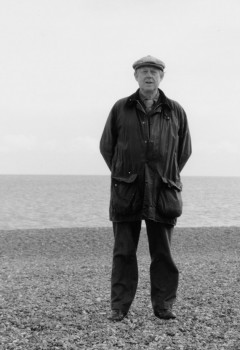
Down by the sea: Herbert Lomas in Aldeburgh. – Photo: Soila Lehtonen
‘People do not read translations to encourage minor literatures but to rediscover themselves in new imaginative adventures‚’ says the poet and translator Herbert Lomas in this essay on translation (first published in Books from Finland 1/1982). ‘Translation is a thankless activity,’ he concludes – and yet ‘you have the pleasure of writing without the agony of primary invention. It’s like reading, only more so. It’s like writing, only less so.’ And how do Finnish and English differ from each other, actually?
Any writer’s likely to feel – unless he’s a star, a celebrity, a very popular and different beast – that the writer is a necessary evil in the publisher’s world, but not very necessary. How much more, then, the translator from a ‘small’ country’s language.
Why do it? The pay’s absurd, you need the time for your own writing, it’s very hard to please people, and translation is, after all, the complacent argument goes, impossible. I’m convinced by all these arguments, and really I can’t afford to go on; but I don’t regret what I’ve done and, looking back, I can find two reasons for translating Finnish writing, one personal, the other cultural. More…
So close to me
19 August 2010 | Reviews
Please try this first, before we enter the chamber of horrors. It’s a poem by Timo Harju:
… The old people’s home is the strange hand of God with which he strokes
his thinning hair,
a sudden shower of cackling in the dry linen closet, slightly
sad and lonely
God looks out, stirring his cup of tea as if it were on fire.
If Jesus had lived to grow old and gone into an old people’s home,
he would have been like these.
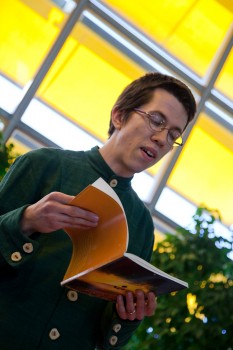
Timo Harju was awarded the 2009 Kritiikin kannukset prize (‘the spurs of criticism’, 2009) of the Finnish Critics' Association, SARV. Photo: Pia Pettersson
This spring a young Finnish female nurse was sentenced to life imprisonment for using insulin to murder a 79-year-old mentally retarded patient. Not long after, sentence was passed on another nurse – this time a meek and submissive-looking middle-aged woman who had murdered a whole series of elderly patients with overdoses of medication.
These are the terms – those of ordinary crime journalism – in which our recent public discussion of long-stay care of the elderly here in Finland was conducted. The discussion was followed by the usual misery of cuts, unchanged diapers, dehydration, over-medication, poor wages for hard work… No wonder that the concept of ‘healthcare wills’ and ‘living wills’, in which people are supposed to say how they want to be cared for in the last stage of their lives – is acquiring a disturbing undertone of ‘better jump before you’re pushed.’ More…
Brief lives
30 September 1989 | Archives online, Fiction, Prose
Rosa Liksom’s characters live in the tiny villages of empty Lapland, speaking a dialect that rings oddly in the ears of the southern Finnish majority; or they may inhabit anonymous towns, but there, too, life is full of the anguish of existence. Liksom, whose black comedy can be compared with that of the Danish writer Vita Andersen, is able to cram into her short texts complete life histories, bizarre, comic or tragic. Her first volume of short stories, Yhden yön pysäkki (‘One night stand’) appeared in 1985; the following short stories are from Tyhjän tien paratiisit (‘Paradises of the open road’, 1989)
We got hitched up the 14th of November and by the end of the month it was all over. As far as I’m concerned call it a marriage exactly two weeks too long. We hadn’t set eyes on each other till the Pampam that’s the place me and the girls go after work for a drink and I was sitting there having one with them when who comes through the door but this bloke and it hits me. That bloke’s for me. In the end I went over to his table and said up yours stud. We went over to my place to bunk down and after that I couldn’t get the sod out. The bloody shitbag got his claws into me and hung on just on the strength of that one night. He glued himself to my bed. Lay there flat out when I set off to work and shit he was still there when I came back only arse up this time. More…
Breton without tears
31 March 1994 | Archives online, Fiction, Prose
Extracts from Euroopan reuna (‘The edge of Europe’, Otava, 1982). Introduction by H. K. Riikonen
I am reading a book, it says pour l’homme latin ou grec, un forme correspond à un être; pour le Celte, tout est metamorphose, un même individu peut prendre des apparences diverses, so it says in the book. A strange claim, considering that the word metamorphosis is Greek, and that the best-known book about metamorphoses, Ovid’s Metamorphoseon libri XV was written in Latin. In the myths of all peoples, at least the ones whose oral poetry was recorded in time, such as the Greeks, Serbs, Slavs, Finns, or Aztecs, metamorphoses play a very important part, the Celts are not an exceptional tribe in this respect. The author must mean that the Celts still live in mythical time, the time of metamorphoses when the human being assumed shapes, was able to fly as a bird, swim as a fish, howl as a wolf, and to crown his career by rising up into the sky as a constellation. Brittany is part of the Armorica Joyce tells us about in Finnegans Wake, that book is incomprehensible if one does not know Ireland, and now I see that Brittany is the key to one of the book’s locked rooms. I thought I already had keys to all the rooms after Dublin, the Vatican, and Athens, but one door was and remained closed, the key is here now, in my hand, I can get into all the rooms in the book, and I am home even if I should happen to get lost. The room creates the person, she becomes another when she goes from one room to another, this is metamorphosis, and when she leaves the house she disappears, she no longer exists. The legend on the temple at Delphi, gnothi seauton, know thyself, has led Occidentals onto the false track that is now becoming a dead end, polytheistic religions correspond to the order of nature, but as soon as the human starts to imagine that she knows herself, as soon as the metamorphic era ends, monotheism is born, the human being creates god in her own image, and that is the source of all evil. Planted like traffic signs at the far end of this cul-de-sac stand the hitlers and brezhnevs and reagans and thatchers, new leaves are appearing on the trees, the sun is shining. Landet som icke är* är en paradox: landet blev befintligt därigenom att Edith Södergran sade att det icke är. On the sea sailed a silent ship*, as I tracked my shoeprints across the sand on the beach, it was like walking on a street made out of salty raw sugar, I felt desolate. The wind bent the grasses, the sun warmed the back of my sweater, of course the sun always has the last word, I thought, things should be as they are, this thought gave me peace of mind. I walked past the cows, two of them already chewing the cud, the others still grazing, they stood in a line and raised their heads, stood at attention, as it were, as I walked past. I was not entirely sure that I was heading in the right direction, but then I saw the boucherie and knew that there was a café nearby. Madame greeted me in a friendly fashion, brought me a calvados and a beer and sat down for a chat, wanted to know if I liked the countryside here. I said that things looked the same here as in Ireland, she said that was true, but she had never been to Ireland. I finished my drinks and paid, left, decided to walk along the beach. I saw gun emplacements and two bunkers. I crawled into a bunker. Inside, it was dark and damp. I looked through the embrasure at the sea. I thought of the boys who had been incarcerated here. They had been given a death sentence. I examined a rusty object, what was it, I looked at it more closely, it was an axle from a gun’s undercarriage. As I arrive in my home yard, I note that the lilacs are beginning to bloom. More…
Do you remember the yellow house?
14 February 2011 | Fiction, Prose
Extracts from the novel Enkelten kirja (‘The book of angels’, Tammi, 2010)
[Tallinn, summer] The past will not go away
and the present is insurmountable. Summer vacation has begun, the newspaper hasn’t come; it doesn’t get delivered here anyway. Can you remember the Isabelline yellow house? Remember the alley with the name that means hurry? Surely you remember the home with all the maps on the shelves, the important papers and the brass objects bought from nearby antique dealers? Also the rugs from North Africa and the obligatory cedar camel figurines on the windowsill. And so many glasses and plates and empty lighters in a cardboard box on the shelf on the left hand side of the kitchen.
Tallinn, June 7th. The floors creak. One step has split in half; some of the lights have burned out. This is a lovely home. A small window upstairs is ajar to the courtyard. Tuomas had latched it behind the Virginia creepers. The fountain in the courtyard is dry. On cold nights the smoke from the fireplace grows like a statue for the crows until it wraps around over the layered rooftops like a snake eating its tail. Russian men are repairing the attic of the house across the street for wealthy people to live in; they laugh in front of the window and smoke. Tuomas waves at them, and they wave back. The courtyard is creepy when it’s empty. Soon the neighbours would go about their day and quietly close their doors behind them, and two nearby churches would divide the hours into quarters, Russians and their gossip would make their way to the Alexander Nevski Cathedral, and the Estonians and their gossip would go to their own churches where a wise and peculiar, almost human scent would rise from between the headstones. Tuomas wouldn’t smell it, Aino would and would move to stand beneath the the center tower. More…
In the same boat
29 May 2012 | Authors, Interviews, Reviews
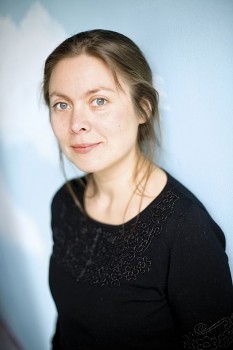
Pauliina Haasjoki. Photo: Tommi Tuomi
For the poet Pauliina Haasjoki, a writing process can begin in many ways, but particular periods – residencies, for example – are dedicated to writing. She attempts to create a cross-swell of influences in which she may read, watch movies, listen to music, have conversations and wander, collecting memories.
In the end, beginning to write becomes easy. Haasjoki may put music on to play, for example, for a certain time and use it to write ‘the poetry that belongs to that time, which sort of jostles there, waiting, because I have put it there.’
Haasjoki’s writing career began in Turku in the 1990s: she was studying literary theory at the university and was a witness to the birth of the poetic movement that developed there. Haasjoki has published five volumes of poetry, of which the latest, Aallonmurtaja (‘Breakwater’), was published in 2011. More…
The pursuit of happiness
30 June 1996 | Archives online, Fiction, Prose
Extracts from the novella Ilo (‘Joy’, Helsinki Media, 1995)
‘The flower is a characteristic feature of the highest group of the plant kingdom – the flowering plants – and is the name given to the association or organs, more or less leaf-like in form, which are concerned with the production of the fruit or seed.’
Encyclopaedia Britannica, 1910
The encyclopedia made us happy. But what was happiness? That the encyclopedia did not say. You had to set out to look for it. Our exploratory party represented the highest achievements of the field: it would be difficult to find a more serious or committed group.
When we waved to the people cheering on the quay, we were overcome by a strange feeling. It was as if we had already arrived. I made the mistake of speaking my thought aloud.
‘It will all end in tears,’ remarked our welfare officer, Mrs Rose. The atmosphere was ruined. What a pity that our quick-witted Doctor Stratelli was not present at that moment! For it was he who solved the problem of happiness.
The fairest in the land
26 January 2012 | Children's books, Fiction
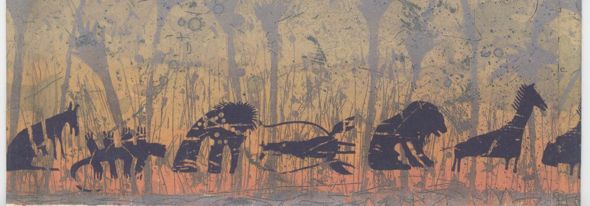 Two fables from Gepardi katsoo peiliin (‘The cheetah looks into the mirror’, Tammi, 2003). Illustrations by Kirsi Neuvonen. (More fables by Hannele Huovi here.)
Lizard
The air rippled above the pile of stones. The lizard twitched her hip and took up an s-shaped pose like an ordinary photo model. After a moment she changed her left side to a convex curve. The movement was quick and graceful; the lizard’s tail swished through a broad arc so quickly you could hardly see it. Her thin, blistery skin pressed against the surface of the stone. The lizard felt the rough, raised patterns through the thin skin of her belly. She felt unpleasant, but otherwise the place was good, and the lizard did not have the energy to look for a better one. She looked through her eyelashes at the fissured sky and saw the golden disc shining at the centre of the dome. She was happy. Everything in her life was good, the weather was pleasantly dry, the temperature exactly suitable. More…