

Search results for "harjunpää/2010/10/mikko-rimminen-nenapaiva-nose-day"
Itämeren tulevaisuus [The future of the Baltic Sea]
17 February 2011 | Mini reviews, Reviews
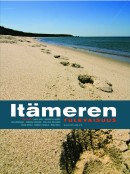 Itämeren tulevaisuus
[The future of the Baltic Sea]
Contributors: Saara Bäck, Markku Ollikainen, Erik Bonsdorff, Annukka Eriksson, Eeva-Liisa Hallanaro, Sakari Kuikka, Markku Viitasalo, Mari Walls
Helsinki: Gaudeamus, 2010. 350 p., ill.
ISBN 978-952-459-132-6
€ 39, paperback
This publication covers the key environmental issues affecting the Baltic Sea and provides new perspectives on those issues. The Baltic, with its relatively small, shallow dimensions and low salinity, is one of only a few seas in the world that is home to both freshwater and saltwater fish species and inland and marine birds. The Kvarken Archipelago in the Gulf of Bothnia was granted UNESCO World Heritage Site status in 2006. There are some 85 million people living within range of the environmentally sensitive, heavily trafficked Baltic Sea in nine countries around its coastline and its drainage basin. Serious environmental alarm bells began to ring in the 1960s with the realisation that the white-tailed eagle was on the brink of extinction. The socio-political history of the Baltic has had an effect on its protection, since the border between two competing economic systems – communism and capitalism – ran right through it. The articles in this book make it clear that science has identified ways to protect the Baltic Sea, but these research findings are not being put into practice in official decision-making.
Translated by Ruth Urbom
Elina Hirvonen: Kauimpana kuolemasta [Furthest from death]
30 September 2010 | Mini reviews, Reviews
 Kauimpana kuolemasta
[Furthest from death]
Helsinki: Avain, 2010. 240 p.
ISBN 978-952-5524-81-9
€ 30, hardback
Elina Hirvonen (born 1975) came to international attention with her first novel, Että hän muistaisi saman (English translation: When I forgot). With Kauimpana kuolemasta she shows that her success was well deserved: she has both talent and originality, and also courage linked with a sense of form. This book belongs to the genre of Finnish novels set at the interface between two countries, a device that in some hands can become a facile dramaturgical trick for the creation of contrasts. The interweaving of human stories from Finland with stories from Zambia sets all the alarm bells ringing, but the encounter between Paul and Esther, two sad people who lack a secure homeland, vibrates with emotion-charged scenes. Paul is the son of Finnish overseas aid workers, Esther is an outcast from her Zambian village, in flight from one hell to the next. Slowly Paul and Esther are brought together and the reader hovers in uncertainty as to whether their paths will ever cross. The two characters see and experience violence as they journey towards pain, but Elina Hirvonen’s sensual and life-affirming language conveys the realisation that hope is – sometimes – stronger than death.
Maarit Knuuttila: Kauha ja kynä. Keittokirjojen kulttuurihistoriaa [The ladle and the pen. The cultural history of the cookbook]
24 September 2010 | Mini reviews, Reviews
 Kauha ja kynä. Keittokirjojen kulttuurihistoriaa
[The ladle and the pen. The cultural history of the cookbook]
Helsinki: SKS (The Finnish Literature Society), 2010. 207 p., ill.
ISBN 978-952-222-187-2
€ 26, hardback
This book by ethnologist Maarit Knuuttila describes the history of European cookbooks, recipes and cooking. Knuuttila familiarises the reader with the earliest documents relating to the preparation of food, which were written by the ancient Greeks and Romans, but of which only a few have been preserved. Instead of haute cuisine the book concentrates on the authors and users of basic Finnish cookery books, and examines how those books reflect the times in which they were written, as well as their significance for women. While the literary high culture of gastronomy has been produced mainly by men, the everyday dishes represented in the basic cookbooks are the work of women. The author discusses the changes in perceptions of the ideal home and health, as well as the ways in which Finnish cookery, housekeeping and food culture have altered during the past hundred years.
The Tollander Prize to Ulla-Lena Lundberg
17 February 2011 | In the news
One of the biggest literary prizes in Finland is the Tollander Prize, awarded annually on 5 February, the birthday of he national poet J.L. Runeberg, by Svenska litteratursällskapet i Finland (the Society of Swedish Literature in Finland). The prize is worth €35,000.
The recipient of the 2011 Tollander Prize is Ulla-Lena Lundberg, a versatile writer of novels, short stories, poems and travel essays. ‘She moves freely in different landscapes, times and cultures, finding universality in locality, whether on the island of Kökar in Åland, in Africa or in Siberia’, said the jury.
Written between 1989 and 1995, Lundberg’s fictional trilogy of Leo, Stora världen (‘The big world’) and Allt man kan önska sig (‘Everything one can wish for’), focused on the seafaring history and evolution of shipping in the Finnish Åland islands. Her autobiographical work Sibirien (Siberia’, 1993) has been published in German, Danish and Dutch.
Read the extracts from her latest book, Jägarens leende (‘Smile of the hunter’, 2010), on rock art, reviewed on our pages by Pia Ingström.
Helsinki Book Fair 2011
2 November 2011 | In the news
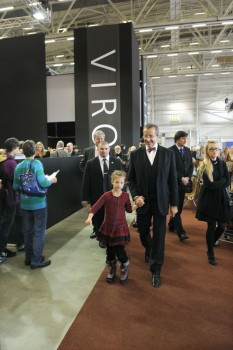
President Toomas Hendrik Ilves at the Book Fair: Viro is Estonia in Finnish. Photo: Kimmo Brandt/The Finnish Fair Corporation
The Helsinki Book Fair, held from 27 to 30 October, attracted more visitors than ever before: 81,000 people came to browse and buy books at the stands of nearly 300 exhibitors and to meet more than a thousand writers and performers at almost 700 events.
The Music Fair, the Wine, Food and Good Living event and the sales exhibition of contemporary art, ArtForum, held at the same time at Helsinki’s Exhibition and Convention Centre, expanded the selection of events and – a significant synergetic advantage, of course – shopping facilities. Twenty-eight per cent of the visitors thought this Book Fair was better than the previous one held in 2010.
According to a poll conducted among three hundred visitors, 21 per cent had read an electronic book while only 6 per cent had an e-book reader of their own. Twenty-five per cent did not believe that e-books will exceed the popularity of printed books, and only three per cent believed that e-books would win the competition.
Estonia was the theme country this time. President Toomas Hendrik Ilves of the Republic of Estonia noted in his speech at the opening ceremony: ‘As we know well from the fate of many of our kindred Finno-Ugric languages, not writing could truly mean a slow national demise. So publish or perish has special meaning here. Without a literary culture, we would simply not exist and we have known this for many generations, since the Finnish and Estonian national epics Kalevala and Kalevipoeg. – During the last decade, more original literature and translations have been published in Estonia than ever before. And we need only access the Internet to glimpse the volume of text that is not printed – it is even larger than the printed corpus. We live in an era of flood, not drought, and thus it is no wonder that as a discerning people, we do not want to keep our ideas and wisdom to ourselves but try to share and distribute them more widely. The idea is not to try to conquer the world but simply, with our own words, to be a full participant in global literary culture, and in the intellectual history and future of humankind.’
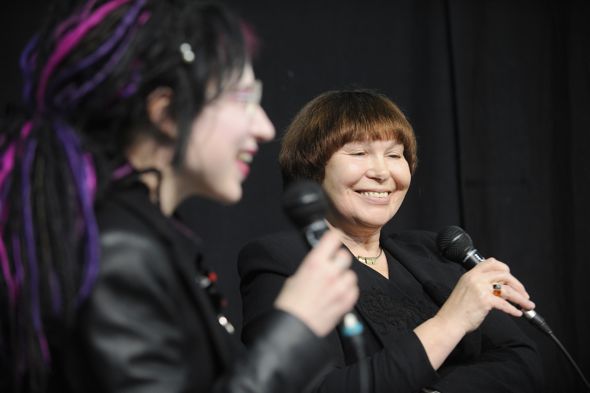
Finland meets Estonia: authors Sofi Oksanen and Viivi Luik in discussion. Photo: Kimmo Brandt/The Finnish Fair Corporation
Jarmo Papinniemi in memoriam 1968–2012
9 October 2012 | In the news
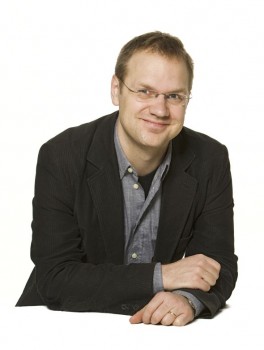
Jarmo Papinniemi
The editor, literary critic and writer Jarmo Papinniemi has died of a sudden illness in Helsinki.
Two days later, the latest edition of Parnasso was published: Papinniemi became editor-in-chief of this august 60-year-old literary magazine in 2005. During his period as editor, the magazine’s readership increased, quite an achievement in the difficult world of periodicals.
Jarmo Papinniemi worked as a literary critic and as a news and arts reporter for Finnish Broadcasting Company from 1998 to 2005. He wrote and directed television documentaries, and was the author of numerous books on literature and music, including Aloittamisen taito (‘The art of beginning’, 2010, with Kaisa Neimala) and Sävelten siivillä (‘On the wings of music’, 2011), a study of the work of the composer Ilkka Kuusisto.
Jarmo was also a member of the Editorial Board of Books from Finland from 2002. He was a quick, industrious and knowledgeable reader and writer whose opinions were well grounded and expressed, and he was interested in an unusually wide range of culture. Cheerful, humorous, a connoisseur of music, Jarmo was a colleague with whom conversations were always enjoyable and thought-provoking; he will be greatly missed by all of us who worked with him.
Sodan haavoittama lapsuus [A childhood scarred by war]
11 August 2011 | Mini reviews, Reviews
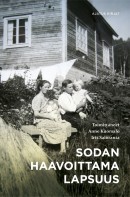 Sodan haavoittama lapsuus
[A childhood scarred by war]
Toimittaneet [Edited by]: Anne Kuorsalo & Iris Saloranta
Helsinki: Gummerus, 2010. 288 p., ill.
ISBN 978-951-20-8107-3
€ 34, hardback
Around 1.5 million Finns were children during the Winter and Continuation Wars of 1939–1944. Three hundred children are estimated to have been killed by bombs, and between 55,000 and 80,000 were orphaned by the war. Many more deaths were caused by diseases such as tuberculosis, polio and cerebral meningitis. Some children lived fairly secure lives on farms with their own families or with relatives; some were sent to live with foster families in Sweden; some were evacuated from Karelia and a small number were interned in camps because of their German heritage. Many under-18s served in the Finnish military and would now be considered child soldiers. Finns who were born in the 1930s and early 1940s have long been a neglected group: for several decades, discussions of the victims of war were avoided for foreign policy reasons as well. It is only in recent years that discussions have emerged concerning the fates of the children who were sent to Sweden during the war and those who were born to Finnish women, fathered by German soldiers. This book includes the stories of thirty people. The views of some refugees who have settled in Finland are included as well, such as the story of Mahmoud, who fled from Iraq via people smugglers.
Translated by Ruth Urbom
The 2013 European Union Prizes for Literature
3 October 2013 | In the news
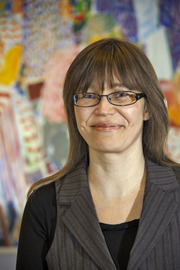
Katri Lipson. Photo: Olli Turunen
The second novel Jäätelökauppias (‘The ice-cream vendor’, Tammi, 2012) by Katri Lipson won her one of the 12 European Union Prizes for Literature this year, announced at the Gothenburg Book Fair, Sweden, on 26 September.
Each winner will receive € 5,000, and the priority to apply for European Union funding to have their book translated into other European languages.
The European Commission, the European Booksellers’ Federation (EBF), the European Writers’ Council (EWC) and the Federation of European Publishers (FEP) are the organisers of the prize which is supported through the European Union’s culture programme. The competition is open to authors in the 37 countries involved in the Culture Programme.
The prize aims to draw attention to new talents and to promote the publication of their books in different countries, as well as celebrating European cultural diversity.
The previous Finnish winner of the prize was Riku Korhonen in 2010.
Comic prize
26 March 2010 | In the news
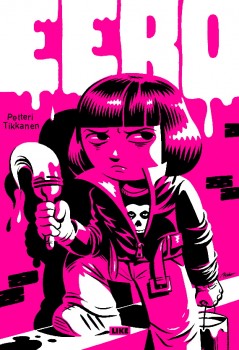
Eero the hero: the winner of the Sarjakuva-Finlandia comics prize 2010
Sarjakuva-Finlandia, worth €5,000, is the name of a prize created in 2007 for Finnish graphic novels or comic books. (Sarjakuva, literally ‘serial picture’, refers to both comic strips and books as well as graphic novels.)
It is awarded annually at the Tampere comics festival (and has nothing to do with the Finlandia prizes for literature, awarded by the Finnish Book Foundation).
Out of 56 contestants, ten made it into the final run, and the winner, Eero, by Petteri Tikkanen, was chosen by the thriller writer Matti Rönkä.
Petteri Tikkanen (born 1975) is a graphic artist who has published several books. In his previous graphic novels about a girl named Kanerva, Eero has appeared as her friend. Now Eero is the central character, and it seems childhood is over. Kanerva likes to chill out with her girlfriends only – what is a boy to do?
Valta Suomessa [Power in Finland]
5 August 2010 | Mini reviews, Reviews
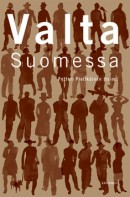 Valta Suomessa
[Power in Finland]
Toim. [Ed. by] Petteri Pietikäinen
Helsinki: Gaudeamus, 2010. 287 p., ill.
ISBN 978-952-495-143-2
33 €, paperback
The authors have been involved in the Academy of Finland’s ‘Power and society in Finland’ research programme, which supports the multidisciplinary study of the historical impact that changes in Finnish society have on its power structures and on those who exert power in Finland. Among the changes are Finland’s accession to the European Union and the internationalisation of corporate and business life. Major power management and policy decisions have often been made without extensive public debate. The articles include studies of the historical changes in economic history and women’s status; other subjects include the conflicts between the forestry industry and nature conservationists; energy policy and the relatively low level of opposition to nuclear power among Finns, labour relations and the opportunities that citizens have to influence media content.
Henrik Meinander: Kekkografia. Historiaesseitä [Kekkography. History essays]
1 April 2011 | Mini reviews, Reviews
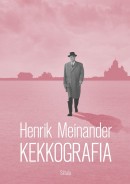 Kekkografia. Historiaesseitä
[Kekkography. History essays]
Suomentanut [Translated into Finnish from the original Swedish texts by] Matti Kinnunen
Helsinki: Siltala, 2010. 229 p.
ISBN 978-952-234-040-5
€ 34, hardback
Professor Henrik Meinander examines the forces that have shaped Finnish history and the controversial issues that have marked its development; Finnish history and culture were formed by chain reactions in European power politics. Finland did not emerge as a nation until the 19th century, as a by-product of the Napoleonic wars, and the independence of 1917 was not the result of an autonomous process of national development but rather a consequence of events elsewhere, especially in Russia. The history of independent Finland is roughly equal in length to that of the Soviet Union; in the early 1990s the Soviet Union collapsed, and Finland joined the European Union. The author does not take a position on the desirability of this development, and points out that the increasing integration and globalisation Finland’s era of independence may appear to be only a transitory phase. President Urho Kekkonen (1900–1986), who influenced Finnish politics for half a century and whose name gives the work its title, figures in approximately half of the texts.
Translated by David McDuff
Arne Nevanlinna: Hjalmar
5 November 2010 | Mini reviews, Reviews
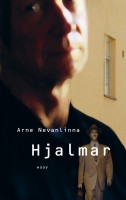 Hjalmar
Helsinki: WSOY, 2010. 294 p.
ISBN 978-951-0-36700-1
€29, hardback
‘Jansson!’ Hjalmar, the protagonist of Arne Nevanlinna’s second novel, is repeatedly woken by voices barking his surname at him. The people shouting at him are primary school teachers, commanding officers, nurses, psychiatrists and his bosses; these figures collectively serve as a sort of Orwellian ‘Big Brother’ figure, or Hjalmar’s social superego. At the core is penniless bohemian office drone Hjalmar’s relationship to his boss, Börje, who personifies the archetype of the Finnish banker, both idolised and loathed. Hjalmar eventually rises up from his lowly position into the opposition, aided by several picaresque characters and his own ‘pokeresque’ skills as a gambler. Arne Nevanlinna (born 1925), an architect and essayist, began writing fiction late in his career: his first novel, Marie (2008), was a runaway success. It tells of a lady from the cream of Strasbourg society who had been married off to Finland and lived in isolation to the age of a hundred. Hjalmar does not quite match its predecessor in terms of quality, but the elegance of old patrician clans persists in its enjoyable irony.
Elina Vuola: Jumalainen nainen. Neitsyt Mariaa etsimässä [The divine woman. In search of the Virgin Mary]
1 April 2011 | Mini reviews, Reviews
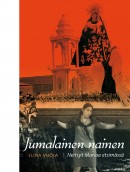 Jumalainen nainen. Neitsyt Mariaa etsimässä
[The divine woman. In search of the Virgin Mary]
Helsinki: Otava, 2010. 220 p., ill.
ISBN 978-951-1-22364-1
€ 34, hardback
This book is about the Virgin Mary and in particular her role in women’s religious experience. Theologian Elina Vuola considers that the doctrines concerning the Virgin Mary have quite a lot in common, as the principal dogmas were formulated in the early centuries of Christianity. As a partial explanation of the difference between the Mary of the Church and the Mary of popular faith, the author adduces the fact that with few exceptions women in Finland did not begin to receive theological training until the second half of the twentieth century. The central question in the book is whether or not Mary is the crowned queen of a patriarchal religious faith that is hostile to women, a harmful role model. Vuola avows herself to be a representative of the trend in women’s religious studies that takes a more positive and multifaceted view of Mary. In the section devoted to the Mary of Karelian folk religion it becomes evident that in Finland and its surrounding regions there are interpretations that are surprisingly similar to those found in Latin America.
Translated by David McDuff
Matti Rämö: Polkupyörällä Intiassa. Lehmiä, jumalia ja maantiepölyä [Cycling in India. Cows, gods, and road dust]
30 July 2010 | Mini reviews, Reviews
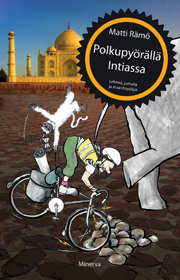 Polkupyörällä Intiassa. Lehmiä, jumalia ja maantiepölyä
[Cycling in India. Cows, gods, and road dust]
Helsinki: Minerva Kustannus Oy, 2010. 301 p., ill.
ISBN 978-952-492-335-4
€ 27.90, hardback
The author decides to take a pinch of the ashes of his dead mother to India’s Varanasi, the city of pilgrims on the banks of the Ganges, and at the same time visit his daughter at an international high school on the country’s west coast. Rämö takes his bicycle on the plane to Delhi and in the course of a month cycles more than 2,600 kilometres, from Delhi to Mumbai. The cyclist is challenged by the heat and humidity, the chaotic traffic, the awkward sections of road and the endless thirst for knowledge on the part of curious bystanders – but his observations are deeper than those of the average travel author, as he worked in India in third world research during the 1980s and 1990s. In the summer of 2007 he completed a four months’ cycle tour of the Sahara, travelling some 9,600 kilometres, and published a book about his experiences (Rengasrikkoja Saharassa, ‘Punctures in the Sahara’, Minerva, 2008). In spite of the shorter length of the Indian journey, the author thinks it possessed a higher difficulty factor.
Juha Seppälä: Takla Makan
22 April 2010 | Mini reviews, Reviews
 Takla Makan
Helsinki: WSOY, 2010. 149 p.
ISBN 978-951-0-36322-5
€ 27, hardback
Author Juha Seppälä’s manner of portraying the world is often characterised as harsh and desolate, and this certainly applies to this, his twentieth work. ‘Jesus’ mother was a woman,’ declares the first-person narrator in ‘Ristin tie’ (‘The path of Christ’) in the second novella in Takla Makan. This true but erotically charged statement sums up the themes of the two texts that make up the work. As the narrator of that story bears the cross in an Easter procession, issues of life and death, faith and worldliness, spirit and flesh, masculinity and femininity, are all present. The man carrying the cross, who has recently lost his job, has taken on a greater burden to bear. The other novella in this book, which takes its title from the name of a desert in China, tells of a terminally ill man who has withdrawn to a small rural community and lets his life slowly slip away. In Seppälä’s narratives anguished men are thrown into the world to ponder the big issues of life and death, expressing themselves with admirably precise sentences stripped of everything inessential.